
During an intense battle, everyone (even your best soldiers) looks to the leader for guidance and direction. If the leader falters, defeat is imminent. Baseball works the same way. Leaders are crucial to a team’s success.
And that’s exactly what a catcher is.
A catcher sits behind the plate, observing, strategizing, and trying to stay one step ahead of the batter. Now picture this: what if you, the catcher, are stuck in a state of constant discomfort because of your mitt? Are you really going to pull off that whole string of responsibilities?
If you’re a veteran with years of experience, maybe you power through it. But if you’re not, you’ll struggle, and so will the team. Catchers play a huge role in leading a team to victory. That’s why the best catcher’s mitt isn’t a luxury. It’s a necessity.
Now if you’re just playing casual games, you don’t need to get as worked up about it as I just did. Still, a good catcher’s mitt will help you control the game and make you look like the most reliable player on the field.
So, I (an ex-pro and a coach) updated this guide for 2026 to walk you through the catcher’s mitts I trust most right now, what’s changed since I first wrote this review, and how to pick the right size, material, and web pattern for your position.
Note: A lot of people assume a bigger price tag always means better quality. That’s not true. I’m going to cover what actually separates a pro-tier catcher’s mitt from an average one, so you know exactly what you’re paying for.
- Top 7 Best Catcher's Mitts for 2026
- 1. Wilson A2K (Best Premium Overall)
- 2. Rawlings Player Preferred RCM325 (Best Catcher's Mitt for the Price)
- 3. Wilson A2000 (Best Value)
- 4. Rawlings Heart of the Hide (Best High-End Alternative)
- 5. Rawlings R9 (Best Entry-Level Youth Catcher's Mitt)
- 6. All-Star Pro Elite CM3000BK (Best Japanese Leather)
- 7. Mizuno Prospect GXC105 (Best for Ages 5 to 10, Lefty Friendly)
- How to Choose the Best Catcher's Mitt – Buying Guide
- FAQ
- Wrapping Up
Top 7 Best Catcher’s Mitts for 2026

Before I break each mitt down one by one, here’s a quick side-by-side so you can jump straight to the pick that fits your budget and position. I’ll go deeper on sizing, materials, and break-in time in the buying guide further down.
| Catcher’s Mitt | Best For | Size Range | Price Tier | Material |
|---|---|---|---|---|
| Wilson A2K | Best Premium Overall | 33.5″ | Premium ($300+) | Pro Stock Select Leather |
| Rawlings Player Preferred RCM325 | Best Catcher’s Mitt for the Price | 32.5″ | Budget (under $100) | Synthetic leather |
| Wilson A2000 | Best Value | 32.5″ to 34″ | Mid-High ($250 to $300) | Pro Stock Leather |
| Rawlings Heart of the Hide | Best High-End Alternative | 32.5″ to 34″ | Premium ($300+) | Steer hide leather |
| Rawlings R9 | Best Entry-Level Youth Catcher’s Mitt | 27″ to 32.5″ | Mid ($100 to $150) | Synthetic/leather shell |
| All-Star Pro Elite CM3000BK | Best Japanese Leather | 33.5″ to 35″ | Premium ($300+) | Japanese steer hide |
| Mizuno Prospect GXC105 | Best for Ages 5-10 (Lefty Friendly) | 32.5″ | Budget (under $100) | Pigskin |
1. Wilson A2K (Best Premium Overall)

Further down, I talk about two excellent all-around mitts, the Wilson A2000 and the Rawlings Heart of the Hide. They’re both great. But they aren’t quite in the same league as the true premium mitts. If you’re okay with paying top dollar, take a serious look at the Wilson A2K.
Now, the Wilson A2000 is already a top-shelf mitt, so why bother with the A2K? Because the A2K edges it out in performance, durability, flexibility, and overall feel. Here’s why.
The Wilson A2000 uses Pro Stock Leather, which comes from the strongest American steer hides. That’s already top-tier. But the Wilson A2K steps it up with Pro Stock Select Leather. It’s not just an extra word tacked on. It’s a whole different tier of hide.
All the leather made in Wilson’s factory goes through the same screening process, and only a small percentage clears the bar to become an A2K. That should tell you everything you need to know about durability before you even try it on.
The pocket also has two layers instead of one. That extra layer keeps the mitt stable after a fastball hits the pocket, and it helps absorb the shockwaves that would otherwise beat up your palm and fingers over a long season.
The double-palm design also keeps the ball from bouncing back out of the mitt. Between the padded edges and the multi-layered palm padding, you get a steady, secure hold on every pitch.
I also like the color combinations Wilson offers on this mitt. From behind the plate, it’s easy for your pitcher to spot, which means you can call location with small hand movements instead of making it obvious to the batter. That’s a small thing that matters a lot in a close game.
According to Wilson, the craftsmen put roughly three times more work into building one A2K compared to a standard mitt. I can’t verify that number myself, but I can tell you the finished product backs it up. If you want to compete at a high level, the A2K deserves a spot on your short list. If you want the fuller brand-by-brand comparison, our Wilson vs Rawlings baseball gloves breakdown goes deeper into how these two brands stack up across their whole lineup.
There isn’t much size variety here, just the standard 33.5 inches. If your hands aren’t especially large, the fit shouldn’t be an issue.
My only real complaint about Wilson catcher’s mitts is the break-in time. It takes a while for the leather to loosen up and reach its full potential. There’s an upside, though. A longer catcher’s mitt break-in period usually means sturdier, more durable leather on the other end of it.
2. Rawlings Player Preferred RCM325 (Best Catcher’s Mitt for the Price)

I know it looks like I’m just circling around Rawlings and Wilson. There’s a reason for that. While I casually recommend Louisville, Franklin, or Shoeless Joe for other gear, I play it safer when it comes to catcher’s mitts. That’s why I stick to established names even on the budget end.
The Rawlings Player Preferred RCM325 is built for the budget-conscious catcher, and a ton of people who play casual baseball or softball love it. There are also plenty of times when I don’t want to bring my premium mitt to an easy practice, and that’s exactly when a mitt like this earns its keep.
Don’t mistake budget-friendly for cheaply made, though. This 32.5-inch catcher’s mitt can take a lot of fastball hits thanks to Zero Shock palm padding. It’s not as thick as what you’ll find in the A2K, Heart of the Hide, or All-Star Elite, but it’s still solid for the price.
The trick is learning to pocket fastballs cleanly instead of letting them clip the edges. The edges aren’t padded enough to shrug off repeated impacts, so technique matters more here than it does with a premium mitt.
The Player Preferred is made from synthetic leather rather than cowhide or steer hide, and synthetic materials come with real trade-offs. The upside is that the mitt arrives close to game-ready. Give it a couple of practice sessions and it’ll already feel smooth and flexible in your hand.
The downside is that synthetic leather won’t hold up as long as what you get on pricier mitts. That’s easier to accept once you remember you’re paying a fraction of what a Heart of the Hide or A2000 costs, and a small fraction of what an A2K runs. For the price, there’s not much to complain about.
The mitt’s color and closed web also make it an easy target for your pitcher to see. A good catcher controls tempo, and you can guide your pitcher and fielders through small hand movements without tipping anything off to the batter. If you’re on a tight budget, this is about as good as it gets, and it’s still a genuinely good catcher’s mitt, not just a cheap one.
3. Wilson A2000 (Best Value)
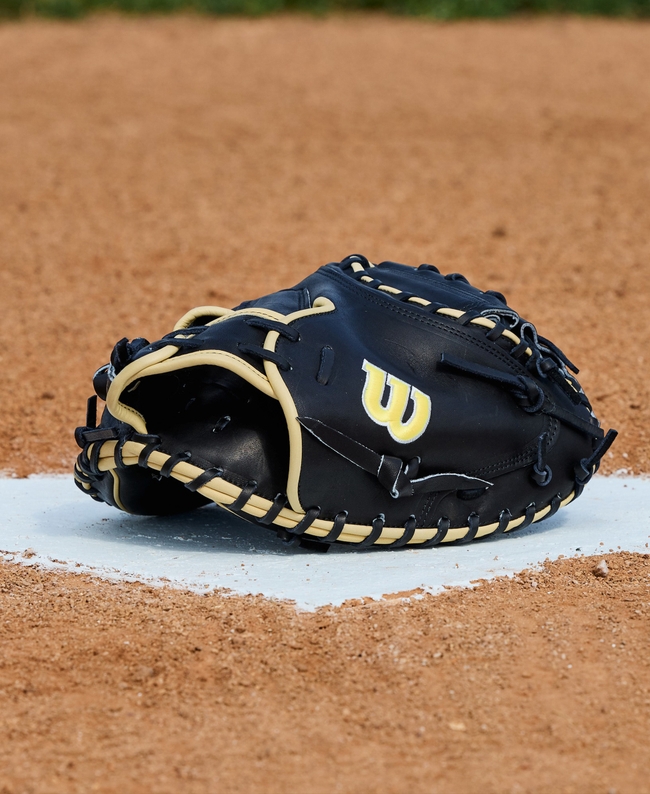
Plenty of people would argue the A2000 deserves the top spot on this list, and I get it. The A2K is just a step ahead in a few areas, but not everyone wants to pay the extra money for it, which is exactly why the A2000 remains one of the most popular catcher’s mitts on the market.
The Wilson A2000 is one of the best catcher’s mitts out there, full stop. Start with the leather. It’s the same signature Wilson Pro Stock Leather, sourced from US steer hides, that made the A2K’s reputation in the first place.
That leather is tough. Plenty of catchers use the same A2000 for three to five seasons without ever needing a replacement, which makes it a genuinely good long-term investment rather than a mitt you’ll be shopping to replace next year.
Wilson also offers the A2000 catcher’s mitt in a SuperSkin version across parts of the lineup, which trims noticeable weight off the mitt without sacrificing the leather’s toughness. Older premium mitts got heavy fast because of the hide itself, so this is a real quality-of-life upgrade if you’re on the field for hours at a time.
I like how the glove feels once it’s broken in. Wilson uses a Dri-Lex wrist lining to keep your hand cool and dry through a long game, so even if you sweat a lot, the lining and material keep things manageable.
The lacing is strong, well placed, and holds up for years without needing constant relacing. Between the ease of use, the comfortable padding, and the high-quality leather, this is a mitt that consistently outperforms its price point. It’s available across a size range of roughly 32.5 to 34 inches depending on the specific model, so there’s a good chance you’ll find a fit that works for your hand.
4. Rawlings Heart of the Hide (Best High-End Alternative)
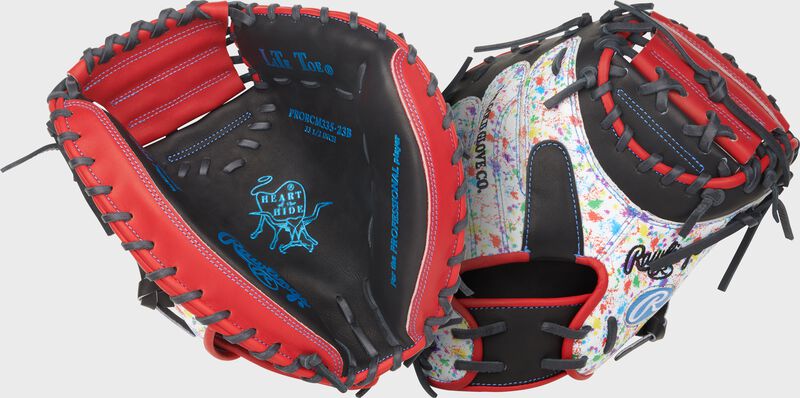
I know, back-to-back Rawlings picks right after the Player Preferred. I could have just as easily slotted the Heart of the Hide into the number two spot. Honestly, there’s a real argument that the HOH can go toe-to-toe with the Wilson A2K.
Before I get into specifics, you should know that Rawlings and Wilson each have loyal fanbases, and even MLB catchers are split on which brand they prefer. If anything stands a real chance against the A2K, it’s the Heart of the Hide. For a full side-by-side on how these two brands compare across their catalogs, take a look at our Wilson vs Rawlings baseball gloves comparison.
Now for the specs. Remember what made the A2K special, the Pro Stock Select screening process that only lets the best hides through? Rawlings runs a similar screening process for the Heart of the Hide. Only the top-tier steer hides make the cut, so the leather quality speaks for itself.
I owned a Heart of the Hide before I ever picked up an A2K. After switching to the A2K for a stretch, I found the performance was close on most fronts, with one real difference: the HOH breaks in faster.
Premium steer hide can turn into a brick if you’re not careful, and I’ve seen mitts stay stiff for months, sometimes years. The HOH uses softer rawhide in certain parts of the mitt, which shortens the catcher’s mitt break-in time compared to the A2K without giving up much durability.
The most vulnerable spots, palm, fingers, and thumb, are all covered with thick padding. The cushioned feel Rawlings is known for is here, and it might be even better than on older HOH generations.
The color combo also makes calls easy to spot from the mound. Overall, the Heart of the Hide has everything you’d want to compete with the other high-end mitts on this list, and current models sit in a similar premium price range to the A2K, so this really comes down to brand preference and fit rather than a clear winner.
5. Rawlings R9 (Best Entry-Level Youth Catcher’s Mitt)
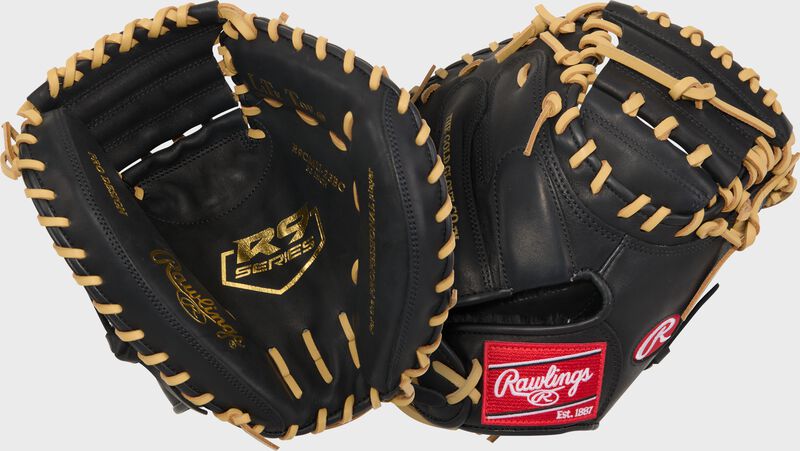
Every mitt I’ve mentioned so far works fine for teenagers and adults. But there are dedicated options built specifically for younger players, like the Rawlings R9. The list wouldn’t be complete without a proper youth catcher’s mitt pick, so here it is.
The first thing to know is that this isn’t meant for adult hands. Depending on the model, it runs in the 27 to 32.5 inch range, which is right in line with what most little leaguers and tee-ball players need. It’s a great entry-level mitt to get a young player comfortable with the position.
The leather is synthetic, similar to what you’ll find on the Rawlings Player Preferred. It’s not premium American or Japanese steer hide, but it’s far from junk pigskin either. You get decent performance and durability for the price.
It also has a padded thumb loop, which isn’t something I usually expect on a budget youth mitt. That’s a smart inclusion, because young players are still learning to consistently pocket the ball, and a lot of balls end up landing on the thumb. The padded loop keeps that from becoming a real problem.
Synthetic leather breaks in far faster than cowhide or steer hide, and the R9 ships close to game-ready right out of the box. A couple of rounds of backyard catch should get it fully broken in.
The color and closed webbing make it easy for young catchers to start learning game management, guiding the pitcher and calling small adjustments to the defense. It’s a lot to ask of a kid, but starting young is how good habits form.
There’s padding in the palm, though it won’t hold up to a steady diet of hard fastballs. Little league pitchers usually aren’t throwing anywhere near high school or adult speeds, so the padding is more than enough until a player moves up in competition.
Above all, the price won’t wreck your budget. It costs a bit more than the Rawlings Player Preferred, but it’s still affordable compared to the adult premium mitts on this list.
Keep in mind this is a training mitt built for youth baseball. Some parents also use a smaller youth model as an entry-level fastpitch catcher’s mitt for softball, but that’s about the limit of its range. Try to use it as an adult catcher’s mitt and you’ll be disappointed fast. For young players still learning the position, though, the quality, performance, and construction easily make it one of the better youth catcher’s mitts you can buy.
6. All-Star Pro Elite CM3000BK (Best Japanese Leather)

Now that I’ve covered a budget mitt and a youth mitt, it’s time to go back to premium territory. Wilson and Rawlings aren’t the only brands making high-end mitts. If you’ve ever used an All-Star mitt, you already know that. The All-Star Pro Elite CM3000BK is right up there competing for the title of best catcher’s mitt on the market.
So what makes it stand out? For starters, it isn’t built from US or Japanese Steerhide alone, it’s constructed from Japanese steer hide specifically. If you know your leather, you know that debate usually comes down to Kip leather versus steerhide, and while the CM3000BK isn’t a Kip leather mitt, Japanese steer hide is a close cousin in terms of quality.
The usual downside of steer hide is a longer break-in period. Even with solid break-in technique, some steer hide mitts never fully soften up in time for an important game. Japanese steer hide behaves a little differently. It keeps the sturdy, thick, reliable feel while staying more manageable and less stubborn than you’d expect.
The simple design with a Velcro adjustment strap is a nice touch for anyone who finds laced straps annoying. It’s about as convenient as adjustment systems get.
The pocket is genuinely spacious. When the ball hits it, you get that satisfying pop, and the deep pocket makes it easy to control a wide range of incoming pitches.
Thumb, finger, and palm padding all add up to serious protection against the repeated contact catchers deal with every game. This mitt is built to hold up to that kind of abuse. It’s available in a range of sizes from roughly 33.5 to 35 inches depending on the exact model, so check the specific listing for the size you need.
7. Mizuno Prospect GXC105 (Best for Ages 5 to 10, Lefty Friendly)
I already listed one youth catcher’s mitt, but the Rawlings R9 leans more toward a training glove than a fully developed catcher’s mitt. It’s a good entry point, but it’s not the mitt I’d hand a slightly more advanced young player.
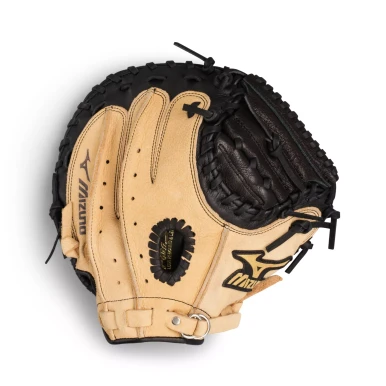
That’s why I added a second youth option to the mix. The Mizuno Prospect GXC105 is built for ages five to ten, and it’s a smart buy because you save money up front while still getting a mitt that holds up as your player grows into the game.
The first thing you’ll notice out of the box is how close to fully broken in it already feels. You can open and close it with ease right away, and it’s soft and snug without creating pressure points on a small hand.
You’ll also get that satisfying pop when a fastball lands in the pocket. It’s deep and padded enough to take the edge off repeated impacts.
The fit system is simple too. There’s no Velcro or complicated leather straps, just a single strap that runs through hoops. Pull it one way to tighten and the other way to loosen. It sounds fiddly written out, but it’s easy once you try it.
If a young player is struggling to open and close the mitt, you can remove the last two laces to loosen things up further. Not every mitt lets you do that safely, but the GXC105 makes it simple.
That said, this is still closer to an upgraded entry-level mitt than a premium one. The leather is pigskin, which is more fragile than the steer hide and cowhide used on the mitts higher up this list.
It still holds up well because kids in the five to ten age range rarely pitch faster than 40 to 50 mph, and this mitt has more than enough padding to handle that. Between the easy break-in, affordable price, and overall flexibility, it’s a great mitt for younger players. It’s also one of the few models on the market offered as a left-handed catcher’s mitt, so if you’re outfitting a lefty catcher, this is probably your easiest option.
How to Choose the Best Catcher’s Mitt – Buying Guide
What do the pros actually look for in a catcher’s mitt? There are thousands of options on the market. Some are genuinely great, but most fall short of what they promise.
Catcher is the most physically demanding position on the field, so you can’t afford to compromise on gear. That’s why finding the right mitt matters so much. But what actually separates a great mitt from an average one?
Here’s what to weigh before you buy a catcher’s mitt.
Size
A catcher has to make a lot of quick movements with the glove hand during a game, so you don’t want a mitt that’s too loose or too tight. Either extreme feels uncomfortable and slows down your reactions.
Catcher’s mitt size is mostly a function of age and hand size. As a rough catcher’s mitt size chart, most middle schoolers do well in a 32 to 33 inch mitt, high schoolers usually move up to 33 to 34 inches, and adult and pro-level catchers often go up to 34 or even 35 inches. Younger players in tee-ball or little league typically start around 27 to 31.5 inches. Our youth catcher’s mitt guide breaks the age-to-size chart down in more detail if you’re buying for a younger player.
Material
There are basically four types of material used in catcher’s mitts: synthetic, mesh-backed, soft leather, and full-grain durable leather.
If you’re buying for a young player, synthetic is usually the right call. It’s lightweight and inexpensive, which makes it ideal for kids who are still growing into the position. The trade-off is that it won’t last nearly as long as leather.
Mesh-backed mitts are comfortable and lighter than full leather options, but they’re also less durable over a long season.
Soft leather is a nice middle ground. It’s comfortable out of the box and doesn’t need much of a break-in period, since it’s not as stiff as premium durable leather. It’s also lighter than the top-tier stuff, though it won’t hold up quite as long.
Durable leather, like the steer hide and Pro Stock leather used in the premium mitts above, is what most serious and professional players prefer. It costs more and weighs more, but it holds up the longest, offers the best padding, and gives you that satisfying, crisp pop when a fastball hits the pocket.
Break-In Time
Catcher’s mitt break-in time is directly tied to material. Synthetic and soft leather mitts arrive close to game-ready, while premium steer hide and Pro Stock leather mitts can take weeks of real use before they loosen up.
The fastest legitimate way to break in a catcher’s mitt is simply to play catch with it as often as possible, ideally with a real ball rather than a softer training ball. A light coat of glove oil or conditioner on the pocket and finger stalls helps soften the leather without overdoing it. Working the pocket by hand, closing and opening the mitt around a ball, and wrapping it with a ball inside secured by rubber bands or a glove wrap overnight can speed things up further.
Avoid shortcuts like microwaving a mitt or soaking it in water. Both can dry out or warp the leather permanently. A steamer at a pro shop is fine in moderation, but it’s not something you want to do repeatedly on a mitt you plan to use for years.
Webbing
Catcher’s mitts come with either closed or open webbing. Closed webbing is more durable and holds up better over a long season, which is why it’s far more common. Open webbing catcher’s mitts are rare enough that you’ll usually need to special order one if that’s what you’re after.
Padding
Catcher is the toughest position on the field on your body. You’re catching every pitch that comes your way while also protecting yourself from foul tips and bounced pitches. A mitt with weak padding can genuinely hurt you over time. To help reduce your injury risk, look for a mitt with proper, well-distributed padding.
Adjustability
As I mentioned in the sizing section, a catcher’s mitt needs to fit your hand well. No matter how durable a mitt is, it’s a bad product if it doesn’t sit right on your hand and wrist.
Everyone’s hand is shaped a little differently, which is why adjustability matters. You typically adjust fit by tightening or loosening the laces or straps. Look for a catcher’s mitt with a solid adjustment system so you can dial in the fit over time.
Warranty
Everyone likes a solid warranty, myself included. Before you worry about warranty length, think about why you’re buying the mitt in the first place. You’re presumably solving a specific problem with your current gear.
If a new mitt doesn’t hold up to normal use, you should be able to send it back to the manufacturer. Look for a catcher’s mitt with a reasonably long warranty. It’s genuinely worth it for the peace of mind alone.
Brands
Honestly, I don’t believe a well-known name automatically makes the best mitt. There are underrated brands that make genuinely good catcher’s mitts too. Some of the most established baseball glove manufacturers are:
- Wilson
- Rawlings
- All-Star
- Mizuno
- Nokona
- Easton
- Marucci
I also have a soft spot for brands like Akadema and Louisville Slugger. They make good-quality gloves and mitts too, even though they’re not quite as popular as the names above.
My honest take: shop for quality over brand name. You’re the one using the mitt, not the logo on it. Once you’ve got the mitt sorted, it’s worth thinking about the rest of your kit too. Our best catcher’s gear guide covers the chest protector, helmet, and shin guards that round out a full setup.
FAQ
If you’re shopping for a catcher’s mitt with a real budget in mind, you probably have a few questions left. Nobody wants to spend their money without the full picture, so here are answers to the questions I get asked most about catcher’s mitts.
Are All-Star catcher’s mitts good?
It depends on which All-Star mitt you’re looking at. All-Star has been in the baseball and softball scene for a long time, and like most established brands, they make both budget and premium mitts. Spend the money on something like the All-Star CM3000BK and you’ll get top-notch performance, since it’s one of the pricier catcher’s mitts on the market. Go with a sub-$100 model instead and the quality won’t be close to what you’d get from a $300 to $500 mitt.
So the honest answer is both yes and no. It comes down to how much you’re willing to spend on which model.
How do I choose a catcher’s mitt?
The buying guide above covers this in detail, but the short version is to weigh leather quality, size, padding, webbing, and adjustability against your budget. Leather and size matter most for comfort and durability, while padding and webbing matter most for how the mitt performs behind the plate.
Are Rawlings catcher’s mitts good?
Pretty much the same answer as All-Star. Rawlings mitts and gloves are used by seasoned professionals, and they’re one of the top baseball and softball equipment manufacturers around. So yes, their mitts are genuinely excellent.
The real question is how much you’re willing to pay. If you want the best Rawlings catcher’s mitt experience, you’ll need to pay premium prices for something like the Heart of the Hide. For the full picture on how Rawlings stacks up against Wilson, check out our Wilson vs Rawlings baseball gloves comparison.
What size catcher’s mitt do the pros use?
There isn’t one magic number. Sizing comes down to individual hand size and preference. If your hands are big, you’ll want a bigger mitt, and vice versa. A standard size range for professional MLB catchers runs from about 32.5 to 35 inches. Many MLB catchers also use custom-built mitts, so there’s no single exact size that applies across the board.
How do you break in a catcher’s mitt?
The most reliable way is simply playing catch with it as much as possible, ideally with a real baseball. Add a light coat of glove oil or conditioner to the pocket and finger stalls, work the pocket by hand, and wrap the mitt around a ball with rubber bands or a glove wrap overnight to help it hold its shape. Avoid microwaving or soaking a mitt in water. Both can damage the leather permanently instead of speeding up the catcher’s mitt break-in process.
What’s the difference between a catcher’s mitt and a first baseman’s mitt?
They look similar at a glance, but they’re built for different jobs. A catcher’s mitt is rounder, shorter, and more heavily padded to absorb repeated high-velocity pitches, and it has a hinge instead of individual fingers so you can quickly frame and secure the ball. A first baseman’s mitt is longer and more elongated to help scoop low throws out of the dirt, with less overall padding since it isn’t taking the same volume of hard impacts a catcher’s mitt handles every game.
How much should I spend on a catcher’s mitt?
For a serious high school or adult player, expect to spend somewhere between $150 and $350 for a mitt that will hold up over multiple seasons, with true premium leather mitts like the A2K or Heart of the Hide landing at the top of that range. If you’re after the best catcher’s mitt for the price rather than the best mitt overall, a synthetic option in the $50 to $100 range, like the Rawlings Player Preferred, is a completely reasonable choice for casual or recreational play. For youth players who are still growing, it rarely makes sense to spend premium money since they’ll outgrow the mitt anyway.
Wrapping Up
If you need a true tier-one mitt, there’s no real alternative to the Wilson A2K or the Rawlings Heart of the Hide.
The Wilson A2000 is also worth serious consideration. The A2K is just a step ahead, and plenty of players don’t want to spend that kind of money, especially if they’re outfitting a growing kid rather than themselves.
If you’re shopping for a budget mitt for your young baseball player, go with the Mizuno GXC105. It’s affordable and it holds up well. As I said earlier, a good leader is the one who leads a team to victory.
And a catcher is, in most cases, exactly that kind of leader. So you, of all people, should be comfortable behind the plate. Understand your age, size, and needs, pick the mitt that matches them, and go lead your team to victory. Cheers.

With 4 years of Division II experience, a .272 career batting average, .410 on-base percentage, and 7 home runs, I’m now in my fifth season. I’ve played baseball since age 3, alongside future MLB Draft picks, and I aim to pursue a career in baseball professionally, be it playing, coaching, or scouting.