
Baseball and softball gloves get made from a handful of different leather grades, and each one changes how the glove feels, breaks in, and holds up. Premium steerhide, cowhide, buffalo skin, and full-grain leather are all common picks, but there’s one material that keeps coming up whenever players talk about a glove that’s ready to use almost right out of the box.
Kip leather baseball gloves come up a lot in team group chats and dugout conversations these days. If you’re a younger player and you want to put your money into the right glove for where you’re at right now, kip leather is worth a serious look.

What Is Kip Leather For Baseball Gloves?
Kip leather, sometimes called kipskin, comes from young cattle, usually somewhere between six and twelve months old. Just like a younger animal has softer skin than an older one, kip hide is thinner, lighter, and softer than the cowhide or steerhide that goes into most traditional gloves. That’s exactly why it’s become such a popular pick for players who want a glove that feels broken in the day it shows up.
Kip leather has been picking up steam year over year. Manufacturers used to lean almost entirely on stiff, hard-wearing steerhide because of its durability, but more brands are now building kip gloves into their lineups since players of every age can use them without fighting the leather for weeks. Rawlings builds its Pro Preferred line around Japanese-tanned kip, and smaller glove makers like Buckler and Nokona use their own kip tannage to compete at a lower price point. If you want the full rundown on how kip stacks up against the more traditional option, my Kip vs Steerhide baseball glove breakdown goes a lot deeper.
Is Kip Leather Good To Use?
To answer that, it helps to know why players reach for kip gloves in the first place. Since the hide comes from a young calf, it’s naturally light and soft. Gloves built from kip leather also need way less break-in work than steerhide models. That doesn’t mean it’s a zero-effort glove out of the box, but you’re looking at days of use instead of weeks before the pocket feels right.
You might assume a thinner, lighter glove means weaker durability. I get it, that’s a fair worry. But in practice, kip gloves hold up well. I haven’t used a kip leather glove myself, but my younger brother, who’s 13 and plays in the outfield, has been using one for a couple of seasons now.
His glove is the Buckler Core Series, and he’s put it through two full years of regular use without any real problems. That’s enough for me to say kip leather can absolutely handle the long haul, not just a single season.
Best Kip Leather Baseball Glove
Now that you know why kip leather has earned its spot in the baseball world, here’s the glove I’d actually point you toward if you’re shopping for one.
BUCKLER Core Series KIP Baseball Gloves
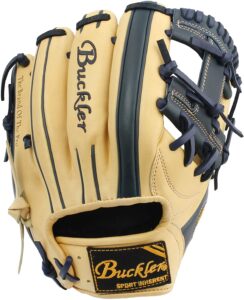
This is one of the best kip gloves I’ve come across, and I’m confident saying that because my younger brother has been using his for the last two years straight.
The Core Series is built from kip leather sourced from young calves around six to twelve months old, the same age range that defines the material. Buckler pairs it with an I-Web and dual welting to keep the pocket durable over time, and one thing I’ve noticed is that it holds its shape well and doesn’t bend back on itself even after a lot of use.
Buckler says these come roughly half factory broken in, with the rest left for the player to finish by hand. You can use it right out of the box if you want, but I’d still recommend giving any new glove a light oiling before you take it out to play.
Either way, this one comes about as close to game-ready as a kip glove gets, and it’s available in a handful of colorways if you care about that sort of thing.
Pros
- Dual welting pocket for added durability
- Roughly half broken in right out of the box
- Noticeably lighter feel than a steerhide glove
Cons
- Costs more than a basic cowhide youth glove
Best Kip Leather Softball Gloves
Baseball isn’t the only sport where kip leather shows up. Softball players want the same lightweight, quick break-in feel, so here’s the kip softball glove I’d point them toward.
Nokona American Kip Black Softball Glove
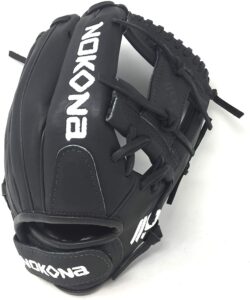
Nokona builds this one from AmericanKIP leather, which comes from young cattle and keeps the glove thinner and softer than you’d get from a cowhide or steerhide fastpitch glove. It’s noticeably lighter in the hand too.
This model is sized for younger players, since it only comes in an 11.5-inch build, and it’s available for both right-hand and left-hand throwers.
An adjustable Velcro wrist strap on the back lets a player tighten or loosen the fit as needed. True to the name, it only comes in one colorway, black on black.
Nokona hand-builds every glove in Nocona, Texas, and that individual craftsmanship shows in the finish. It’s the kind of glove that’s built to last a player through multiple seasons, not just one.
Nokona backs it up too, with a two-year warranty against manufacturing defects.
[i2pc show_title=”false” title=”Pros & Cons” show_button=”false” pros_title=”Pros” cons_title=”Cons” button_icon=”icon icon-hand-o-right” link_text=”Check Latest Price” link=”https://amzn.to/3gWDZkt” ][i2pros]Light and soft AmericanKIP leather
Dual welting pocket
Adjustable Velcro wrist strap
Handcrafted in the USA with a 2-year warranty[/i2pros][i2cons]Only available in one size and color[/i2cons][/i2pc]
Best Kip Leather Glove for Young Players
If you’re shopping for a younger player who needs a glove that’s easy to break in right away, this next pick from Nokona is worth a look. Quick correction on this one before we get into it: I originally had this listed as a Japanese-made glove, but that’s not accurate. Nokona builds its AmericanKIP line at its own factory in Nocona, Texas, not overseas. If you specifically want the genuine Japanese-tanned kip that pro-level lines use, Rawlings Pro Preferred is the more accurate example, and it’s built for older, more advanced players.
Nokona American KIP 14U Baseball Gloves
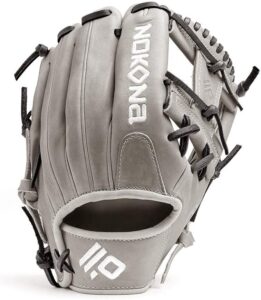
This one is built specifically for players under 14, so if you’re an adult shopping for yourself, this isn’t the pick for you. But for a younger player who wants a real kip leather glove without an adult price tag, it’s a solid option.
It’s an 11.25-inch glove that comes in gray with black laces. The I-Web pattern gives it a versatile pocket that works fine at most positions on the field.
The palm is soft enough to absorb most of the sting from a hard-thrown ball coming off the bat, which matters a lot for a young player who’s still getting comfortable catching.
[i2pc show_title=”false” title=”Pros & Cons” show_button=”false” pros_title=”Pros” cons_title=”Cons” button_icon=”icon icon-hand-o-right” link_text=”Check Latest Price” link=”https://amzn.to/3y8pxf5″ ][i2pros]AmericanKIP leather, built in Texas
Made for players under 14
Soft, forgiving palm
Light and easy to break in
Works for most positions besides catcher[/i2pros][i2cons]Only available in right-hand throw
Not sized for adult hands[/i2cons][/i2pc]
Kip Leather VS Steerhide
Kip leather comes from a young cow, usually six to twelve months old. Like a younger animal’s skin, it’s thinner, lighter, and tighter in the grain. Steerhide is pretty much the opposite, coming from a full-grown steer and built for raw, long-term toughness. Lines like Wilson’s A2000 and A2K and Rawlings Heart of the Hide are steerhide through and through, which is part of why they’ve stuck around as pro-level favorites for decades.
Kip leather Vs premium steerhide comparison
KIP
- Thinner
- Lighter, with a tighter grain
- Durable for how little it weighs
- Softer than most other glove leathers
- Minimal break-in required
- A favorite for younger and mid-level players
- Growing in popularity across most glove brands
Steerhide
- Hard and stiff out of the box
- Heavier than kip
- Best long-term durability of any glove leather
- Usually priced higher
- Takes weeks to fully break in
- Works for players of any age, not just beginners
- The long-standing standard for pro-level gloves
Kip Leather VS Cowhide
Cowhide leather usually comes from a medium-aged cow. It’s not as stiff and rigid as premium steerhide, but it’s also not as soft and light as kip leather.
Cowhide gloves still need a real break-in period to feel game-ready, but you can usually manage that on your own without much trouble.
Price-wise, cowhide sits well below premium steerhide and kip. Affordable, reasonably quick to break in, and a decent middle ground on weight and durability, it’s a fair compromise between the two premium options above. My breakdown of the best baseball glove brands covers where each brand’s cowhide, kip, and steerhide lineups fall on price if you want a fuller picture before you buy.
Wrap Up
Here’s my honest take on kip leather. I’ll admit I’m not fully at ease with the fact that it comes from such young calves, and if that bothers you too, cowhide or a synthetic build is a fair alternative to look into.
That said, if you’re shopping for a young player who wants a glove that’s ready to play with almost immediately, kip leather baseball gloves are hard to beat. They’re light, they’re soft, and they don’t demand weeks of babying before they’re game-ready, which is exactly what most kids and their parents want out of a first real leather glove.

With 4 years of Division II experience, a .272 career batting average, .410 on-base percentage, and 7 home runs, I’m now in my fifth season. I’ve played baseball since age 3, alongside future MLB Draft picks, and I aim to pursue a career in baseball professionally, be it playing, coaching, or scouting.