
Fastpitch softball is a young player’s game. Slowpitch is where the rest of us live – adults who want a real game on the weekend without needing a 0.4-second reaction time.
That doesn’t mean you should show up unprepared.
If you play first base, third base, or anywhere flyballs rain down on you, a dedicated slowpitch glove matters. You can get away with a fastpitch softball glove in a pinch, but the pocket is shallower and the padding is built for a smaller, faster ball. It’ll cost you a dropped ball or two before you figure that out.
I’ve caught, coached, and broken in more slowpitch gloves than I can count. This guide covers the 7 I keep coming back to, plus everything you need to know before you buy one yourself. By the end of the article, these are the things you’ll get:
- The best slowpitch softball glove for your position and budget
- How to read pocket depth, webbing, and leather quality like a buyer who’s been burned before
- My honest pick if you only read one section
Sound good? Let’s get started.
Top 7 Best Slowpitch Softball Gloves Review
I put these gloves through actual games, not just a quick catch in the backyard. A few didn’t make the cut this year because the leather cracked early or the sizing options dried up. These 7 held up.
| Glove | Best For | Size Range | Web Pattern | Price Tier |
|---|---|---|---|---|
| Rawlings Player Preferred | Best Overall | 12″+ | Multiple | $ |
| Franklin Sports Windmill Pro | Best Budget | 11″ – 12″ | Basket | $ |
| Rawlings Heart of the Hide Slowpitch | Best Premium / Tournament | 13″ – 14″ | Pro H (H-Web) | $$$$ |
| Miken Pro Series | Best Impact Protection | 13″ – 14″ | H-Web | $$$ |
| Mizuno Premier | Best Value | 13″ | H-Web, Tartan U-web | $ |
| Easton EL JEFE | Best Balanced Pick | 12.5″ – 14″ | Trapeze, H-web, dual-bar | $$ |
| Wilson A2000 SuperSkin | Best for Lefties | 13″ – 13.5″ | Modified trapeze | $$$$ |
Prices shift with inventory, so treat the $ signs as a relative guide and check the live price before you buy.
1. Rawlings Player Preferred Slowpitch Softball Glove (Best Overall)
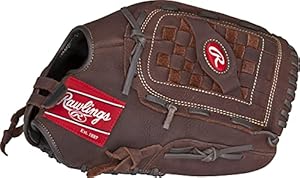
Most slowpitch players don’t want to drop big money on a glove they use twelve Sundays a year. Fair. But cheap usually means it’s dead by August. The Player Preferred is the one glove I trust to split that difference.
It’s built from full-grain cowhide, and I’ve worn it through five hours of back-to-back games without a hot spot. Full-grain does add a little weight versus top-grain leather, but you get durability in return, and that trade is worth it for a glove that isn’t babied.
Rawlings makes a Player Preferred for every position: infield, outfield, pitcher, catcher. The catch is sizing starts at 12 inches, so there’s no true youth option here. If you’re shopping for a kid, look at the Rawlings Sure Catch Youth line instead, or check my breakdown of softball gloves for small hands for sizing that actually fits smaller players.
The palm padding handles flyball impact fine, and the leather pull-strap is durable, though I’d still trade it for Velcro if Rawlings offered the choice since Velcro gives you finer adjustment. Out of the box, this glove is about 80% broken in, so you’re looking at a handful of games before it’s fully game-ready, not a full offseason of pounding a ball into the pocket.
Pros: Full-grain cowhide holds up to a full season. Minimal break-in required. Covers every position. Best price-to-durability ratio on this list.
Cons: No sub-12″ sizing for youth players. Pull-strap instead of Velcro. Slightly heavier than top-grain alternatives.
Best for: Weekend rec league players who want one reliable glove without babysitting it.
2. Franklin Sports Windmill Pro Series Slowpitch Softball Glove (Best Budget)
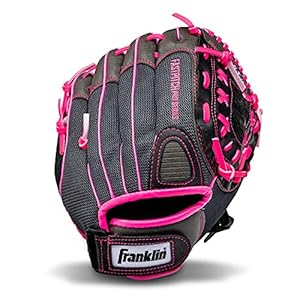
I picked this one up originally for my youngest son, who wasn’t ready for the weight of a full-grain leather glove. It’s the cheapest legitimate option on this list, and it does exactly what a budget glove should: it lets a new player enjoy the game without you spending real money on something they might quit in a month.
It’s light, the pocket breaks in fast, and movement is quick enough that the ball tends to find the pocket instead of the web. The synthetic leather is the tradeoff. It gets slick, especially in humid conditions, so expect a slightly steeper learning curve on clean catches. I ended up using a rubber band around the wrist closure because the basic strap doesn’t cinch down as tight as I wanted.
Sizing tops out at 12 inches, so this isn’t a glove that grows with a player long-term. Treat it as a starter glove, not a forever glove. Still, from all the gloves I’ve bought for people around me, the Windmill Pro is a genuinely decent option for people with small hands.
Pros: Lowest price point on this list. Lightweight, easy for new players. Fast break-in, soft pocket out of the box.
Cons: Synthetic material gets slippery. Only 11″ and 12″ sizing. Basic wrist closure.
Best for: Beginners, kids, and casual players who want to try the position before investing more.
3. Rawlings Heart of the Hide Slowpitch Softball Glove (Best Premium / Tournament Pick)
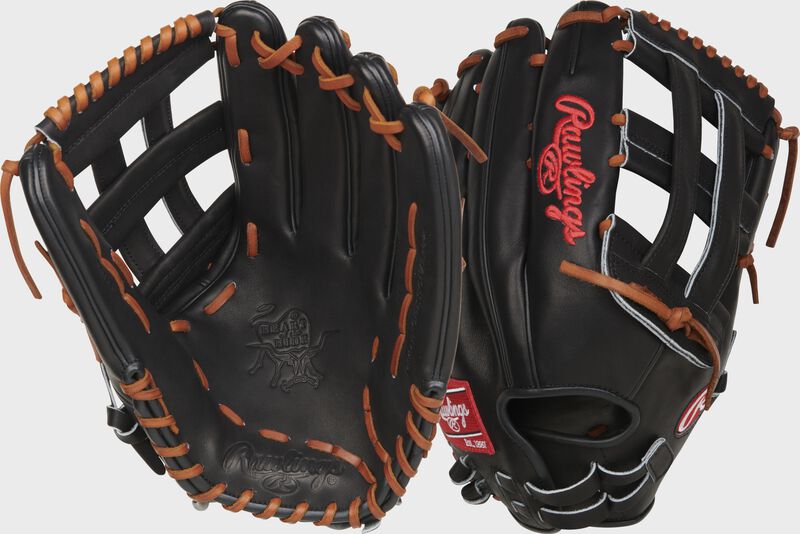
This one wasn’t on my radar until enough readers asked why it wasn’t here. Heart of the Hide is Rawlings’ pro-tier line, and the slowpitch-specific version (13″ to 14″, Pro H web on the standard build) brings that build quality to a sport that usually gets budget leftovers from baseball glove makers.
The steer hide shell is noticeably stiffer out of the box than the Player Preferred, with a break-in period closer to 60 hours of use, which means a longer break-in, but the payoff is a glove that holds its shape for years instead of seasons. The deep pocket is built for outfield and first base, where you’re tracking flyballs off a bat, not ground balls, so pocket depth matters more here than web visibility. This is the glove I point tournament and league-competitive players toward when they ask what separates a “good enough” glove from a “I trust this in a championship game” glove.
Pros: Pro-tier steer hide construction. Excellent long-term shape retention. Deep pocket built for slowpitch flyballs.
Cons: Longer break-in than synthetic or full-grain options. Premium price. Limited size run compared to the Player Preferred line.
Best for: Competitive league and tournament players who want a glove that lasts multiple seasons.
4. Miken Pro Series Slowpitch Softball Glove (Best Impact Protection)
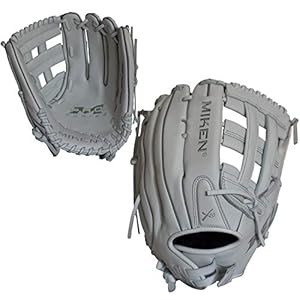
Nothing about this glove looks special out of the box. My opinion changed the first game I used it. When a hard-hit flyball lands in the pocket, the Poron XRD padding absorbs the impact in a way I haven’t felt in a cheaper glove. No sting, no aftershock in your palm.
Poron XRD is an impact-absorbing foam used in a lot of protective gear outside of baseball too, and it’s the reason this glove costs more than the Player Preferred or the Mizuno. Combined with full-grain leather, this is built for players who catch a lot of hard-hit balls at the corners or in the outfield gap.
The tradeoff is flexibility. You’re locked into an H-web pattern, and the size range is narrower than Rawlings or Easton. Miken has had some past complaints about mixed-up hand orientation on orders, though I didn’t run into that issue myself, and most complaints I found were a couple years old.
Pros: Poron XRD padding is the best impact protection on this list. Full-grain leather durability. Comfortable pull-strap adjustment.
Cons: H-web only, no other web pattern options. Limited size variety. Some historical order-accuracy complaints.
Best for: Corner infielders and competitive players who take a lot of hard-hit balls.
5. Mizuno Premier Slowpitch Softball Glove (Best Value)
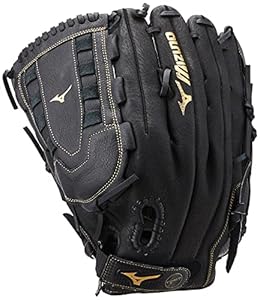
If you’ve shopped budget gloves before, you already know Mizuno. The Premier line earns its reputation here. The 13-inch H-web is built specifically for infield play and gives you a deeper pocket than the size suggests you’d need, which matters more in slowpitch than fastpitch because you’re tracking arcing flyballs, not line drives.
Palm padding is solid for the price. A clean catch in the pocket won’t sting, though an off-center catch on the palm’s edge will let you know about it. The build uses full-grain leather on the palm with a pigskin outer layer. Pigskin isn’t as durable long-term as rawhide or steerhide, but at this price point it’s a fair trade.
There’s also a Tartan U-web option if you want more coverage for pitching, though visibility through the web matters less in slowpitch since hitters aren’t reacting to a hidden ball the way they would against a faster pitch.
Pros: Best price-to-quality ratio on this list. Deep pocket for the size. Comfortable, snug fit.
Cons: Pigskin less durable than rawhide or steerhide. Lateral impacts sting more than centered catches.
Best for: Budget-conscious infielders who still want real leather.
6. EASTON EL JEFE Slowpitch Softball Glove (Best Balanced Pick)
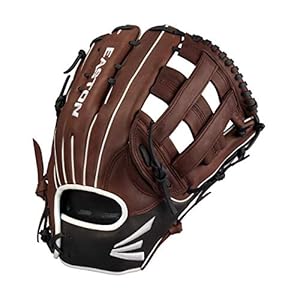
Most glove makers just shrink a baseball pattern down and call it a softball glove. Easton actually built a slowpitch-specific pocket here, and it shows. The depth makes tracking down flyballs noticeably easier than on a repurposed baseball design.
The diamond steer leather isn’t quite Rawlings or Wilson quality, but you’re paying roughly a third of the price of the Wilson A2000, so that’s an easy trade. Break-in is faster than most full-grain leather gloves, and you get real web variety: trapeze, H-web, dual-bar single post, and dual-bar H-web, across a 12.5″ to 14″ size range.
The one place this glove falls short is palm padding. I used it once as a fastpitch infield glove and regretted it. The padding is tuned for a slower ball, and a hard-hit fastpitch throw will sting. Keep it in slowpitch where it belongs and you won’t have that problem.
Details:
- Glove Type: Infielder/ Outfielder/ Pitcher
- Size: 12.5 – 14 inches
- Material: Diamond Steer Leather
- Throw: Right hand/ Left hand
Pros: Dedicated slowpitch pocket design. Wide web and size variety. Faster break-in than comparable full-grain gloves.
Cons: Thin palm padding, not suited to fastpitch. Leather quality below Rawlings/Wilson tier.
Best for: Players who want web and size options without paying premium prices.
7. Wilson A2000 SuperSkin Slowpitch Softball Glove (Best for Lefties)

This is the most expensive glove on the list, and the leather tells you why. Pro Stock leather is Wilson’s signature US steerhide: thicker, stronger, and more durable than anything else here, matched only by Rawlings’ full-grain construction.
Padding is excellent throughout the lining, laces, and pocket, so even an off-pocket catch won’t rattle your hand. The Velcro wrist closure gives you real adjustment range compared to the pull-strap on most of this list, and the SuperSkin upper cuts weight versus Wilson’s standard steerhide builds without giving up durability.
The dealbreaker for a lot of buyers: it’s left-hand throw only, in just two sizes (13″ and 13.5″). If you’re a right-handed thrower, this glove isn’t for you regardless of how good the leather is. Wilson has expanded A2000 softball options over the years, so it’s worth confirming current sizing before you buy.
Details:
- Glove Type: Outfield/ Infield
- Size: 13 – 13.5 inches
- Material: Pro Stock Leather (US Steerhide)
- Throw: Left hand
Pros: Best-in-class leather and padding. Velcro closure for precise fit. SuperSkin cuts weight without cutting durability.
Cons: Left-hand throw only. Only two sizes available. Highest price on this list.
Best for: Left-handed outfielders and competitive players who want the best glove money buys.
How to Choose the Best Slowpitch Softball Glove
Shopping for a glove means wading through a lot of sponsored listings and vague marketing copy. Here’s what actually separates a good slowpitch glove from a bad one.
Pocket Depth
Pocket depth is the single biggest difference between fastpitch and slowpitch softball gloves. Slowpitch gloves need deeper pockets because you’re tracking constant flyballs off a bigger, slower-moving ball, not reacting to a line drive in half a second. Every glove on this list is a dedicated slowpitch build, so pocket depth is already handled. If you shop outside this list, check depth before anything else.
Web Pattern
Web pattern affects both pocket depth and visibility:
- H-Web – Versatile, medium-deep pocket, works for infield or outfield. Good all-around default.
- Trapeze Web – Deepest pocket of the common patterns, built for outfielders tracking flyballs.
- Basket Web – Structural support with a moderate pocket, common on budget gloves.
- Single-Post Web – More open, better visibility, less common in dedicated slowpitch builds.
Unlike baseball, visibility through the web matters less in slowpitch, since hitters aren’t reacting to a hidden ball at high speed. Prioritize pocket depth over web style unless you have a strong personal preference.
Focus on Build Quality
Slowpitch is more of a casual game compared to fastpitch, but that doesn’t mean you have to settle for a glove that’ll die in a couple of months. Always pay close attention to the build quality of the glove. Leather is the best material you can ask for, but there are variations to keep in mind.
If you want a powerhouse of a glove, go for steerhide. The Pro Stock Leather of the A2000 and the Rawlings Heart of the Hide are examples of steerhide’s potential, and steerhide leather is expensive. For people who want to cut down on expenses, look into rawhide/cowhide. The Rawlings Player Preferred is a good example. Finally, if you want to have some Sunday chill and don’t want to go beyond $30 to $40, a synthetic leather or pleather glove will work just fine.
Don’t Lose Sight of Size/Position Flexibility
A lot of players set their crosshairs on a particular glove only to end up disappointed, because it’s either only a left-hand throw, or it doesn’t come in the design that fits the position they play. Most adult slowpitch players land in the 12″ to 13″ range for infield and 13″ to 14″ for outfield, since the larger pocket handles flyballs better than a tight infield build. Youth players typically fit 11.5″ to 12.5″.
The glove variation doesn’t matter as much in slow-pitch as it does in baseball, but having a particular webbing style and size that fits perfectly will still improve your gameplay. Also confirm hand orientation before you buy. Right-hand throw (glove worn on the left hand) is far more common in stock, and left-hand throw options like the Wilson A2000 sell out fast.
Easy to Break-in
This only applies to you if you’re worried about breaking in the glove. If you’re not, skip past it. A glove that’s 70-90% factory broken in saves you weeks of pocket-pounding, but that convenience sometimes comes at the cost of long-term structural quality. If you don’t mind the work, a stiffer glove that breaks in the hard way, through actual reps, usually lasts longer.
For a full walkthrough, my glove break-in guide covers techniques that apply to slowpitch gloves just as well, even though it was written with fastpitch in mind.
Budget
If you’re trying to stay under $100 total for a glove and other gear, my softball gloves under $100 roundup has more options in that exact price bracket.
Related Questions
It’s okay to get a bit confused during a slowpitch glove hunt. Here are a few common questions that’ll help you see things clearly.
What is the best glove for slowpitch softball?
It depends on your budget and how competitive your league is. For value without sacrificing durability, go with the Rawlings Player Preferred. For tournament-level play, the Wilson A2000 SuperSkin and Rawlings Heart of the Hide are the two gloves I’d trust in a championship game.
How big should a slow-pitch softball glove be?
A slow-pitch ball is 12 inches. So, the glove you need has to be big enough to catch the ball. Most adult players can work with 12 to 13-inch gloves. However, if you’re looking for a youth softball glove, I’d recommend sticking to 11.5-12.5 inches.
Can I use a baseball glove for slowpitch softball?
For casual Saturday night fun or Sunday evening hoorah, be my guest. As long as you want to have fun, you can use your baseball glove for slowpitch softball. However, if performance is of any concern to you, getting the best slowpitch softball glove is going to be a much better option.
What is the best brand of softball gloves?
A lot of brands have made their name in the world of softball gloves. I’m just going to name a few here- Rawlings, Wilson, Nokona, Mizuno, Miken, Easton. Each brand has something unique to offer. So, it’s difficult to label one particular brand as the “best brand”. However, statistically speaking, Rawlings has the upper hand over all the other brands when it comes to professional preference.
What’s the difference between fastpitch and slowpitch softball gloves?
Pocket depth is the main difference. Slowpitch gloves run deeper to handle the bigger, slower-arcing ball, while fastpitch gloves prioritize a quicker transfer for faster reaction times.
Do I need a different glove for pitching in slowpitch softball?
Not necessarily. Most dedicated slowpitch gloves work fine for pitchers. If you want gear built specifically for that position, a dedicated pitching glove can offer extra ball-hiding coverage.
Make Slowpitch Your Bitch
Slowpitch softball keeps growing every year, and more leagues means more competition for that flyball in the gap. If you want to get into the action, you need the best slowpitch softball glove.
You can always treat slow-pitch as a source of weekend entertainment too. Actually, that’s what most people do. Still, getting a top-notch glove will only add more fun and comfort to the process.
If you’re on the more-fun and less-competition end, I’d recommend the Rawlings Player Preferred. It’s an excellent all-around glove that won’t take a swipe at your wallet, and you’ll get more than satisfactory performance.
If you want a softball glove capable enough to handle the pressure of the major leagues, try the Wilson A2000 SuperSkin or the Rawlings Heart of the Hide. The Wilson is limited in size and hand orientation, but the Heart of the Hide gives right-handed players the same tournament-grade build.
So, I hope this article has helped you know, identify, and assess top-tier slow-pitch gloves. Now go out there and play some ball. Cheers!

With 4 years of Division II experience, a .272 career batting average, .410 on-base percentage, and 7 home runs, I’m now in my fifth season. I’ve played baseball since age 3, alongside future MLB Draft picks, and I aim to pursue a career in baseball professionally, be it playing, coaching, or scouting.