
Infielders get most of the highlight reels, but one bad read in the outfield can sink your whole game. As the outfielder, it’s on you to run down the ball and save the big hits. Miss one, and the other team is rounding the bases while your dugout groans.
Even the best outfielders need the right glove on their hand. You can get away with borrowing an infield or a pitcher’s glove for a casual catch, but in a real game it’ll cost you. The gap between the two positions comes down to length, pocket depth, and web style, and I break all of that down in my infield vs outfield baseball gloves guide if you want the full picture.
So I put together this list of the best outfield gloves using three things: my own time in the field, hours of research, and conversations with coaches and pro outfielders I’ve worked with. I did the digging so you don’t have to. If you want to make it in this game, remember this line I live by: a run saved is the pressure created (yours truly).
The right outfield glove really can make or break a game. I’ve watched plenty of wins and losses come down to a single run. If you’re determined to stop that one extra run and be the hero, keep reading.
- Top 6 Best Outfield Gloves Baseball
- 1. Rawlings Heart of the Hide Baseball Glove Series (Premium Outfield Glove)
- 2. Wilson A2000 Baseball Glove SuperSkin (Premium Alternative)
- 3. Rawlings Player Preferred Outfielders Glove (Budget Outfielder’s Glove)
- 4. Mizuno MVP Prime Baseball Outfielder’s Glove (Female Outfielder’s Glove)
- 5. Rawlings Select PRO-LITE Glove Series (Youth Outfielder’s Glove)
- 6. Rawlings R9 Outfield Glove (Mid-tier Outfielder’s Glove)
- Things To Consider Before Buying The Best Outfielders Glove
- Frequently Answered Questions
- With All Said and Done
Top 6 Best Outfield Gloves Baseball
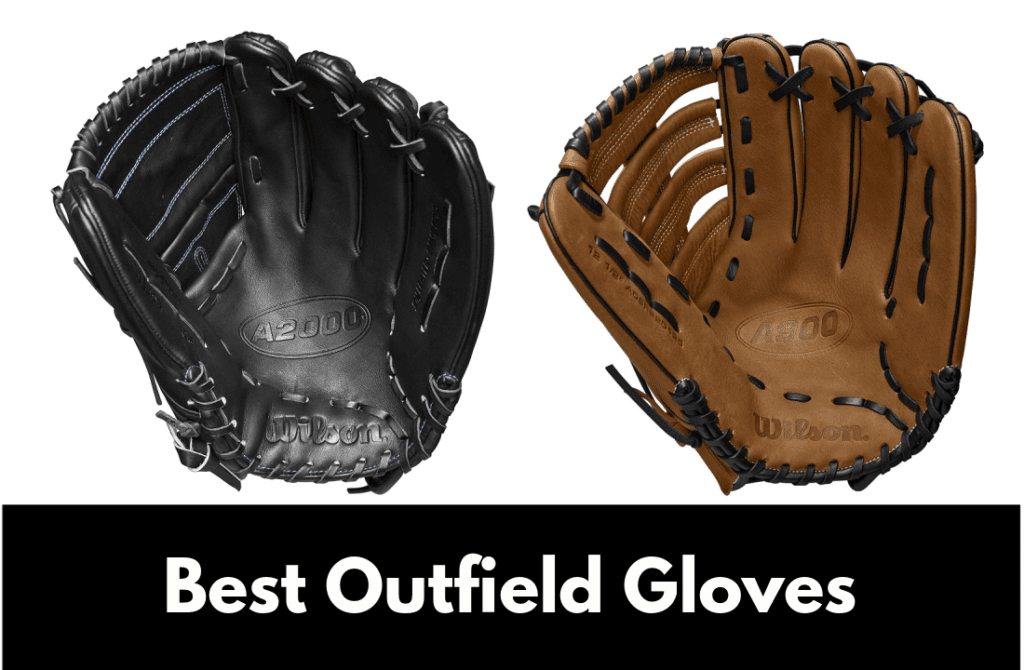
I’ve gotten my hands on a lot of outfield gloves over the years, and only a handful earned a spot on this list. Every glove below has a clear job to do, whether you’re after a premium MLB-style pattern or a solid budget pick, you’ll find something here.
1. Rawlings Heart of the Hide Baseball Glove Series (Premium Outfield Glove)
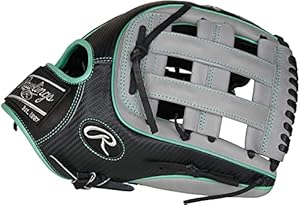
Time to call the first contender into the battlefield. It’s lean, it’s mean, it’s tough. It’s the Rawlings Heart of the Hide.
Theatrics aside, the Rawlings Heart of the Hide (or HOH, as most people call it) is a genuine MLB-level outfielder’s glove.
When I say it’s an MLB outfield glove, I mean the HOH has what it takes to sit at the top of the mountain. It’s in the same big-boy league as the Wilson A2000.
A lot of pros I’ve talked to prefer Rawlings over Wilson, so there’s that. The Rawlings HOH is built from premium steer hide leather.
Rawlings has claimed for years that only around 5% of steer hides make it through their rigorous testing to become an HOH.
I can’t independently verify that exact number, and I doubt anyone outside Rawlings can. But every HOH I’ve tested backs up the reputation, and every player I know who wears one has nothing but praise for it.
It’s consistently rated as one of the best outfield gloves out there, so there’s clearly some truth behind the reputation.
What sets the HOH apart from other high-end outfielder’s gloves is the cowhide palm lining. While most of the glove is steer hide, the palm area uses a deer-tanned cowhide instead.
That extra layer makes the palm and thumb area noticeably more comfortable, so a hard-hit fly ball doesn’t sting on impact no matter how high it’s coming from. The HOH also breaks in faster than you’d expect from a premium glove.
It’s still a stiff glove out of the box since it’s built tough, but it comes with roughly 60% factory break-in already done, which takes the edge off.
Overall, the HOH is an excellent outfield glove. If you want to go even higher-end, look at the Rawlings Pro Preferred.
The Pro Preferred runs about $100 more than the HOH, and there’s a good reason for it. The HOH is popular with high school ballplayers, while the Pro Preferred is the pattern you’ll see more often at the MLB level. I compared the two in detail in my Rawlings Heart of the Hide vs Pro Preferred breakdown if you’re trying to pick between them.
Earlier I told you the HOH is MLB-tier, and I wasn’t lying. You can take the HOH into an MLB game, plenty of pros already have, but the Pro Preferred still has a slight edge.
Most players I coach stick with the Heart of the Hide instead, since that extra $100 stings. If you’ve got the skills, you can absolutely become an incredible outfielder with the HOH on your hand. Whether the upgrade to Pro Preferred is worth it for you comes down to your budget and how serious you are about the position.
2. Wilson A2000 Baseball Glove SuperSkin (Premium Alternative)
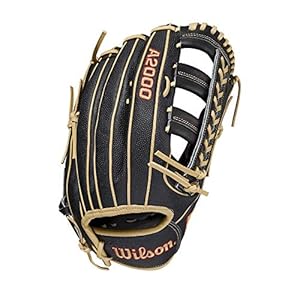
Wilson gloves are always in demand, and if you’ve been around this game for more than a couple of months, you’ve heard the name. I’ve always been torn between Wilson and Rawlings, honestly.
For this best outfield gloves list, I kept the Wilson A2000 SuperSkin in the second spot. It easily could have taken the top position instead.
Both the Wilson A2000 and A2K can go toe to toe with the Heart of the Hide and Pro Preferred. I just personally like how Rawlings feels, that’s all. If you want to see exactly how the A2000 stacks up against the pricier A2K, I compared the two directly in my Wilson A2000 vs A2K guide.
The 12.75 inch version of this outfielder’s glove uses a dual-post H-web, which gives you a deep pocket plus a clear look at the ball as it comes in.
If 12.75 inches isn’t your size, Wilson also makes this pattern in 12.5 and 13 inch, so you’ve got options.
If you’ve ever owned an A2000, you already know how good the leather feels. The Pro Stock leather here is premium US steer hide, and it’s second to none.
The version I’m recommending here uses Wilson’s SuperSkin construction. Yes, “SuperSkin” is a marketing term, but there are real benefits behind it.
The SuperSkin material is noticeably lighter than standard Pro Stock leather and more durable to boot, so you get both quick movement and durability, the two things you actually want in an outfield glove.
You also get Drilex wrist lining to manage heat and sweat. Playing under the summer sun will get your hands sweaty fast, and a slippery glove is the last thing you want mid-play.
The Drilex lining keeps that in check. You also get flat finger binding on the A2000. Watch seasoned MLB outfielders and you’ll notice a lot of them play with a finger or two outside the glove, and this construction lets you do the same.
The biggest downside of the Wilson A2000 outfield glove is break-in time. This isn’t a glove you can quickly break in as a beginner. The construction makes it tough to soften up if you don’t already know the right techniques.
If you don’t have much experience breaking in a glove, it can turn into a mess, and you could end up damaging it. Budget real time (or professional help) before game day.
That tough break-in can make it seem like a heavy glove, but it isn’t. Between the Pro Stock leather and the SuperSkin construction, it stays lightweight and comfortable enough for the outfield once it’s broken in.
It doesn’t matter if you throw right or left, the A2000 series is available in both hand variations. If you’re picky about color, you’ve also got a few good options to choose from.
Aside from the break-in time, the A2000 also costs top dollar, and the price can feel steep at first glance.
But the comfort and performance you get out of this glove are genuinely excellent. I’d call it worth the money. It’s a pro-tier, MLB-tier glove through and through.
The A2000 outfield glove is built for serious ballplayers chasing their A-game, not for people who just want casual weekend fun.
Hall of Famer Kirby Puckett coached with this series during his tenure with the Minnesota Twins, and it’s stuck around as an outfielder favorite ever since.
Outfielders tend to love it for the added length and the reinforced bar across the web, which gives you extra stability on tough catches.
It’s one of the best outfield baseball gloves out there. You just need two things: the budget to afford it and the patience to break it in.
3. Rawlings Player Preferred Outfielders Glove (Budget Outfielder’s Glove)

The two Rawlings gloves above are both high-end, pro-tier gloves meant for serious ballplayers. The Player Preferred is a completely different animal.
It’s my pick for budget hunters. Don’t let the number 3 spot fool you into raising your expectations though, this isn’t a glove you’d bring to a competitive league.
But if you want something for casual baseball or softball, or you need a training mitt, you’re covered.
This Rawlings outfielder’s glove comes in two sizes, 12.5 and 13 inch, so you won’t find the 12.75 inch version here.
Most players consider 12.75 inches the most balanced length for outfield, but 12.5 and 13 inch both work fine, especially for casual play.
You get a choice between an H-web and a single post I-web on this glove. Both patterns work well for outfielders since neither blocks your view of the ball. If you want to see exactly how these two webbing styles differ, I put together a full I-web vs H-web comparison.
Either way your vision stays clear on incoming fly balls, so it really comes down to personal webbing preference.
Most gloves under $80 are made of weak vinyl or plastic, I’m speaking from experience testing plenty of them. The Rawlings Player Preferred is the exception.
It’s built with real cowhide leather. It’s not a premium cowhide or steer hide, but it’s still decent quality for the price.
The palm padding is solid too. It handles the impact of hard throws without any trouble.
Combine the cowhide shell with that palm padding, and this glove is a lot sturdier than its price tag suggests.
Simple math: no plastic, decent leather, under $80. That’s a win in my book.
You will feel a real difference between this and the A2000 or HOH, but that’s expected. Those gloves run $300 to $350, so there’s a big price gap to account for.
It also uses simple Velcro adjustment straps instead of laces. Lace adjustment is second nature for hardcore players who know their gloves, but Velcro is a real time saver for casual players.
The point is, the Player Preferred is a good outfield glove. It can’t compete with the premium gloves on this list, but it’s better than most other budget outfield gloves out there.
If you want a casual training mitt, or a backup glove to keep your premium one protected, the Rawlings Player Preferred is my recommendation.
If you’re working with a tight budget, this is the best outfield glove you can get your hands on.
4. Mizuno MVP Prime Baseball Outfielder’s Glove (Female Outfielder’s Glove)

Up to this point I’ve mostly been talking to the guys. Time to give some love to the women in this game. I’ve watched a lot of my trainees try different gloves, and the Mizuno MVP Prime comes out on top more than anything else.
The MVP Prime is technically unisex, but I think it’s an especially strong pick for female players since Mizuno has spent years building gear with women in mind.
You might be wondering why I’m recommending the MVP Prime over the pricier Mizuno Pro Select. Simple: this glove packs a ton of useful features at a very reasonable price. The value you get for around $100 is hard to beat.
The bio soft leather is the standout feature here. I love how soft this material feels right out of the box, it gives you a smooth, comfortable surface from day one.
That softness also means a much easier break-in compared to the A2000, HOH, or other high-end outfield gloves.
The MVP Prime is available in both left and right hand throw. The color options, black cherry and black, aren’t going to turn heads, but they’re not bad either.
The embroidered logo on the outside gives it a clean, professional look on the field, even if the color choices are basic.
That combination of look and price makes it a favorite among younger players working with a tighter budget.
This glove is also impressively flexible, which makes catching the ball a lot more comfortable.
The plus grip thumb technology adds a padded thumb slot that helps you handle a hard-hit ball without your hand taking the brunt of it, and none of these features push the price out of reach.
It still falls short of true pro-tier outfield gloves though. If you can spend more, the Mizuno Pro Select is the better call.
For high school ball or a casual weekend game, this glove does the trick. I’ve watched players under my coaching pull off some genuinely great catches with it.
The price to performance ratio is what earns the Mizuno MVP Prime its spot as the best outfield glove for high school baseball. Just don’t expect pro-level performance from a glove built for casual and mid-tier players.
5. Rawlings Select PRO-LITE Glove Series (Youth Outfielder’s Glove)
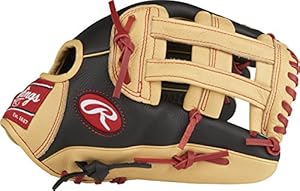
If you’ve got a rising tee-ball star at home, you don’t need to spend a fortune on their first real glove unless they’re already playing high school ball or above.
The Rawlings Select PRO-LITE hits that low price, great value combination. It’s designed specifically for younger players.
Don’t let the 12 or 12.5 inch sizing fool you into thinking it fits an adult hand. This one is sized for players roughly age 4 to 12. If you’re not sure what size your kid needs, check out our full glove sizing guide before you buy.
It’s also one of the cheaper gloves on this list, priced under $80.
Sure, you can find $15 to $50 youth gloves out there, so this can look pricey by comparison, but those cheaper options are usually a step down in quality.
The Select PRO-LITE is a clear step up from the super cheap youth outfielder’s gloves. Take another Rawlings youth glove, the Sure Catch, as a comparison.
The Sure Catch runs under $40, but the PRO-LITE is worth the extra $40 for the jump in quality.
Kids also tend to love this one as a gift, and it’s not just a feel-good line. The design variations in the Select PRO-LITE are modeled after real MLB player gloves.
You get the Bryce Harper, Aaron Judge, Corey Seager, Kris Bryant, Manny Machado, and Mike Trout versions, plus a general Pro Pattern option.
If you know your baseball, you probably already guessed that only the Bryce Harper and Mike Trout models are actually built as outfielder’s gloves. The rest are patterned for infield and utility positions.
If you want your kids to learn the game and get familiar with the players who shape it, these gloves help with that too. Who knows, maybe they’ll grow up to be the next Bryce Harper, or even better.
On the technical side, the Bryce Harper model is a 12 inch H-web glove with soft leather and comfortable padding that’s easy to open and close.
The Mike Trout model runs 12.25 inches with a Trapeze web instead. Both models hold up to the same quality standard. Overall, the Rawlings Select PRO-LITE is still my pick for the best youth outfielder’s glove.
You’ll also find the Rawlings Sure Catch, Wilson A360, Franklin Field Master, and others in this price range, but the PRO-LITE outperforms all of them in fit, feel, and durability.
6. Rawlings R9 Outfield Glove (Mid-tier Outfielder’s Glove)
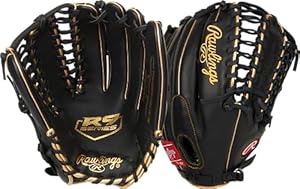
I started this list with Rawlings, and I’m ending it with Rawlings too. I almost left the R9 off this list since I already felt good about how comprehensive it was.
So why include it? The answer’s simple: the R9 is the best mid-range outfield glove you can find. The Heart of the Hide, A2000, Mizuno Pro, Rawlings Pro Preferred, and other high-end gloves are all fantastic, but they’re also expensive.
Cheap gloves tend to do more harm than good, so what’s the middle ground? The Rawlings R9. For starters, it uses a soft, durable all-leather shell.
It’s not in the same league as the premium leather gloves above, but it does a great job. The flexible construction helps you catch the ball more comfortably.
The padded thumb loop, finger back liners, and reinforced palm absorb hard throws well too, so your hand won’t take a beating during a long game.
The R9 also comes with about 80% factory break-in right out of the box, so you don’t need any special techniques to get it game ready.
One fun extra: you can get your name custom engraved on the outside of this glove.
Walking onto the field with your name on your glove is a small touch, sure, but it makes you feel like a pro out there.
This outfield glove works well for players roughly 8 to 15 and up. It splits the difference between a youth glove and a full adult glove.
In other words, it’s also a solid option for adults with smaller hands. It comes in both right and left hand variations too.
So it doesn’t matter which hand you throw with, this glove is an excellent choice if you want decent quality without stretching your budget.
Things To Consider Before Buying The Best Outfielders Glove
Not every outfielder’s glove is cut from the same cloth. Some clearly have an edge over others. So what actually separates the best outfield gloves from the rest? Every glove on this list got screened against the same key features. Let me walk you through them.
Easy To Open & Close (Comfort = Better Performance)
Sturdy, durable leather gives your glove long-lasting endurance, but none of that matters if it doesn’t feel comfortable in your hand. Before buying, always check the flexibility.
A glove that opens and closes easily is going to improve your performance on the field, plain and simple.
Every glove on this list is flexible and easy to break in, except the A2000 and HOH. Those two are professional-tier gloves, so once you put in the work to break them in, the comfort and flexibility are outstanding.
Get the Right Glove Length
An outfielder doesn’t wear the same glove as an infielder. If you want to see what a dedicated infield pattern looks like, check out my picks for the best infield gloves. Outfield gloves run bigger, typically somewhere in the 12 to 13 inch range.
Since outfielders need a quick reaction, both catching the ball and getting it back to the infield fast, a longer glove gives you more reach and helps you close the distance on tough plays.
- If you are from 11-13 or older than 14, the 12-12.75-inches size will be perfect for you.
- For 8-10, outfielder gloves with the size of 10-12 inches will be enough.
- Or if you are under 7, then you should choose something from 9-10.5 inches.
If you’re an adult asking me for one length, I’d say go with 12.75 inch. It gives you more reach without sacrificing flexibility. If you want a glove that also handles quick groundball scoops well, go with 12.5 inch instead.
For a full breakdown of sizing by age and position, check out our complete baseball glove sizing guide.
Materials (How Long Will the Glove Last?)
Baseball gloves are usually built from one of three materials.
- Leather
- Synthetic
- Mesh
Leather wins on durability, hands down. Almost every professional player sticks with a leather glove because it delivers comfort, impact resistance, and flexibility all in one package.
Premium leather does cost more though. Synthetic gives you a similar look and a lighter feel at a lower price.
The quality of synthetic just isn’t the same as leather long term. Mesh-backed gloves, meanwhile, are known for flexibility and a lightweight feel.
People do compare mesh-backed gloves with leather shell gloves, but the truth is leather still outlasts both mesh and synthetic over time, and it’s a more eco-friendly material to boot.
Adjustable Strap (Easy Adjustments)
An adjustable strap lets you tighten or loosen the glove based on your hand size.
Most manufacturers actually skip this feature altogether.
Honestly, it’s not a dealbreaker. If your glove already fits your hand well, you don’t need a strap in the first place.
Straps can also feel uncomfortable in hot weather, so if you pick the right size to begin with, this feature matters a lot less.
That said, straps come in handy if a glove runs a little loose or your hands grow into a new size over time. The strap adjustment gives you a bit more flexibility when you need it.
Pocket Depth & Comfort
Pay attention to this one. Pocket depth and comfort aren’t something to skip past. A good outfield glove needs to protect your hand from the impact of a hard-hit ball, and that starts with a comfortable, deep pocket.
A deeper pocket also gives you more room to track down balls that are tough to reach. Every glove on this list comes with a soft, roomy pocket built to absorb impact. If you want to understand how pocket and web shape affect this, I broke down the difference between a flare and a roll baseball glove in a separate guide.
Easy To Break-In
Breaking in a glove takes time and effort. If you want that smooth, game-ready feel, you have to put in the work. Some gloves ship with 80% or more factory break-in already done.
Others, like the Wilson A2000 or Rawlings Heart of the Hide, need real time and manual effort before they’re ready for a game. I put together a full walkthrough on how to break in a baseball glove if you want step-by-step methods.
If you don’t already know how to break in a glove properly, go with a softer leather option to begin with. It cuts your break-in time down significantly.
Left hand or Right Hand
Every player has a natural hand preference, and a good outfielder’s glove should come in both left and right hand throw options.
You don’t get to choose your dominant hand, so make sure the glove you pick matches it.
If you throw right-handed, you need a glove for your left hand. If you throw left-handed, you need a right hand glove. Double check this before you buy, it’s an easy mistake to make.
Budget
You don’t need to spend a fortune on a glove, so look for one that covers most of your needs at a fair price.
That said, I wouldn’t recommend going all the way to the bottom of the price range just to save a few bucks. Cheap gloves tend to cost you more in the long run.
Outfield gloves generally run from about $20 to $500. Yes, luxury gloves priced in the thousands exist too, you read that right.
Those are novelty items built by fashion houses like Hermes, not something even MLB players actually use. For everyone else, the standard range is $20 to $500.
A $20 glove won’t hold up anywhere near as well as a $500 one, so aim for the sweet spot. A balanced price-to-performance ratio is what actually gets you results.
Brands (Narrowing Down Your Search)
There are well over a hundred baseball glove manufacturers out there. Sticking with a well-known brand gets you more comfort, better materials, and more consistent quality, since big brands have a reputation to protect. I ranked the top names in a separate best baseball glove brands guide if you want a deeper comparison.
You’ll be hard pressed to find a low-quality glove from a trusted brand. Some of the brands that consistently deliver high-quality gloves are listed below.
- Wilson (Top of the game)
- Rawlings (Top of the Game)
- Easton
- Mizuno (Top of the Game)
- Marucci
- All-star
- Akadema
- Louisville Slugger
Support and Warranty
A solid warranty is a good sign. It tells you the manufacturer actually stands behind the glove’s performance and durability.
Every glove on this list comes with a 100 day love-your-glove guarantee. If you’re not happy with it, you can request an exchange or a refund.
Frequently Answered Questions
I get asked a lot of the same questions by outfielders just getting into the position. Here are the ones that come up most.
What Gloves Do MLB Outfielders Use?
Everyone wants a piece of professional action, and understandably so. If you want to go pro, it’s better to know what they do and emulate them to give yourself the edge, right?
Anyways, there isn’t any particular glove that pros choose, but they do have their preferred brands. More than 57% of baseball athletes lean towards Rawlings whereas Wilson gets around 26% of the sunlight. Plus, around 70% of outfielders sport an H-web glove.
What Is the Best Outfielder’s Glove?
It’s a tough question to answer since it comes down to personal preference, but from where I sit, it’s either the Rawlings Heart of the Hide or the Wilson A2000 SuperSkin. Both are amazing outfielder’s gloves that deliver top-shelf performance. The price is a bit high, but it’s worth it.
What Size Glove Do MLB Outfielders Use?
Most MLB outfielders go for either 12.75 inch or 12.5 inch gloves, with only a few choosing 12.25 inch. If you want more reach, try a 12.75 inch outfielder’s glove. If you want a bit more speed, go with 12.5 inch instead.
What Is the Most Used Outfielder’s Glove Brand In MLB?
Rawlings is the most used outfield glove brand in MLB. Wilson, All-Star, Mizuno, and others all get a share of the field, but Rawlings sits on top of the mountain.
Are Outfield Gloves Necessary to Play Left/Center/Right Field?
Short answer: yes, absolutely. If you try to play right, left, or center field with an infielder glove, you’ll be in trouble. There’s a small chance you pull it off, but the shorter reach of an infielder’s glove will usually get in your way. It’s better to be safe and get a real outfield glove.
With All Said and Done
Let’s get straight to business. If you want an outfield glove that lives up to your expectations for years to come, the Rawlings Heart of the Hide or Wilson A2000 SuperSkin are the ones to bet on.
If you’re on a tighter budget but still want a glove built like the HOH or A2000, go with the Rawlings R9. Remember what I said earlier about winning a game?
Save a run, create pressure, win. That’s how it goes. You can only pull that off if you stop the extra runs as an outfielder. The best outfield gloves for baseball can be the difference between a win and a loss if you let that home run slip. Pair the right glove with your fielding skills, and you’ve got yourself a winning combination. Now get out there and show everyone what you’ve got. Cheers.

With 4 years of Division II experience, a .272 career batting average, .410 on-base percentage, and 7 home runs, I’m now in my fifth season. I’ve played baseball since age 3, alongside future MLB Draft picks, and I aim to pursue a career in baseball professionally, be it playing, coaching, or scouting.