
Between a uniform, helmet, bats, glove, cleats, and a stack of balls, there’s a lot of gear to haul to and from the field every week. A good baseball bag is what keeps all of that organized instead of rattling around loose in your trunk.
No matter how many bats or how much gear you’re carrying, the right bag keeps everything in its place. The tricky part is that there are dozens of baseball equipment bags on the market, and picking the right one isn’t always obvious.
I’ve spent years testing bat bags, backpacks, and wheeled duffels for this site, and in this guide I’m covering the best all-around baseball equipment bags for 2026. This one’s focused on general-purpose bags for everyday practice, travel ball, and games.
If you specifically need a heavy-duty rolling bag for a full team load, my wheeled baseball bag guide digs deeper into that category. And if you’re a catcher who needs room for a chest protector, leg guards, and a helmet on top of your bat, check out my best catcher’s bag picks instead.
If you’re in a hurry and just want to know what the best baseball bag is, then I’d recommend the Boombah Rolling Superpack as the best all-around pick. It’s the bag I keep coming back to, and I’ve written a full standalone review of the Boombah Superpack if you want the deep dive.
5 Best Baseball Equipment Bags Reviewed
1. Boombah Rolling Superpack
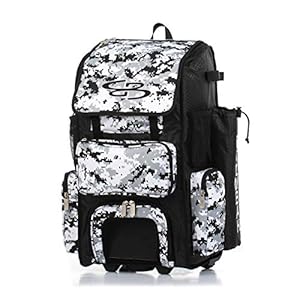
The Boombah Rolling Superpack is the bag I recommend most often when someone asks me what to buy. It’s built from rip-stop nylon, which is a lot tougher than it sounds, and it holds up to years of being tossed in and out of a car trunk.
You get two bat compartments on the outside, each holding two bats, so four bats total. The inside of each sleeve is padded to keep your barrel and handle from getting scuffed up against the zipper or the frame.
It’s a genuinely large bag, so beyond bats you can fit a glove, cleats, a change of clothes, and your phone and wallet without anything feeling cramped. There’s also a separate shoe compartment, which keeps your cleats from stinking up everything else in the bag. If you ever need to carry catcher’s gear in it too, I’ve got a whole post on fitting catcher’s gear in a Boombah bag.
This bag rolls on heavy-duty wheels with a telescopic handle, so you’re not stuck carrying it on your shoulder when it’s fully loaded. The reinforced J-hooks let you hang it right on the dugout fence, which sounds minor until you’ve spent a season without one.
Despite the size, it’s lighter than most competing bags in this category because of the nylon build. Boombah also sells it in a long list of colors, so matching your team’s look isn’t a problem.
2. DeMarini Momentum Wheeled Bag

DeMarini is a name every serious player already knows, and the Momentum is their answer for anyone who needs to carry a heavier gear load. It’s built big, with enough room for four bats plus the extra bulk of a helmet, cleats, and a full set of clothes.
The four bat sleeves are padded on the inside so your bats aren’t knocking against each other on the drive to the field. One detail I like is the two integrated J-hooks instead of the usual single hook, which keeps the bag steadier when it’s hanging off the fence.
The abrasion-resistant, water-resistant shell holds up well over a long season, and it’s not as heavy to lug around as its size would suggest. You get both a shoulder strap and inline wheels, so you can carry it the way that suits you that day.
If your position means you’re regularly hauling full catching gear rather than just bats and a glove, it’s worth comparing this one against the picks in my catcher’s bag guide, since a few of those are built specifically around that extra bulk.
3. DeMarini Voodoo Rebirth Backpack
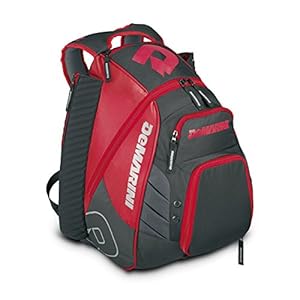
If you’d rather wear your gear than roll it, the DeMarini Voodoo Rebirth is my favorite backpack in this lineup. It’s made from a high-end base nylon that’s held up well in every season I’ve thrown at it, rain included.
The composite-treated base is water-resistant, so a wet parking lot or a surprise sprinkler isn’t going to soak through to your gear. Inside, there’s a large main compartment that comfortably fits a helmet, glove, and the rest of your everyday equipment.
I like that the shoe compartment is vented and fully separated from the main storage, so your cleats don’t end up sharing space with your clean clothes. On each side you’ll find a barrel-lock neoprene bat sleeve, good for two bats total.
The padded shoulder straps make it comfortable even loaded up, and there’s a fence hook built in for the dugout. It also comes in a wide range of colors, so there’s no shortage of ways to match your team gear.
4. Easton Octane Bat and Equipment Wheeled Bag

Skip this one if you’re just carrying a bat and a glove. But if you’re a coach or a player who travels with a full set of gear, the Easton Octane is built exactly for that job. Easton’s official specs list it at roughly 36 inches long by 13 inches wide by 12 inches tall, with a bat compartment that holds up to five bats.
The shell is heavy-duty polyester with a hard-molded, reinforced base, so it can take the weight of a full equipment load without sagging. The main compartment has an oversized opening, which makes it a lot easier to dig gear out of than bags with a narrow zipper mouth.
Inside, there are separate vented pockets for a helmet, glove, and shin or chest guards, which helps cut down on the locker-room smell after a long weekend tournament. There’s also a small insulated pocket on the side that keeps a water bottle cold.
Wide-set, rugged wheels handle rocky parking lots and turf alike, since you’re not meant to carry this one on your shoulder when it’s loaded up. Easton lists it around $80 MSRP, which is fair for what it holds, though it does sit a step above a basic bat bag in price. This one’s really built for coaches and players who need to move a lot of equipment at once.
5. Athletico Baseball Bat Bag (Best Youth Bat Bag)

If you’re shopping for a younger player, the Athletico is the bag I point parents toward. It’s built from 600 Denier Oxford fabric and polyester, which holds up better than you’d expect at this price point.
Athletico backs it with a two-year money-back guarantee, so if it falls apart early, you’re not stuck eating the cost. The main compartment is roomy enough for a batting helmet, glove, uniform, and the rest of a youth player’s gear, with two side bat holders for a pair of bats.
There’s a ventilated shoe compartment plus smaller pockets for keys, a wallet, and a phone, and an external bungee for batting gloves or a cap. The padded, adjustable shoulder straps make it comfortable for a smaller player to carry on their own.
It comes in eight colors and works equally well for baseball or softball, boy or girl. For a youth bat bag that won’t break the bank, this is the one I’d buy.
What Type of Baseball Bag Do You Need
There are a few distinct styles of baseball bag on the market, and not every style fits every player. Here’s a quick breakdown so you can figure out which one matches how you actually play.
Handheld Baseball Bag
These are your entry-level bags. You get one big zippered compartment for gear, carried with a shoulder strap. The tradeoff is that once it’s fully loaded it gets awkward to carry, and without separate compartments things end up jumbled together.
Wheeled Baseball Bag
These are the go-to for players carrying a heavier gear load. You get more pockets and dedicated compartments to keep everything organized, and you’re not stuck carrying the full weight on your shoulder.
There are two common styles: inline wheels and tank-style wheels. I break down the differences, plus my top picks in each style, in my wheeled baseball bag guide.
Bat Pack / Backpack
Don’t let the name fool you, these bags carry a lot more than just a bat. They’re built around a familiar backpack shape with dedicated outside sleeves for bats, and they’re the most popular style in the baseball community for a reason.
They’re inexpensive, lightweight, and easy to carry, with separate storage compartments that keep your gear from turning into a jumbled mess. Between the shoulder straps and the lighter overall weight, this is my personal favorite style for everyday practice.
How to Choose the Best Baseball Bag (Buying Guide)
You’ll find baseball bags everywhere from big box stores to specialty shops online, and the quality swings wildly. Here’s what I actually look at before recommending a bag to anyone.
What Does the Player Actually Need
Start here before anything else. Coaches and players hauling a full team’s worth of gear should go with a premium wheeled bag. A regular player who just needs a bat, glove, and a change of clothes is usually better off with a handheld bag or a simple backpack.
Younger players who want comfort over capacity tend to do best with a bat pack. Figure out your actual gear load first, then shop the style that matches it.
Materials
The material a bag is built from matters more than almost anything else on this list. I look for bags built from thick, ballistic-grade polyester, since it holds up to years of abuse and still looks decent.
Nylon is durable too, and often lighter, but you’ll usually find fewer color options. Polyester tends to be the more versatile, water-resistant choice, and it’s what I’d point most players toward.
Size and Capacity
Size comes down to your position and how much gear you’re carrying. A bag that can’t fit everything you own is a bag you’ll stop using within a month.
Check the listed dimensions and bat capacity on the product page before buying, especially if you’re carrying catching gear or multiple bats.
Compartments and Organization
Nobody likes digging through a jumbled bag looking for their batting gloves. Look for a bag with a dedicated bat sleeve, a separate shoe compartment, and small pockets for a phone and wallet.
Ventilated compartments are a nice bonus too, since they keep sweaty cleats from making the rest of your gear smell like a locker room.
Shoulder Straps and Comfort
If you’re carrying the bag on your back or shoulder at all, padded straps make a real difference over a long season. Stiffer, unpadded straps work fine for lighter loads, but they’ll dig in once the bag is fully loaded.
Water Resistance
Bats, gloves, and leather gear don’t hold up well to water. Polyester and nylon bags generally handle rain better than cheaper canvas builds, but keep in mind even a “water-resistant” bag isn’t fully waterproof once the zippers are involved.
Zippers and Security
A bag is only as good as its zippers. Look for heavy-duty, lockable zippers, especially if you’re the type who leaves a bag on the dugout fence or in a locker room during a game.
Fence Hooks
Mostly relevant for backpacks, a fence hook lets you hang your bag off the dugout fence instead of setting it on the ground. It’s a small feature, but once you’ve used one you won’t want to go back.
Price
Most baseball bags land well under a hundred dollars, with premium wheeled bags running higher. Price generally tracks with brand, materials, and capacity, but there are budget bags out there that hold up just fine, like the Athletico pick above.
Baseball Bag Brands Worth Knowing
Popularity and quality don’t always line up. There are smaller companies making genuinely good bags that just don’t have the name recognition of the bigger brands. Some of the established names that consistently make solid bags include:
- Easton
- DeMarini
- Wilson
- Rawlings
- Louisville Slugger
- Under Armour
- Mizuno
Athletico, Boombah, and Franklin aren’t as widely known in the baseball community, but they make solid gear too, including some of the best catcher’s bags I’ve tested.
Wrapping Up
Finding the best baseball bag isn’t always an easy task, but hopefully this rundown got you closer to the right pick. Everyone’s needs are a little different, so your final choice really comes down to your position, your gear load, and how you like to carry it.
If you ask me what I’d buy today, I’m still going with the Boombah Rolling Superpack. It checks every box I care about without the price tag of some of the premium coach-level bags out there.
It’s held up well for me over years of use, and I’d expect the same for most players who pick one up. If you need something more specific, don’t forget to check out my dedicated guides to the best wheeled baseball bags and the best catcher’s bags.

With 4 years of Division II experience, a .272 career batting average, .410 on-base percentage, and 7 home runs, I’m now in my fifth season. I’ve played baseball since age 3, alongside future MLB Draft picks, and I aim to pursue a career in baseball professionally, be it playing, coaching, or scouting.