
If your glove feels like a piece of plywood, or your two-year-old mitt is starting to crack at the hinge, the fix isn’t a new glove – it’s the right bottle of oil or tub of conditioner, used the right way.
I’ve broken in more gloves than I can count, on my own hands and for teammates who wanted a shortcut. For this guide I tested 7 of the most-recommended oils and conditioners on the market in 2026, including two newer products that weren’t around when we last updated this page. Below, I’ll walk through what oil actually does versus what conditioner does (they are not the same thing, and mixing them up is the number one mistake I see), then give you my honest pick in each category.
Baseball Glove Oil vs. Glove Conditioner: What’s the Real Difference?
Most guides gloss over this, and it’s the reason so many gloves get ruined.
Glove oil is a penetrating product – usually built on neatsfoot oil, mineral oil, or lanolin – designed to soak deep into stiff, untreated leather and speed up the break-in process. It’s what you want for a brand-new glove straight out of the box. Used too often on a glove that’s already broken in, oil will over-saturate the leather, weigh down the pocket, and can clog the leather’s natural pores over time.
Glove conditioner is a lighter, maintenance-focused product. It replaces the moisture and oils your glove naturally loses from sun, sweat, and repeated flexing, without soaking in the way oil does. Conditioner won’t meaningfully speed up a break-in, but it’s the right monthly (or seasonal) touch-up for a glove you already broke in properly. If you want a deeper walkthrough on applying it, we have a full detailed guide on using baseball glove conditioner.
Simple rule I give teammates: new and stiff, reach for oil. Already broken in, reach for conditioner. If you’re maintaining a game-ready glove all season, you should be using conditioner far more often than oil.
One more thing worth knowing before you buy: several of these products will darken your glove’s leather, some noticeably. If you like the broken-in, worn-leather look, that’s a bonus. If you want to keep your glove’s original color, check the notes below before you buy – I’ve flagged every product that’s known to darken leather.
Best Baseball Glove Oils
Oils are for break-in. These two are the ones worth your money in 2026.
1. Rawlings Glovolium XL – Best Overall Oil
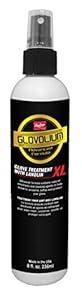
Still the easiest recommendation on this list. It comes in a spray applicator, so you get even coverage without the guesswork of a balm, and it works on old or new leather without noticeably darkening it. It’s also the most affordable oil here, which matters if you’re breaking in more than one glove a season (parents of multi-sport kids, I’m looking at you).
Best for: breaking in a new glove fast, on a budget, without changing the leather color.
2. Fiebing’s Premium Baseball Glove Oil – Best for High-End Leather
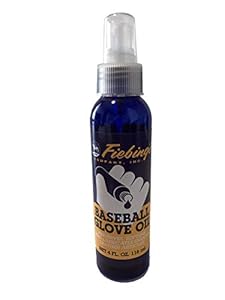
Fiebing’s has been in the leather business a long time, and it shows – this oil softens fast and works especially well on premium, full-grain leather gloves (think kip leather baseball gloves or high-end Rawlings/Wilson pro-line mitts). It’s non-toxic and safe for the stitching. The tradeoff is it’s a heavier oil, so go light on your first application and add more only if the glove still feels stiff after 24 hours.
Best for: premium leather gloves, players who want maximum softening in one session.
Best Baseball Glove Conditioners
Conditioners are for upkeep. This is where most of your season-long maintenance budget should go.
3. Wilson Pro Stock Glove Conditioner – Best for Reviving an Old Glove
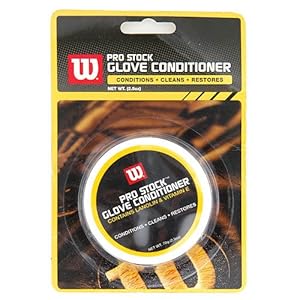
If you’ve got a glove that’s been sitting in a bag for a year and feels dried out, this is the one to reach for – perfect if you’re working on reviving an old baseball glove. It’s an organic, USA-made formula that restores moisture to leather that’s lost its life. Heads up: it will darken your glove, sometimes noticeably, so this isn’t the pick if you want to preserve a lighter leather color.
Best for: reviving a dried-out or older glove.
4. Nokona NLT Classic Leather Glove Conditioner – Best Trusted Formula

Nokona’s conditioner has been a staple in pro and college dugouts for decades, and there’s a reason it’s stuck around – a small amount goes a long way, and it does a genuinely good job maintaining shape and softness over a full season without over-softening the pocket. Like Wilson’s, expect some minor darkening over repeated use.
Best for: season-long maintenance on a glove you already broke in the right way.
5. Hot Glove Cream Conditioner – Best for Game-Day Feel
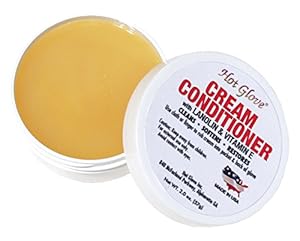
This one’s not for breaking in a glove – it’s built for players who want a slightly tacky pocket feel and better grip in wet or humid conditions. The formula uses Vitamin E and lanolin, is USA-made and non-toxic, and adds a light water/rain resistance without feeling greasy.
Best for: in-season maintenance for catchers and infielders who want extra grip and weather resistance.
6. Ball Player’s Balm Luxury Pro Glove Conditioner – Best Premium Pick (New for 2026)

This is the newest product on this list, and it’s a legitimate step up from a standard conditioner. It’s built around moringa oil, a cosmetic-grade oil known for deep hydrating and skin-healing properties in leather goods generally – it conditions without feeling heavy, and it’s genuinely pleasant to use. It’s priced like a premium product, so it’s not for everyone, but if you want the nicest thing you can put on a glove you actually care about, this is it.
Best for: players who want the best available conditioner and don’t mind paying a bit more for it.
7. Pecard Baseball Glove Conditioner – Best Heritage Brand (New for 2026)

Pecard has been making leather care products since 1902, and this conditioner is purpose-built for oil-tanned leather gloves specifically. It’s a paste, not a liquid, so it adds essentially no weight to the glove and won’t damage stitching – a real plus if you’ve had a bad experience with a runny oil soaking further than you wanted. It needs 12-24 hours to fully absorb, so plan ahead rather than using it the night before a game.
Best for: oil-tanned leather gloves, players who want a no-fuss, no-weight formula from a brand with a long track record.
How to Oil or Condition Your Glove, Step by Step
- Clean first. Wipe down dirt and dust with a dry or slightly damp cloth before applying anything – oil and conditioner both work better on a clean surface.
- Apply a small amount. Use your fingers, a soft cloth, or the product’s built-in applicator. Focus on the pocket, the hinge between thumb and fingers, and the outside seams – these are the areas that crack first.
- Work it in, don’t soak it in. Rub in small circles until it’s absorbed. If you can still see product sitting on the surface after a few minutes, you used too much.
- Let it sit. Oils typically need a few hours; some conditioners (like Pecard) need 12-24 hours. Check the product label.
- Wipe off any excess with a clean, dry cloth before your next use.
- Break in with reps, not just product. Oil softens the leather, but you still need glove work to shape the pocket – playing catch, using a mallet, or a ball-and-glove wrap overnight. For a full walkthrough, see our guide on the fastest way to break in a glove, and for ongoing upkeep check our glove care basics guide.
How often should you oil or condition a glove? For a new glove, one or two oil applications during the initial break-in is usually enough – more than that and you risk over-softening. For an in-season glove that’s already broken in, a light conditioner application every 4-6 weeks (or once a month if you’re playing year-round) is the right cadence. Oiling an already-broken-in glove every week is the single most common way players accidentally ruin a good pocket.
What About Household Alternatives?
Search around and you’ll see people asking about coconut oil, olive oil, mink oil, and even Vaseline. We’ve tested and written up most of these individually, so here’s the honest short version, with links to the full breakdown on each:
- Mink oil – works reasonably well and adds some water resistance, but it can darken leather significantly and slightly soften stitching over time. Fine in a pinch, not my first choice.
- Coconut oil – conditions in a light coat, but it’s not formulated for leather and can go rancid or sticky in humid conditions over time. Use sparingly if you use it at all.
- Olive oil – same story as coconut oil: it’ll soften leather short-term, but it’s not a leather-specific product and isn’t built to last.
- Vegetable oil, cooking oil, or motor oil – don’t. These aren’t designed for leather, can break down the material over time, and some will leave a smell or residue that never fully goes away.
- Vaseline, boot oil, canola oil, and mineral oil – each has its own quirks and tradeoffs, which we cover in detail in their own guides if you’re curious about a specific one.
If you’re curious about other backyard options and which ones actually hold up, we’ve got a full breakdown in our glove oil alternatives guide, including our take on using neatsfoot oil on a baseball glove and whether linseed oil is a safe substitute.
How to Choose Between These Products
Balm/paste vs. spray. A thick balm (Nokona, Hot Glove, Ball Player’s Balm, Pecard) takes a bit more elbow grease to work in but tends to hold up longer between applications. A spray (Rawlings Glovolium) is faster and more portable – good for a quick touch-up in your bag. Neither is objectively better; it’s a workflow preference.
Leather color. If keeping your glove’s original color matters to you, avoid Wilson Pro Stock and Nokona’s conditioner, which are both known to darken leather over repeated use. Rawlings Glovolium and Ball Player’s Balm are the safer picks if you want to preserve color.
Price. Don’t overspend here. Most of these products cost $7-16 and a little goes a long way – a single container lasts most players a full season or longer. The Ball Player’s Balm Luxury Pro is the one premium-priced exception, and it’s worth it only if you specifically want that ingredient story.
Your glove’s leather type. If you’re playing with a high-end kip leather baseball glove, treat it a little more gently. Catchers and infielders working with heavier hides should also see our guide on breaking in a catcher’s mitt, which needs a different approach than a standard infield glove.
| Product | Type | Price | Darkens leather? |
| Rawlings Glovolium | Oil | $7.99 | No |
| Fiebing’s Premium Oil | Oil | $7.99 | Minor |
| Wilson Pro Stock | Conditioner | $11.95 | Yes |
| Nokona NLT Classic | Conditioner | $10.02 | Minor |
| Hot Glove Cream | Conditioner | $14.19 (2-pack) | No |
| Ball Player’s Balm Luxury Pro | Conditioner | $15.99 | No |
| Pecard Conditioner | Conditioner | $9.95 | No |
FAQ
How often should you oil a baseball glove?
Once or twice during initial break-in for a new glove. After that, switch to conditioner every 4-6 weeks during regular play. Oiling an already broken-in glove too often will over-soften the pocket.
Can you use coconut oil, olive oil, or mink oil on a baseball glove?
All three will condition leather in a pinch, but none are built specifically for glove leather. Mink oil holds up best of the three but darkens leather noticeably. A dedicated glove oil or conditioner will outperform all three long-term.
What’s the difference between glove oil and glove conditioner?
Oil penetrates deep to soften stiff, new leather and speed up break-in. Conditioner sits lighter on the surface and restores moisture to leather you’re already using, without over-softening it.
Will glove oil or conditioner darken my glove?
Some will, some won’t. Wilson Pro Stock and Nokona’s conditioner both darken leather with repeated use. Rawlings Glovolium and Ball Player’s Balm are the better choices if you want to keep your glove’s original color.
What’s the best oil for breaking in a brand-new glove?
Rawlings Glovolium for most players, or Fiebing’s Premium Oil if you’ve got a high-end, full-grain leather glove that needs a bit more softening power.
My Final Recommendation
- Best overall oil: Rawlings Glovolium – cheap, effective, won’t change your glove’s color.
- Best overall conditioner: Nokona NLT Classic – the formula pros have trusted for decades, and for good reason.
- Best premium pick: Ball Player’s Balm Luxury Pro – if you want the nicest thing you can put on your glove and don’t mind the price.
- Best budget/no-fuss pick: Pecard Baseball Glove Conditioner – a heritage formula that adds zero weight to your glove.
Whatever you pick, remember the golden rule: oil is for break-in, conditioner is for upkeep. Get that right and your glove will outlast most of the gear you paired it with. For everything else on glove care – from choosing the right glove for your position to understanding different web types – check out our full glove hub.
Adios! Hit it Hard!!

With 4 years of Division II experience, a .272 career batting average, .410 on-base percentage, and 7 home runs, I’m now in my fifth season. I’ve played baseball since age 3, alongside future MLB Draft picks, and I aim to pursue a career in baseball professionally, be it playing, coaching, or scouting.