
Instead of lulling you into this post by promising that $150 buys a glorious baseball glove experience, I’ll be real with you. $150 gets you a mid-range baseball glove, not a pro-tier one.
If I split baseball gloves into three rough tiers, bottom (around $100), mid (around $150), and top ($250 and up), a $150 budget puts you right in the middle. That’s exactly the sweet spot I’m covering in this best baseball glove under $150 roundup.
Sure, you can get a lot out of a $150 glove if you know how to use and maintain it. Plenty of ballers with mid-range gloves go on to win games anyway. It really doesn’t matter that much.
What matters is that you get the right glove for yourself. That’s where I come in. I’ve helped high schoolers pick a solid budget baseball glove many times during my coaching years. I know what’s what.
I’m going to highlight some of the nicest value gloves I’ve come across in this price range. I’ll dig out all the details for you to read.
Best Baseball Glove Under $150
This list has gloves from a few different price points, all under our $150 ceiling. You’ll see options in the $30, $85, $130, and $150 range, so don’t be surprised if the cheapest pick feels more suited to backyard catch than competitive innings. If you want to skim through, just read the details section at the end of each review. If you want the full picture, the in-depth breakdown covers that too.

1. Rawlings Player Preferred Glove Series
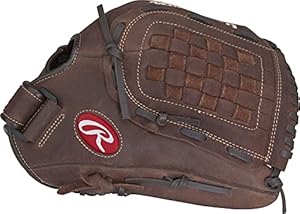
I’m sure many of you BaseballHover regulars saw it coming a mile out, but still, when it comes to an affordable, high-quality budget baseball glove, the Rawlings Player Preferred is always at the top of the chart.
Many players, including myself, started their careers in this sport with this glove.
While Rawlings is well known for the expensive, top-tier custom gloves that pros use regularly, the Player Preferred is genuinely affordable.
Direct from Rawlings, it currently runs around $85, which makes it an absolute steal for the level of durability and performance it offers.
The first thing that stands out immediately with the glove is its impeccable full-grain leather construction. They didn’t go with any synthetic leather to make it.
So, you don’t have to worry about the leather cracking or looking dull after a couple of uses.
The glove also has a couple of nifty tricks up its sleeve. For instance, it features Zero Shock Palm Padding.
Essentially, this means the glove comes with a greater level of padding around the palm area that can negate the impact shock from catching high flyballs or blazing groundballs.
This glove is available in multiple sizes and webbing options. Since it’s also available for all positions, you can pick it up regardless of where you like to play in the diamond.
And for a snugger fit, the glove even has an adjustable wrist strap for you to mess around with.
Another great thing about the glove is its relatively non-existent break-in period. Pros or those who play competitively don’t mind taking the time to break in a new glove.
But if you’re the impatient type, the fact that it comes 80 percent broken in from the factory means you’ll be able to start playing with it almost as soon as you get it.
As for its downside, there’s one that might be a bit of a turn-off for some players. The glove really isn’t the one for younger players, more specifically, players under 8 years of age.
Since the smallest size is only 12 inches, younger players might have a hard time handling the glove.
Overall, this is an amazing entry-level glove that can help you learn the basics of baseball quite efficiently. It’s durable, and the quality of the material makes it feel amazing for the price.
Details:
- Webbing Options: Closed, H-web, Basket, Single-post Double bar
- Special Features: Zero Shock Palm Padding, Adjustable wrist strap
2. WILSON A1000 Baseball Glove Series

Coming off Rawlings, I knew I couldn’t just go with any odd glove brand in the market. You’d burn me at the stake if I did that.
So, I decided to follow up with another brand that holds just as much ground on the MLB scene as Rawlings. That honor goes to Wilson.
Now, Wilson has plenty of expensive gloves. And when you have the budget for those, there’s no real risk of making the wrong investment.
However, when your budget is tight, the Wilson A1000 is the pick that makes the most sense as a mid-range glove.
This is the priciest baseball glove on this list, and depending on size and web pattern, it can sit right at our $150 ceiling or push past it. Let’s look at the specs first.
First off, the glove comes with Pro Stock rolled dual welted leather. You might think of that as a gimmick, but Wilson’s dual welting offers a whole other level of improvement beyond its cosmetic effect.
It massively improves the support and handling of the glove and also enhances its protective features.
In addition, the glove comes with DriLex wrist lining, which offers better comfort on the field. It keeps your hand dry and also improves the overall feel of the glove. The laces are professional grade, look stylish, and last a couple of years easily.
The glove also comes about 80 percent broken in from the factory. That means a couple of days of playing catch is enough to break it in fully.
You can also get it to feel exactly how you want since 20 percent of the break-in is entirely in your hands.
One heads-up before you buy: Wilson prices the A1000 line by pattern and size, and current listings I checked range from around $110 on sale up to $199.99 for some of the newest 2026 patterns. That means this pick only stays inside a $150 budget baseball glove range if you shop the right size and web combo, so check the live price on the specific pattern before you check out.
The size range for the glove is pretty decent, and it’s available in different web options for different playing positions. The color options you get with it are also quite nice.
Details:
- Webbing Options: Single post 3X, Single post 3 bar, Dual post, H-web, X2
- Special Features: rolled dual welting leather, DriLex wrist lining
3. Rawlings R9 Baseball Glove Series
The best thing about the Rawlings Player Preferred is that it’s an amazing entry-level baseball glove for most age groups.
However, when you start thinking about competitive gloves, the Player Preferred doesn’t hold up quite as well against the rest of the market.
Then again, high-end, professional-quality gloves don’t come cheap. The good news is that if you’re playing in the youth leagues, there are a couple of good options out there.
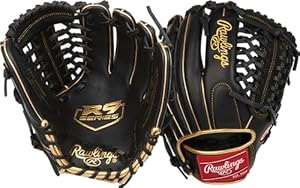
The Rawlings R9 baseball glove is one of my favorite picks for youth players, offering a solid balance of performance and durability at this price range.
Now, I’m not saying it’s a cheap glove. On the contrary, it costs quite a bit more than the Player Preferred, with a current MSRP sitting right around $149.99, just inside our budget ceiling.
But the level of performance it offers at that price point is on par with some of the more expensive gloves on the market.
Like most Rawlings gloves, this one is made of high-quality leather. But what makes this glove special is the game-ready feel and softness of its leather shell.
The shell is also pretty flexible and lightweight, making it easy to wield even for a relative newcomer to the sport.
This glove offers an enhanced level of impact protection thanks to its reinforced palm pad and padded thumb loop.
Some might say the extra padding gets in the way of mobility, but since the glove is designed for youth players, that protection is actually a good thing.
As for the downside of the glove, there’s really only one: its size options. Keep in mind this is exclusively a youth baseball glove.
It’s designed to fit the hands of players between the ages of 8 and 14. If you’re an adult or even a high-school-level player, there’s a good chance the glove won’t fit your hands.
This glove also features a low break-in period, since it comes about 80 percent broken in from the factory.
So, you’ll be able to start using it in competitive games almost as soon as you take it out of the box. For players who don’t enjoy breaking in gloves, that’s a good thing.
The webbing options for the glove are pretty versatile. It’s available for both right- and left-handed players and is also suitable for all positions.
So regardless of your playing position, as long as you’re in the youth leagues, this glove will be a nice addition to your arsenal.
Details:
- Webbing Options: Modified trapeze, 31 Pattern, Pro H-Web, 2-Piece Solid, Modified Pro H-Web, 1-Piece Closed, 1-Piece Solid
- Special Features: Game-ready leather, Reinforced Palm Pad
4. Franklin Sports Baseball and Softball Glove
If you’re on an absolutely tight budget, you’ll get no judgment from me. Baseball gloves can get overwhelmingly expensive, and there’s nothing wrong with getting an affordable glove if you need something that gets you on the field with minimal investment.
Unfortunately, a budget glove rarely performs as well as a high-end glove, nor does it last as long.
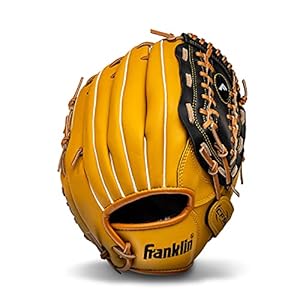
But if you don’t have the budget, there’s one glove I can safely recommend, and that’s the Field Master from Franklin Sports.
Franklin Sports has always been a brand “for the people.” That’s honestly the best thing about them.
Most of the baseball gear and accessories they manufacture are priced to put minimal stress on your wallet, and the Field Master is no exception. Performance-wise, it’s not bad either.
At its price tag of well under $50 (about $30 straight from Franklin), the brand had to cut corners somewhere when they made this glove.
For instance, it uses synthetic leather as its primary construction material. But the quality of that synthetic leather is pretty decent, and it feels quite close to the real thing.
Since they used synthetic leather, the break-in time is virtually non-existent. The moment you take the glove out of the package, it’s ready to use.
It should feel comfy and right at home in your hands as long as you get the right fit for yourself.
I don’t want to set your expectations too high, though. While the glove does feel close to real leather, it isn’t as durable as the real deal.
If you take care of it, sure, you can make it survive a couple of seasons. But expecting it to last a lifetime isn’t practical.
There are a couple of nice additions to the glove that make it stand out from other options in this price range.
For instance, the glove comes with an adjustable wrist strap, and the pocket is hand formed, giving you better grip response and control. I love both of these features.
The glove is available in multiple sizes and webbing options, and for a casual player, it’s a solid investment.
Even if you want to go pro someday and this is just a starter glove, picking it up isn’t a bad idea at all. But if you’re already playing in high school or adult leagues, there are better options out there.
Details:
- Webbing Options: Trapeze, Modified trapeze, Basket, I-Web, H-Web.
- Special Features: Adjustable wrist strap, Hand-formed pocket
5. Mizuno MVP Prime Baseball Glove Series
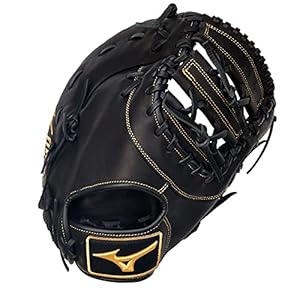
To wrap up this list of value gloves under $150, I decided to mention one of my all-time favorites: the Mizuno MVP Prime.
Very few Japanese brands out there have made as much of an impact as Mizuno in the baseball gear and accessories industry.
The Mizuno MVP Prime is their take on an affordable, entry-level baseball glove that both youth and adult players can use.
It runs around $130 direct from Mizuno, which is still pretty reasonable for the build quality and performance it offers. If you can stretch the budget, Mizuno offers pricier options too.
One of the true highlights of this glove is its material choice. The manufacturer went with BioSoft leather, which is basically full-grain leather with a factory coating of oil, making it soft and comfortable right out of the box. Personally, I’m a huge fan of this material.
In addition, the lacing and premium finish of the glove look extremely stylish. The laces are designed to last as long as the glove itself, so if you take care of it regularly, you won’t have to worry about relacing anytime soon.
The glove is available in multiple sizes and web options, which means you should be able to pick one up regardless of your playing position.
While it’s considered an adult glove, the smaller sizes work for youth players too. That’s another win for this glove.
There’s a bigger downside, though, which is why it’s placed at the bottom of this list instead of near the top. The padding in the glove isn’t very thick.
Seasoned players might see that as an advantage, since it makes the glove lighter and more maneuverable.
However, younger players who need a bit more protection from their gloves might not be huge fans of this feature.
Credit where credit is due, though: the PlusGrip thumb design offers an enhanced level of protection and comfort for your thumb.
If that’s not an issue for you, the glove will fit your needs perfectly. It’s stylish, affordable, and durable enough to last a couple of seasons with minimal maintenance.
Details:
- Webbing Options: Deep III web, Tartan web, Shock web, Shock 2 web
- Special Features: Center Pocket pattern design, PlusGrip thumb
What to Look for When Buying the Best Baseball Glove under $150?
A budget of $150 might be enough to get you a great softball glove, but for a baseball glove, it really isn’t much. So you need to be smart and know which features are worth focusing on if you want a glove that gives you the best value.
I go into more detail on how price and quality actually track together in my cheap vs expensive baseball glove comparison, but here’s the quick version for a $150 budget baseball glove.
Material
The first thing to check in a baseball glove is its material. Most gloves on the market feature leather of some sort, but the type of leather used can largely impact price and performance. Here are some of the commonly used leathers in baseball gloves these days.
1. Synthetic Leather
Synthetic leather is the cheapest of the bunch, and if you’re on an absolutely tight budget, this is the material to opt for. The durability is decent, but it’s not as durable as real leather, and it doesn’t feel as good in the hand.
2. Full-Grain Leather
This is the classic material choice for most baseball gloves in this price range. Full-grain leather is stiff and heavy, which means it’ll take a while to break in properly. Once broken in, though, the performance and durability of this material are unmatched.
3. Cowhide Leather
Cowhide leather is the best material for serious players who want to use their gloves for competitive games. Unlike full-grain leather, cowhide leather breaks in pretty easily.
Since cowhide leather is quite flexible, you should be able to make quick, reflexive catches easily with it.
4. Steer Hide Leather
Steer hide leather is the most expensive choice, and only a handful of gloves in this price range use it.
It’s a heavy material, which means most steer hide baseball gloves are heavy too. But the durability of these gloves is impeccable.
You might also come across some kip leather gloves on your hunt for a value glove in this range. That material is quite expensive, though, and you won’t find any glove under $150 using it. So, I decided not to include it here.
Padding
The leather shell exterior alone can’t offer enough protection for your hands when you catch high flyballs or line drives. That’s why manufacturers use padding in their gloves.
When you’re buying a new baseball glove, it’s important to check the amount of padding that comes with it.
People have different preferences here. Some players like a glove with less padding since it keeps things lighter and more maneuverable. But if you’re playing outfield, going with thicker padding is usually the better call.
So, you need to make a choice: protection or mobility? With thicker padding, the glove gets heavier. But you’ll sacrifice some impact protection if you want a lighter glove with less padding.
Size and Fit
Most baseball gloves come in multiple sizes that cater to a broad age group. Make sure the glove you’re buying is the right fit for your hands. If the glove is too big, your grip and control will take a hit.
Some baseball gloves these days come with an adjustable wrist strap. So if your glove is slightly larger than your hand, you can use the strap for a more comfortable fit.
This is a great feature, and if you’re unsure of your hand size, make sure your glove comes with an adjustable strap.
Break-in Period
Another thing to consider when buying a new baseball glove is how long it takes to break in. Factor that into your calculations if there’s a big game coming up where you want to use it.
Some gloves break in faster, while others can take a couple of weeks. Some even come broken in straight from the factory so you can start using them right out of the box.
If you’re the impatient type, make sure you’re getting a glove you can use right away. Personally, I prefer breaking in my glove my own way so it feels exactly how I want it to feel.
Pocket Depth & Comfort
You’d be missing out if you don’t take pocket depth into consideration when buying a new baseball glove. The depth of the pocket matters a lot.
It dictates how easily you can catch the ball, or how much control you have once you catch it.
Infielders typically prefer a shallow pocket that promotes quick ball transfer to the throwing hand. Outfielders, on the other hand, tend to go for deeper pockets that make catching and holding the ball easier. So decide which is better for you based on your position.
Webbing
Similar to the pocket design, webbing is another thing that depends largely on your preference. There are many types of webbing that can come in your glove, and each design has a different effect on your playstyle.
The I-web, for instance, lets you quickly catch the ball and transfer it to your hand. There’s also the H-web, which lets you shield out the glare from the sun as you reach to catch the ball.
Once you understand which web design you prefer, you’ll be able to pick out the perfect baseball glove for yourself.
Some Words of Wisdom
I’ll say it again: $150 isn’t going to get you a pro-tier glove. But that’s okay. You only need $250 to $300 baseball gloves when you’re competing at the highest level. While you’re on your way to getting there, a mid-range glove is perfect.
I’m a bit biased toward the Rawlings Player Preferred. I think the price-to-value ratio is fantastic with this baseball glove. That’s why every time a budget hunter comes to me for suggestions, I point them toward the Rawlings Player Preferred.
However, the Player Preferred is really more of a casual glove. If you’re playing more seriously, you’re better off with the Wilson A1000, assuming you can find a size and pattern that fits your budget.
If you’re stuck deciding between these two brands in general, I go head to head on the details in my Wilson vs Rawlings baseball gloves comparison.
While the A1000 lacks some premium features, you get a taste of what a high-end glove feels like with this one.
For parents who want to take their kid for a backyard catching session, I’d say get the Franklin Field Master. It can be the perfect glove for your rising baseball champ.
These three gloves all serve different purposes.
- Rawlings Player Preferred for casual play, ranked as the top pick in my best cheap baseball gloves under $100 guide
- Wilson A1000 for semi-competitive play, covered in full in my Wilson A1000 glove review
- Franklin Field Master for tee-ball and youth players, also featured in my best youth baseball gloves roundup
So, as you can see, it all boils down to what you want. Before you get hit with shiny object syndrome, assess your own requirements with care. Then get a baseball glove that fits YOUR bill.
And if your budget stretches a little further, it’s worth comparing these picks against my best baseball gloves under $200 guide before you decide.
Hope you got something useful from here. Cheers!

With 4 years of Division II experience, a .272 career batting average, .410 on-base percentage, and 7 home runs, I’m now in my fifth season. I’ve played baseball since age 3, alongside future MLB Draft picks, and I aim to pursue a career in baseball professionally, be it playing, coaching, or scouting.