
The pitching machine is a well-known piece of equipment for just about any baseball player.
There’s a good chance you’ve spent a decent chunk of your career honing your swing and working on your stance in front of one.
I used one myself to get my hitting mechanics right when I was a young player.
And now that I’m a coach, I occasionally take out my Louisville Slugger Black Flame pitching machine from the shed to help my hitters get better at the game.
But is hitting off a pitching machine really helping them? A lot of people treat pitching machine batting practice as a waste of time and money.
Another group, myself included, believes it can be a genuinely useful training tool when it’s used the right way. The truth is somewhere in between. It has real drawbacks that you can’t just ignore.
Short answer: yes, pitching machines are good for batting practice when you use them to build swing mechanics, timing, and pitch recognition, and you pair them with live at bats. They’re not a full replacement for a live pitcher, but they’re one of the best tools I know for getting reps in.
I’ll walk you through the real advantages and disadvantages of using a pitching machine and try to help you figure out how to get the most out of one.
Advantages of Using a Pitching Machine

Before I get into the downsides, let me start with why I still reach for a pitching machine so often. It lets you focus on basic elements like hitting mechanics and timing without a live arm getting tired or losing control. A pitching machine is also great for training your fielders if you’re a coach trying to get a whole team into shape.
Here are the main advantages of using a pitching machine:
Improving Mechanics and Batting Technique
There’s no alternative to getting a grip on your batting technique other than repetition. How the hitter’s body moves with the bat dictates the force behind the swing, and building that kind of muscle memory takes hours of practice against consistent pitches. That’s where a pitching machine really shines.
If you have an automatic pitching machine like the Jugs BP1, you can set it up with an automatic ball feeder and have your batter consistently hit the same pitch over and over. Meanwhile, you’re free to actually watch your player and offer real feedback instead of standing on the mound.
Every player hits a little differently, and there’s no single right way to swing. But to lock in the right batting technique for a specific player, he needs to repeatedly hit the ball the same way. You can have a coach or pitcher throw live, but it’s not very efficient since you also want that pitcher focused on his own training.
Developing Strike Timing
A pitching machine is also excellent when you’re working on hit timing. Most pitching machines come with speed control settings that let you dial the pitch speed up or down. You can adjust the speed to help your batter learn how to hit different pitches at varying speeds, which is a big part of building pitch recognition.
For new players, timing is genuinely difficult to get right, and a lot of them get jittery when they’re swinging against a live arm. By practicing their timing in front of a pitching machine first, they get comfortable, and you can slowly transition them into facing live pitchers.
Playing against a pitching machine first lets a newer player grasp the basic concept of batting without the pressure. And a lot of pitching machines, especially the ones that use a throwing arm instead of a wheel, let the batter actually see the release point so he can react and time it better, which carries over well once he does face a real pitcher. If you want to dig deeper into how these two designs differ, I broke it down in a separate post on how a pitching machine actually works.
Hitting Specific Spots
The main issue with training against a live pitcher is that it’s hard for him to hit the same spot every single time. Every pitch from a real player is a little different, and the batter has to adjust on the fly. That’s an important skill to build eventually, but for a beginner, it can be pretty frustrating.
With a pitching machine, once you set it up to target a specific spot in the strike zone, it hits that same target every time. That lets your hitter practice attacking that same spot while working on his batting stance, swing technique, and strike power.
So in essence, you can zero in on the exact pitch where your hitter is struggling and help him fix it. That’s probably the single biggest benefit of practicing against a pitching machine, and it’s almost impossible to replicate that kind of repetition with a real pitcher.
Perfect for Youngsters
A pitching machine can be a superb investment.
That’s especially true if you’re working and drilling with players under 13 years old. Players at that age are relatively inexperienced and need consistent, predictable reps. The rhythmical practice you get with a pitching machine is perfect for that age group, and I’ve also put together some tips on how to teach a kid to hit off a pitching machine if you want a more step-by-step approach.
Even with high schoolers, a pitching machine can still be useful. You wouldn’t lean on it as heavily, but it still comes in handy for training against specific pitches in specific zones, and it can help strengthen a player’s swing.
Disadvantages of Using a Pitching Machine
Even though a pitching machine is a fantastic piece of equipment, you shouldn’t rely on it too much. Don’t get me wrong, I love using a pitching machine to train my players from time to time. But even I’ll admit there are some solid reasons to be careful with it.
Here are some of the major disadvantages of using a pitching machine.
It Can Develop Bad Habits
The biggest issue with a pitching machine is that it can reinforce bad habits if you’re not careful about how you use it. You should never let a player train against one unsupervised for too long. Ideally, you want to be watching your hitter the whole time he’s working against the machine.
By keeping a close eye on the hitter while he trains, you’ll catch bad posture or poor technique early and help him fix it. In my experience, once a player locks in a bad habit, it’s genuinely hard to undo. So it’s always better to prevent it in the first place.
You Grow Out of It
If you’re working with little leaguers, getting a good pitching machine is almost always worth it. But once players get older and start playing at the high school or college level, a pitching machine doesn’t offer nearly as much value on its own. It’s much better to get them facing live pitchers at that stage.
That doesn’t mean a pitching machine becomes a complete waste of time, though. You can still use it to train fielders on defensive drills. Most pitching machines let you shoot line drives or fly balls, which is great for team fielding practice.
Not Very Versatile
Unless you’re spending big on a super expensive high-end wheel-style pitching machine, you’re not going to get many options in the type of pitch the machine can throw. Basic, single-wheel machines mostly just throw straight fastballs.
Two-wheel and three-wheel machines can add spin to the ball, which lets them throw breaking balls and even curveballs, but that kind of versatility costs real money. If you want to understand the trade-offs between wheel-based and arm-based designs before you buy, I compared the two in my post on the difference between arm style and wheel pitching machines.
Expensive
Even a low-end pitching machine will set you back a couple hundred bucks, and unless you’re actually committed to using it regularly, it doesn’t offer much value. Affordable options are usually only good for training against fastballs. If you want more pitch variety, you need to spend more money.
If your goal is simply to work with youngsters who have no baseball experience yet, a basic machine can be a great investment. You train them against fastballs, and once they get the hang of it, you move them on to live pitchers to teach them how to handle more complex pitching styles.
If You Decide to Get a Pitching Machine, Here’s What I Have to Say
After going through the advantages and disadvantages of using a pitching machine for your hitters, you should be able to decide whether it makes sense for your team. If you do decide to buy one, here’s a quick rundown of my favorite pitching machine, the Jugs BP1, which I still use often for team and solo practice.
Jugs BP1 Baseball/Softball Combo Pitching Machine
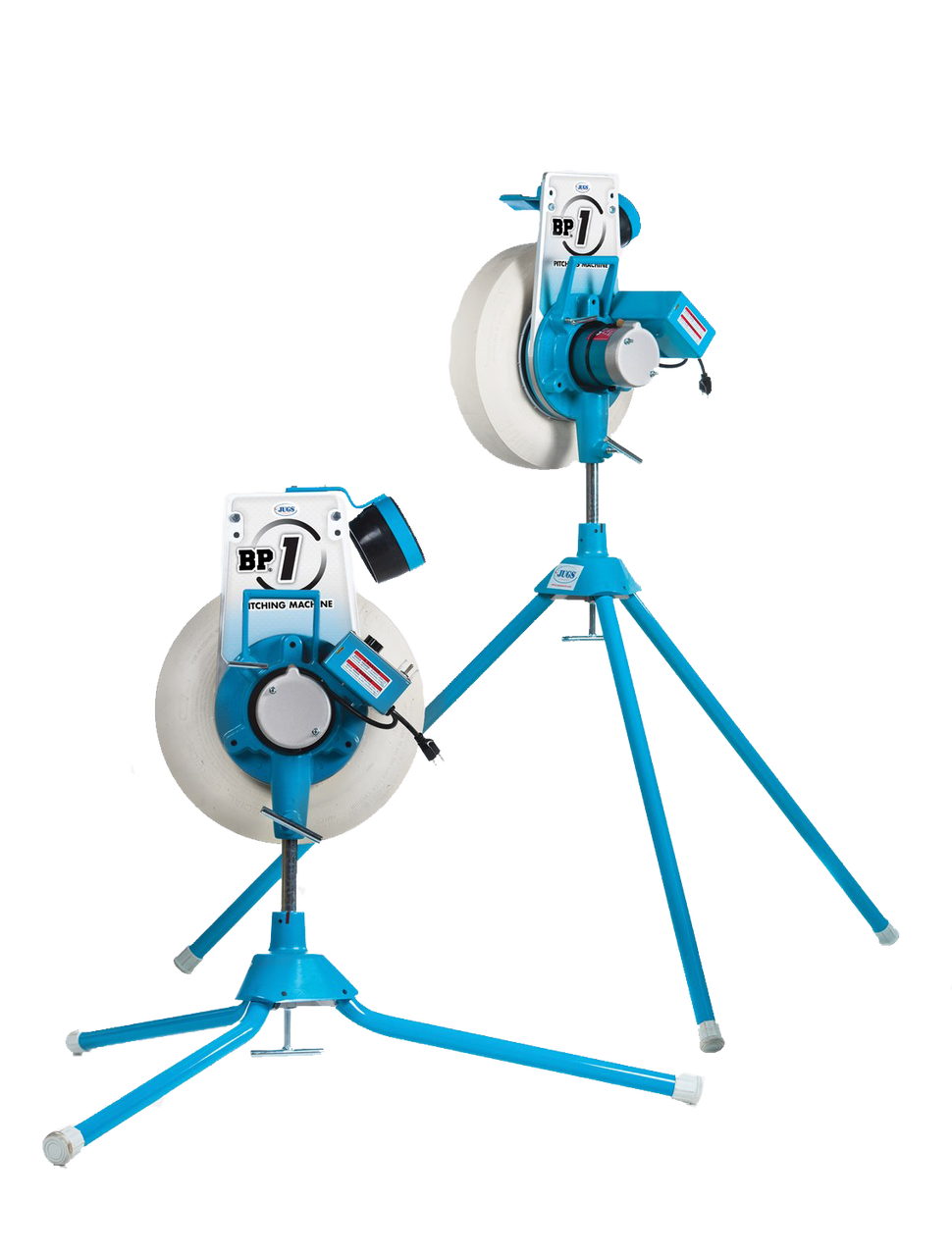
If you’ve ever spent time looking at pitching machines, you’re likely to come across Jugs. And of all the popular machines in their lineup, the Jugs BP1 pitching machine is still my trusted compadre.
As a sub-$2,000 pitching machine,
the Jugs BP1 is one of the top little league pitching machines out there. It’s an automatic design with excellent speed and accuracy settings, which gives you a lot of freedom in how you want it to perform.
On pitching velocity, it can throw the ball as fast as 70 miles per hour. On the slow end, it can come down to 15 miles per hour. You adjust the pitch speed using the handy speed control on the machine, depending on the player’s skill level and what your drill needs.
Since it’s a wheel-style machine, you also get the option to throw a variety of pitches with it. The pitch accuracy is consistent, and the ball hits the strike zone reliably once you calibrate and set it up. If you invest in an after-market automatic ball feeder, you get a fully hands-free experience with it.
On top of that, the head of the pitching machine can swivel a full 360 degrees. If you like using a pitching machine for fielding drills, this feature alone makes it worth the investment. With it, you can run your whole team through a variety of defensive drills.
The frame of the Jugs BP1 is extremely sturdy. At around 75 pounds, you’ll probably want a car to move it from one place to another. It’s built well, and if you maintain it and lubricate the moving parts every now and then, it should last you a long time.
Is It Good to Hit Off a Pitching Machine?
As you can see, there are some pretty strong cases both for and against a pitching machine. In the hands of a coach who knows what he’s doing, a pitching machine can be a fantastic piece of equipment. But leaning on it too much never leads to anything good.
If you ask me, I’d say yes, using a pitching machine to train your hitters is a good idea. It helps them develop consistent hitting mechanics and lets them work on strike power and accuracy. Just make sure you’re not going overboard with it when you’re setting up hitting drills for your players, and that you still get them in against live pitching regularly.
People who are skeptical about pitching machines can always give the best batting tees a shot.
A good quality batting tee can help your hitters with their swing fundamentals, and I also put together a separate breakdown on whether hitting off a batting tee is a good practice if you want to compare the two approaches. So that’s always an option.
Getting back to the topic at hand, the trick to getting the most out of your pitching machine is using it wisely. If you want a few tips on using a pitching machine so it doesn’t do harm or reinforce bad habits in your players, you can check out my article here.
With that said, I hope this rundown of the advantages and disadvantages of a pitching machine helps nudge you in the right direction. You should now have what you need to decide for yourself whether it’s worth investing in. Cheers!

With 4 years of Division II experience, a .272 career batting average, .410 on-base percentage, and 7 home runs, I’m now in my fifth season. I’ve played baseball since age 3, alongside future MLB Draft picks, and I aim to pursue a career in baseball professionally, be it playing, coaching, or scouting.