
Table of Content
When you play infield, you live in the middle of the action. Baseball isn’t won by home runs alone. It’s won one clean transfer at a time, one scoop on a tricky short hop, one accurate throw across the diamond. If you’re the kind of player who makes routine plays look easy, your glove is doing more work than you think.
I remember a trainee of mine who showed up to shortstop practice wearing an outfielder’s glove. It looked fine in his hand, but it fit the position all wrong. He didn’t have the pocket depth or the visibility he needed, and it cost him two clean catches and about ten ground balls in one scrimmage. We lost that game, and the whole team learned a hard lesson about why infield and outfield gloves are built so differently in the first place.
A bad glove can, and often will, cost you the game.
So step onto the diamond with one of the best infield gloves you can afford. In my experience, an infielder’s glove built with a shallow pocket, a quick transfer, and the right web pattern for your position (I-web at shortstop and second base, a closed or H-web at third) makes a night and day difference in your range and your throwing time. Not every glove on the market is built the same way, and some are clearly made for a specific age group or skill level, so you need to be picky when you shop.
That’s exactly why I put together this list. I’ll walk you through what I actually get for my money with each of these gloves, from premium kip leather I-webs down to a genuinely cheap youth option. Let’s get into it.
6 Best Infield Gloves
If you’re hunting for a genuinely great infield glove, you’re in the right spot. I’ve tested a lot of gloves over the years, some that lived up to the hype and some that didn’t, and I’m sharing everything I picked up along the way.
1. Rawlings PRO Preferred Baseball Glove (Best Premium Infield Glove)

Quick disclaimer before I dive in. The Rawlings Pro Preferred sits at the very top of the price ladder, right alongside the Wilson A2K, the All Star Pro Elite, and the Nokona X2 Elite. If you already know these names, you know what kind of price tag comes with “top of the line” in the glove world.
If that price scares you off, the Rawlings Heart of the Hide is a fantastic alternative, and the Wilson A2000 or Mizuno Pro Select can get you close to the same performance for less. I cover both of those later on this list.
The Pro Preferred is, in the simplest terms, a true professional’s infield glove. Ask any college coach or scout and they’ll tell you the build quality here is hard to match. Plenty of pro infielders would grab this glove without a second thought, and that’s exactly why it costs what it costs.
Here’s what sets it apart. Instead of the usual top tier cowhide or Rawlings’ own premium steer hide, the Pro Preferred is built from kip leather, one of the most sought after materials in the entire glove world.
Kip leather isn’t easy to find either. Outside of the Pro Preferred, you’re mostly looking at gloves north of $400 to $450, like the Nokona Elite, if you want a true kip leather build.
So why am I making a big deal out of the leather? Because kip leather behaves differently than cowhide, pigskin, buffalo skin, or steer hide. It has a tighter grain, but it breaks in with a noticeably smoother, softer feel while still holding its shape season after season.
Kip leather comes from calves, which is part of why it strikes that balance of being tight and durable while still feeling soft in the hand. It’s the material most MLB infielders reach for, and once you feel it, you understand why.
Beyond the leather, this glove uses an I-web pattern, which gives you a clear window straight through the pocket so you can track the ball the whole way in. The finger, bridge, and webbing are shaped specifically to help you scoop up ground balls cleanly, and the soft pocket and palm lining make the transfer to your throwing hand fast.
If you’ve owned an infielder’s glove before, you already know how quickly lacing can fail. I’ve got gloves sitting on my shelf that are otherwise fine except for blown out laces. The Pro Preferred’s lacing has held up well for me over a long stretch of use. It won’t last forever, but you’ll get plenty of games out of it first.
The one real downside is the break in period. Rawlings ships this glove with about a 30 percent factory break in, which helps, but you’ll still want to play catch with it every other day for a while before it’s truly game ready.
The upside is that once it’s broken in, it holds its shape. After that initial work, you just slide it on and go. No more fighting with it for five or ten minutes before warmups.
Overall, the Rawlings Pro Preferred earns its reputation as one of the best infield gloves you can buy. The price is steep, but the quality justifies it. If you’re serious about the game and dreaming of playing shortstop or third base like Derek Jeter or Cal Ripken Jr., this glove will not let you down.
2. Mizuno Pro Select (best budget infielder gloves)

It’s completely fine if the Pro Preferred is out of budget. That’s where the Mizuno Pro Select comes in. This is the sweet spot of quality plus price in the infield glove world. The Easton Tournament Elite gets close, but the Pro Select edges it out overall.
The Pro Select skips kip leather in favor of premium US steer hide, the second best leather you’ll find in a baseball glove. If you’ve played long enough, you know steer hide holds up. I’ve used this exact glove for close to two full seasons of rough play with zero complaints.
Mizuno actually splits its infield lineup into two pocket depths, a shallow pocket and a regular pocket version, so you can pick the playstyle you’re comfortable with. Most infielders lean toward the shallow pocket because it speeds up the transfer, but it’s not for everyone. If you’re not sure which one suits you, start with the regular pocket. It’s the safer choice, and it’s nice that Mizuno gives you both options.
You’ll also find two web styles here, I-web and Single Post web. Both give you good visibility on incoming grounders and make scooping easy, and you get a decent range of color options too. I never noticed any discomfort wearing this glove for long stretches, thanks to the palm liner.
Bottom line, the Mizuno Pro Select is a legitimate bargain. It gets you close to pro level feel and durability for a price that’s still under $250. It’s one of my go to recommendations for a mid tier infield glove.
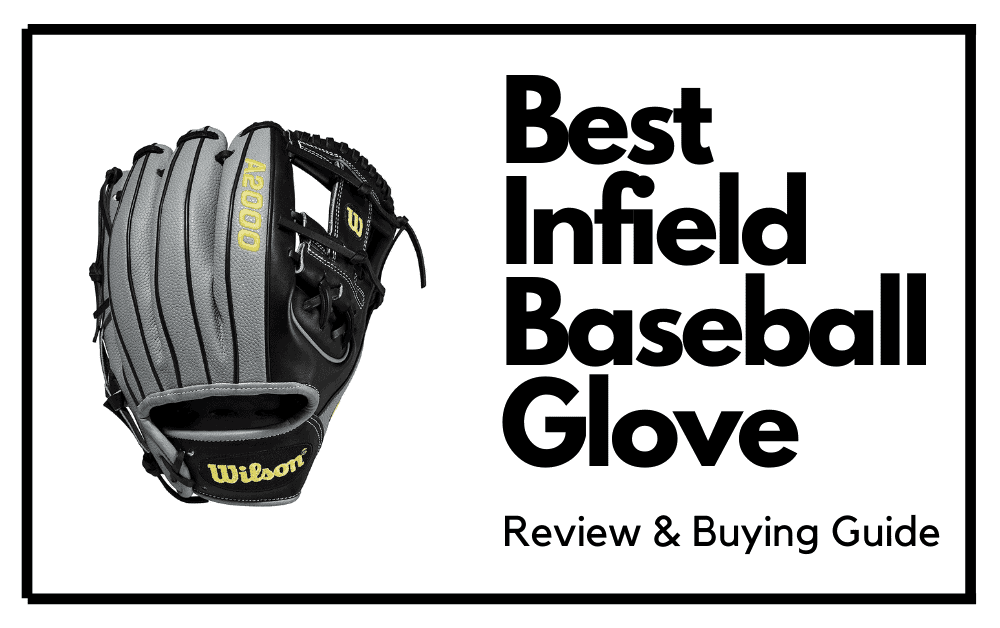
3. Wilson A2000 Baseball Infield Glove (High-end Alternative Infield Glove)

If you’ve been around the game a while, you know the glove world basically splits into three camps, Rawlings, Wilson, and All Star. Roughly half of all ballplayers end up in a Rawlings, but if you’re going to fly the Wilson flag, the A2000 is the glove to get.
Yes, the Wilson A2K is technically a step up, but it also costs about $100 more. Whether that extra money is worth it is up to you and your budget. My take is that if you’re not chasing an MLB roster spot, the A2000 will absolutely get the job done for a killer season.
So what does the A2000 bring to the table? Along with the A2K, it’s one of only two Wilson infield gloves built from Pro Stock Leather, which comes from premium US steer hide. That leather is why I’ve seen A2000 gloves survive two full seasons without falling apart. The Dustin Pedroia pattern covered here uses a classic I-web (Wilson makes plenty of other A2000 patterns and sizes too, so this is just one option among many).
More than 60 percent of infielders reach for an I-web, and this glove shows you why. The bridge and finger lacing are shaped to help you scoop up short hops, and the shallow pocket keeps your transfer quick without sacrificing the palm padding you need to handle a ball coming in at 80 to 100 mph.
You’ve got your choice of infield sizing here too, 11.25, 11.5, or 11.75 inches, so you can decide between a faster, tighter feel or a bit more range and reach.
The one real complaint I hear about the A2000, and it’s a fair one, is the break in period. This isn’t a glove you can soften up in a day or two. Plan on playing catch with it daily if you want a natural break in, though there are shortcuts that can speed things up at the cost of some longevity.
The A2000 isn’t quite in Pro Preferred territory, but it sits right alongside the Rawlings Heart of the Hide, and plenty of MLB infielders actually wear one or the other. That alone tells you how solid this glove is.
If you’re a die hard Wilson fan, you’ll swear by this glove, and you’d be right to. It’s an outstanding infield glove, even if it’s not quite the single best glove on the market. If you don’t want to follow the Rawlings crowd, the A2000 is a great way to stand out.
4. Rawlings Player Preferred (Budget Infield Glove for Adults)

Not every glove needs to be top shelf. Sometimes you just want something simple, usable, and easy on the wallet, whether that’s a holiday gift or a glove for casual weekend games. That’s exactly the lane the Rawlings Player Preferred plays in.
I’ve recommended this glove so many times I’ve lost count. It’s genuinely the best value budget infield glove out there, and you’ll even see it show up on my list of the best outfield gloves, that’s how versatile it is.
What earns it a spot on this list twice? Price to performance. You’re paying under $80 for a glove that feels like a $120 to $150 model. It’s not going to compete with the Pro Preferred, the A2000, or the Mizuno Pro, but as a budget infield glove, nothing else touches it at this price.
The leather here is synthetic rather than steer hide, cowhide, or kip, so don’t expect a premium feel. But synthetic leather still gets the job done. Mine lasted almost two full seasons before part of the webbing gave out, which is solid durability for a glove at this price.
The palm padding deserves a mention too. Even in a casual game, fastballs don’t care that you’re just having fun, and a mishandled catch stings without decent padding. This glove keeps your palm protected.
You also get a flex Velcro strap, so adjusting the fit is simple.
Here’s the catch. The Player Preferred only comes in sizes 12 inches and up, so if you want the ideal 11.5 or 11.75 inch infield size, you’re out of luck here. Outside of first base, most infielders don’t want a 12 inch glove.
And remember, this is a budget glove through and through, so keep your expectations realistic. My copy held up for two seasons, but how long yours lasts depends entirely on how you use and maintain it.
Even so, the Rawlings Player Preferred remains the best infield glove for the money. You can go cheaper with something like a Franklin glove, but the performance drops off fast. It’s tough to beat this price point for an adult infield glove of this quality.
If you’re on a tight budget, want a casual glove for fun, or need an easy gift idea, this is the one to grab.
5. Easton Tournament Elite Youth Infield Glove

Youth travel ball keeps getting more competitive, and the way kids are playing right now, that trend isn’t slowing down. Every glove covered so far works fine for high schoolers and adults, so if you’re in the upper Junior or Senior League, feel free to grab any of those.
But travel ballplayers in the 9 to 14 age range usually can’t make a Rawlings Pro Preferred or A2000 work comfortably, even when it technically fits, it often feels wrong in the hand. That’s where the Easton Tournament Elite Youth comes in, and it helps to understand how youth gloves differ from adult gloves before you buy.
This is a pro tier glove without the pro tier price tag, and that’s what makes it stand out. The tanned cowhide leather is genuinely comfortable right away since the tanning process softens it up, making it easy to open, close, and control.
The palm lining is full leather too, so even a mishandled catch won’t sting as badly. Add in the I-web for a clear view of the ball, and the finger, bridge, and webbing all work together to make scooping ground balls easier.
Easton labels this a “transitional size,” meaning it’s built to grow with a player from roughly age 9 to 14. It’s listed as 11.5 inches, but the wrist opening expands as you adjust the lacing. I’ve personally seen 9U and 11U players wear this glove comfortably.
One detail I really like is the extra room in the pinky area. Some kids prefer to slide two fingers into that slot for more control, and while it’s not for every player, it’s a nice option to have available.
The I-web here also has a snake like pattern cut into the same tanned cowhide, which gives it a high end MLB look. So beyond performance, this glove has some real style to it.
Bottom line, the Easton Tournament Elite is an excellent youth infield glove. It runs around $100, but the feel, control, and durability rival gloves that cost a lot more. For a youth infield glove, this is one of the best out there.
6. Jalunth Kids Youth Junior Infield Glove (Cheap Youth Infield Glove)

This next pick might raise an eyebrow. I wanted to look outside the usual big three brands and see what was actually worth recommending, and there isn’t much out there worth mentioning. But the Jalunth Kids Youth Infield Glove genuinely surprised me.
The most obvious feature is the price. This is the cheapest glove on this entire list, usually running somewhere around $25 to $30.
That doesn’t mean it’s junk. If you’ve got a kid just starting to learn the basics of infield defense, this glove gets the job done without costing you $100 plus.
The leather is synthetic, nothing fancy, but that’s not really the point at this level. Your kid isn’t fielding 80 mph grounders yet, so what matters more is that it feels comfortable around the palm and fingers.
Jalunth claims the glove ships 90 percent broken in, and honestly, in my experience it needs closer to zero break in time. My own kid was using it within minutes of taking it out of the box.
It uses a basket web with trapeze style lacing layered over the top. That’s a common utility web, which means it’s flexible enough for any position, though it’s not built specifically as a dedicated infield pattern the way the other gloves on this list are.
That’s completely fine for a youth glove though.
In short, the Jalunth Kids Youth Infield Glove is a solid, cheap pick for casual, recreational players just discovering the game. It makes a great gift, and it might just be the nudge your kid needs to fall in love with baseball, as long as you’re not bringing it to a serious tournament.
If you want something a step up without breaking a $50 budget, look at the Wilson A360. And if you can spend a little more, the Rawlings Sandlot is worth a look too.
A Detailed Guide on Choosing the best infield gloves
Whether you’re shopping for a premium infield glove or a budget pick for your kid, the core things to look for stay mostly the same. Sizing and construction shift a bit depending on age and position, but here’s the checklist I actually use when I’m evaluating infield gloves.
Material And Construction (What Should You Get and Why?)
Leather quality varies a lot from glove to glove, and it’s usually the single biggest factor in price. Five leather types show up again and again in infield gloves, so here’s a quick rundown of each.
· Buffalo skin
Tough and durable, but stiff. Buffalo skin takes the longest to break in of any material on this list. Push through that and you’ll get a glove that lasts for years.
· Kip leather
One of the most premium leathers you can buy. It’s stiff out of the box, but the break in process is more comfortable than you’d expect, and the finished feel is genuinely incredible. The Rawlings Pro Preferred covered above is built from kip leather, and if you want to go deeper on what makes it special, I’ve written a full breakdown of kip leather gloves.
· Cowhide
The standard leather across most baseball gloves, and for good reason. Cowhide is the benchmark of the industry. Take care of it and a cowhide glove will get you through an entire season, or several, without issue.
· Premium Steerhide
This is the leather Wilson uses across its A2000 and A2K infield glove lines, and it’s another highly sought after option. It’s extremely durable and can last multiple seasons of regular use, though it comes stiff out of the box. If you’re curious how steer hide actually compares to kip leather, I’ve broken that down in detail, or you can jump straight to my fastest way to break in a stiff glove if you just want it game ready sooner. These five leathers cover almost everything you’ll find in a quality infield glove. Outside of them, you’ll mostly see synthetic leather and pigskin, both common in budget-friendly gloves.
So when you’re picking out an infielder’s glove, figuring out the leather is priority number one. Think it through, because your budget plays a big role in which leather quality you can realistically get.
Pocket (Shallow or Standard)
Pocket depth is one of the most important parts of any infield glove. You’ll find two main types, standard and shallow, and most infielders gravitate toward a shallow pocket for one big reason, faster transfers.
A shallow pocket isn’t universal though. Not everyone adapts to that playstyle right away, and it does come with more risk of a ball popping out of the pocket on a bad hop, which can turn into a stolen base in a hurry. Pairing the right pocket depth with the right web pattern, I-web tends to suit shortstops and second basemen, while a closed or H-web is more common at third base, makes a real difference in how the glove performs at your specific position. I go into more depth on that in my guide to baseball glove web types.
So decide on a playstyle first. A shallow pocket is the high risk, high reward option built for speed, while a standard pocket gives you more control and a bigger margin for error.
Left Hand or Right Hand (Don’t Mess the Hand Orientation)
Most infield gloves are built for one hand orientation. LHT means you throw with your left hand and wear the glove on your right, and RHT means the opposite. Double check this before you buy, since a handful of manufacturers label it differently than you’d expect. Always read the product description carefully.
Padding (To Save You from Fastball Impact)
Padding is what keeps your palm from taking the full brunt of every incoming ball. Miss the pocket on a hard hit ball and land it on an awkward spot in the glove, and you’ll feel it.
Getting a glove with thick, quality padding minimizes that sting. It won’t erase the pain of missing the pocket on a 90 mph grounder entirely, but good padding takes the edge off.
Adjustable Wrist (More Flexibility to You)
Every player’s hand is a little different, even within the same general size range. That’s why an adjustable wrist closure matters. It lets you dial in the fit instead of settling for whatever the factory setting gives you.
Keep in mind that youth gloves typically have smaller wrist openings and heels to match smaller hands.
Affordable Price (Expectations vs. Reality)
Everyone wants a great glove at a friendly price, but quality costs money in this hobby just like anywhere else. A genuinely good infield glove usually runs $250 to $300, and if you want something truly special, you can spend up to $500. The Rawlings Pro Preferred covered earlier lives in that high ticket range.
That said, you can get a lot of glove for $200 to $250 too. Both the Rawlings Heart of the Hide and the Wilson A2000 are completely reasonable choices in that range.
Size (Perfect Size = Perfect Game)
Sizing for infield gloves is pretty straightforward once you know what to look for. Infield gloves generally come in three sizes. If you want the full picture on measuring your hand and matching it to a glove, I’ve put together a complete baseball glove sizing guide as well.
- 11.25 inches, a touch smaller. Favored by infielders chasing the fastest possible transfer. Only a small group of players go this small.
- 11.5 inches, the ideal size for middle infielders. It gives you reach, a shallow pocket for fast transfers, and solid control all in one package.
- 11.75 inches, better suited to third basemen. You get more reach at the cost of a slightly harder transfer, though it still works well for infielders who bounce between positions during a game.
Break-In Period (Long vs. Short)
Plenty of gloves ship with some factory break in already done, but you’ll still need to play catch with it before it’s truly game ready. Synthetic leather and pigskin gloves break in fastest. True leather gloves stay stiffer for longer, and there’s no way around putting in the time. If a glove is taking a while to break in, that’s usually a sign it’s built to last.
You can always speed things up by working the glove in by hand, but keep in mind that manual break in methods can shorten a glove’s lifespan if you push too hard.
FAQ
Here are the questions I get asked most often as a coach, answered as clearly as I can.
What glove do most MLB infielders use?
Most MLB infielders wear Rawlings gloves, with Wilson a close second. That usually means a Pro Preferred or Heart of the Hide from Rawlings, or an A2000 or A2K from Wilson.
Keep in mind that most MLB infielders play with custom built gloves, so even matching the brand won’t get you an identical product. If you want to go deeper on this, this breakdown of what pros actually wear is worth a read: WHAT GLOVES DO MLB PLAYERS WEAR?
What gloves do middle infielders use?
Middle infielders, meaning shortstops and second basemen, typically play with 11.5 inch I-web infield gloves. There’s no single brand that dominates here. Once you’ve nailed down the size and web pattern (see my full I-web vs H-web comparison if you want the details), you really can’t go wrong picking between Rawlings and Wilson.
What makes a good infield glove?
I touched on this throughout the list, but the three things that matter most in a quality infield glove come down to this.
- Leather quality
- Palm padding
- Breathability of the glove fabric
What is the best size glove for an infielder?
The sweet spot is 11.5 inches. It gives you enough reach while keeping ball transfers fast, which is really all you need as an infielder. Third basemen sometimes want the extra reach of an 11.75 inch glove, and players chasing the quickest possible transfer can size down to 11.25 inches.
Control the Infield
Like I said at the start, infielders live in the middle of the action. Home runs are rare, but bunts, seeing-eye singles, and stolen base attempts happen constantly, all game, every game. Your job is to shut down as many of those as you can and put pressure right back on the other team’s pitcher. You can’t do that with a glove that’s fighting you instead of helping you.
I know some of these infield gloves aren’t cheap. Think of it as a long term investment instead of a one time purchase. If you want a mid tier option, the Mizuno Pro Select is a great call. Otherwise, I’d point you toward one of three gloves, the Rawlings Pro Preferred if the budget allows it, the Heart of the Hide as a slightly cheaper option, or the Wilson A2000 as a genuine alternative to the HOH. And if you’re building out the rest of your defensive lineup, my guide to the best baseball glove brands is worth a look too.
Don’t let hitters get the better of you. Shut down the runs, create the pressure, and win the game. That’s everything I’ve got when it comes to picking the best infield glove. Now get out there and make some plays. Cheers!

With 4 years of Division II experience, a .272 career batting average, .410 on-base percentage, and 7 home runs, I’m now in my fifth season. I’ve played baseball since age 3, alongside future MLB Draft picks, and I aim to pursue a career in baseball professionally, be it playing, coaching, or scouting.