
When it comes to affordable, no-fuss pitching machines for training young hitters, the Louisville Slugger UPM45 Blue Flame is still one of the most popular picks out there. It’s a manual pitching machine, and it has just enough power to train youths who are still learning the ropes.
I used one extensively when I was starting out, and now, in my career as a little league coach, I still come back to this machine whenever I need to start a player’s training from scratch.
Despite my good experience with it, a lot of people still find things to complain about with this pitching machine. But most of the issues people run into come from a poor setup, bad calibration, or just not knowing the machine well enough. That’s exactly what I want to fix here.
I’ll walk you through a complete guide on how to set up a Blue Flame pitching machine, cover the safety basics, and show you how to get the most out of everything this pitching machine has to offer.
How Do You Set Up a Blue Flame Pitching Machine?
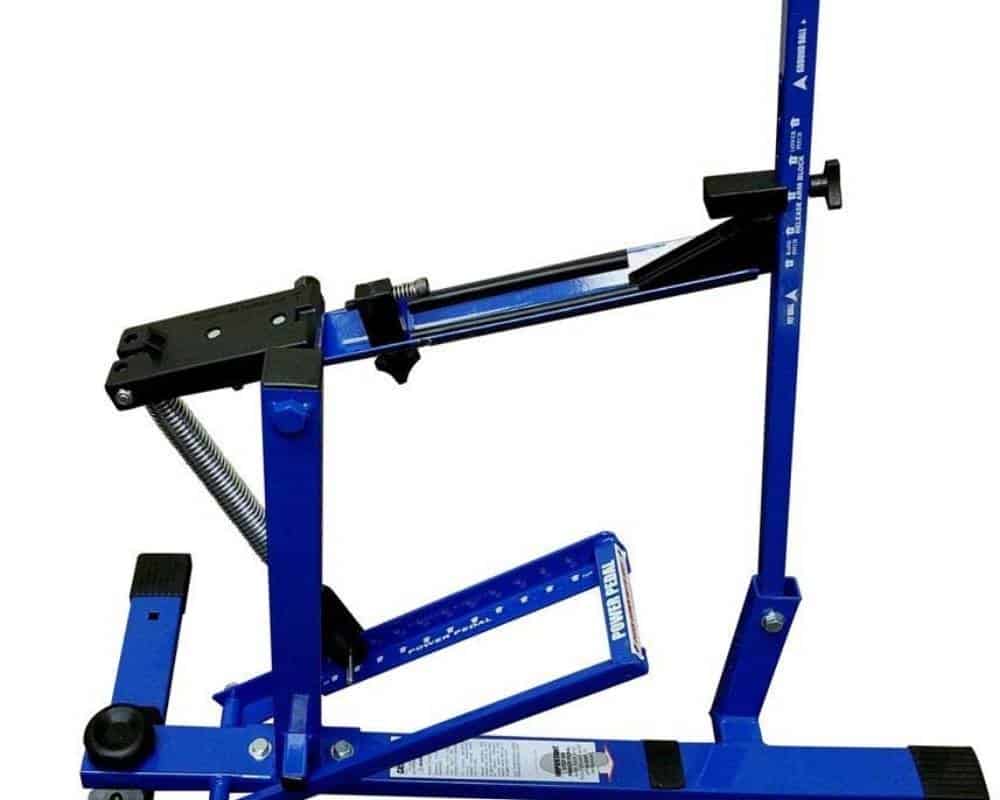
When you first get your hands on your Blue Flame pitching machine, it comes disassembled in a box, mostly broken down into a handful of major pieces. Before you can start practicing with it, you need to put it together. Take your time here, because the machine’s overall stability and performance depend a lot on how well it’s assembled.
You’ll also get an instruction manual for assembling all the pieces. When I first got one, I was pretty intimidated by all the small parts, but the manual has diagrams that make it easy to see where everything goes.
If you’re still struggling with assembly, here’s a step-by-step walkthrough. Grab a wrench and a Phillips head screwdriver before you start.
Do a quick check of all the pieces before you start assembling. You should have around five major pieces along with a few small ones. Most of the bolts should already be threaded in place, and you’ll just need to undo and redo them as you go.
Also, pick your spot before you get started. Set the machine up on flat, level ground with good footing. If the surface is soft (grass, dirt, or turf that gives a little), use the ground anchor spikes that come with the machine to keep the base from shifting once you’re firing off pitches.
Step – 1
Start with the front leg. Remove the large knob located in the middle of the front leg and align it to the base assembly. Then reattach the knob and tighten it as needed.
Step – 2
Take the throwing arm assembly and remove all the nuts, washers, and bolts from it using your wrench. Set it onto the base assembly, then reattach the bolts and washers. After tightening it properly, reinstall the nuts and snug them down.
Step – 3
From the other part of the base assembly, remove the nuts, bolts, and washers with your wrench. Attach the release handle inside the U channel. Don’t overtighten the nuts and bolts here, just tighten enough to hold the release handle securely in place.
Attach the top shield to the top of the release handle by removing and reattaching the nuts and bolts on the release handle.
Step – 4
Attach the release arm block and micro-adjustment mechanism to the numbered slot on the base assembly. Use the chart on the top shield to help you decide where to place it based on the pitch type and speed you want.
Step – 5
Add the optional spike to the front leg assembly for a bit more stability while pitching. Then install the spring into the numbered hole on the power pedal according to the speed you want. Again, you’ll find a speed reference chart printed right on the top shield.
Safety Tips Before Your First Pitch
Once it’s assembled, don’t just start firing pitches right away. Walk through a quick safety check first:
- Keep hitters, fielders, and bystanders clear of the machine’s front and sides until you’re ready to pitch.
- Always supervise younger players around the machine, especially when they’re loading balls or standing near the throwing arm.
- Pull the release lever slowly and steadily instead of yanking it. A slow pull keeps the pitch consistent and keeps your hand out of harm’s way.
- Recheck all the bolts and the spring tension before every session, since a machine that sat in storage over the offseason can loosen up.
Is the Blue Flame Pitching Machine Still Worth Buying?
Yes, and it’s still on the market. Louisville Slugger continues to sell the UPM45 Blue Flame through its own training site and most major baseball retailers, usually priced under $200. So if you’re wondering whether this is a discontinued product before you buy, it isn’t. Just make sure you’re buying the UPM45, since Louisville Slugger also sells the beefier UPM50 Black Flame, which is a different machine with a different price and speed range.
A Brief Overview of the Blue Flame
Before getting into the actual setup, here’s a quick rundown of the Blue Flame’s features. Having used it extensively both in the past and the present, I’ve got a pretty thorough idea of what the machine has to offer.
Here are some of the features you’ll find on your Blue Flame UPM45:
- One of the best baseball little league pitching machines thanks to its affordable price, lightweight design, and ability to work with any type of ball. It works well for baseball, and it can also pitch softballs if that’s what you need.
- Entry-level pitching speed, ranging from about 18 to 45 miles per hour with regulation baseballs. The pitching velocity is easy to adjust using the speed reference on the top shield. With softballs or lighter lite-flight balls, you can push the velocity closer to 60 miles per hour, which is great when you want to challenge your better hitters.
- Completely manual design, requiring no batteries or electrical connection.
- Accurate and on-point pitches. It can get a 12-inch arc when throwing softballs.
- Can throw fly balls accurately and ground balls with some decent force, which is handy for training your fielders.
- Lightweight yet sturdy frame with a strong base, so you’ll see little to no movement once it’s set up and anchored.
- Light enough that one person can carry, assemble, and set it up without help.
As you can see, for a sub-$200 baseball pitching machine, the Blue Flame comes with some pretty solid features. Being able to throw grounders and fly balls is always handy when you’re training your fielders, not just working on hitting.
The only real downside is that someone needs to operate it at all times. But since I like to talk to my batters and fielders in between pitches anyway, that’s never been a big deal for me. And while its speed is just about right for training youngsters, they will eventually grow out of it after a couple of seasons.
But when you weigh the price of the Blue Flame against something like the Hack Attack, it doesn’t look like a bad option at all, minor flaws and all. As a starter pitching machine for training newer players, this one’s a clear winner.
How Accurate Is the Blue Flame Ultimate Pitching Machine?
What I love about the Blue Flame is that, for such an affordable model, its pitching accuracy is pretty consistent. It won’t hit the exact same spot every time, but that’s true of just about any pitching machine trying to simulate a real pitch.
Still, once it’s set up and calibrated, each pitch from this machine lands in the general area of the strike zone. Because of that, batters get a feel for facing a real pitcher when they’re up against this machine. Sometimes the ball goes a little higher, sometimes a little lower, which is honestly part of what makes it good training.
How Fast Does the Blue Flame Pitching Machine Pitch?
The pitching speed of the UPM45 Blue Flame isn’t exactly groundbreaking. It’s decent, but compared to a high-end option, or even a moderately-priced machine like the Jugs BP1, it starts to show its limits. Still, for an entry-level machine aimed at little leaguers, its pitching speed holds up fine.
The machine handles standard pitching machine balls, both regulation baseballs and softballs, and pitches them anywhere from around 18 to 45 miles per hour. With lighter softballs or lite-flight balls, you can get closer to 60 miles per hour, which is excellent for training your hitters’ reflexes and depth perception.
According to the manufacturer, the unit is rated for around 20,000 pitches, so it’ll last quite a while before showing signs of wear. Once the spring gets worn out or damaged, you can just replace it and your pitching machine will be as good as new.
Keeping Your Blue Flame in Good Shape
A little maintenance goes a long way with a machine like this. Since it’s fully manual, there’s no motor to worry about, but the moving parts still need attention if you want it to keep pitching consistently.
- Check all the fasteners before each session, since nuts and bolts can work loose over repeated use.
- Lubricate the moving parts of the throwing arm and release mechanism periodically so nothing binds up.
- Replace the spring once it starts losing tension or shows visible wear, rather than waiting for it to snap mid-session.
- Store the machine somewhere dry between seasons to keep rust off the metal frame and hardware.
Final Words of Wisdom
It may not be the high-end pitching machine on the market, that spot’s reserved for pricier models, but the Blue Flame is a great pickup if you’re after a reliable, affordable pitching machine. If you’re working with young players, this is one of the better investments you can make.
Its reliable accuracy and consistent speed help your players get into a rhythm with their swing. You’ll also be able to watch their batting technique and train your fielders at the same time, since you can call out to them before you load up the next pitch. Pairing it with a solid batting tee for isolated swing work rounds out a pretty complete home practice setup.
If you want something with more speed and more expandability, check out the UPM50 Black Flame by Louisville Slugger. I did an extensive review of that model too.
With that said, the Blue Flame pitching machine is a solid machine that won’t put a gaping hole in your wallet. Now that you know how to set up a Blue Flame pitching machine and use it to sharpen your drilling routine, you can get the most out of it. Cheers!

With 4 years of Division II experience, a .272 career batting average, .410 on-base percentage, and 7 home runs, I’m now in my fifth season. I’ve played baseball since age 3, alongside future MLB Draft picks, and I aim to pursue a career in baseball professionally, be it playing, coaching, or scouting.