
Every softball hitter I know has felt it: that stinging jolt through your hands after a mishit. Maybe you caught the ball out near the end of the barrel instead of dead center. Or maybe it jammed you in tight on the handle.
Either way, the impact sends a shockwave down the bat and straight into your palms.
The vibration can be so intense that some hitters have to shake the bat loose mid-swing. So what’s actually causing it? And is there anything you can do to stop it from happening every time you swing?
There’s real physics behind bat vibration, vibration nodes, bending modes, all of that, but you don’t need an engineering degree to get the basics. Miss the sweet spot, and the bat is going to rattle and sting. That’s rule number one.
But there’s more to it than that, especially with softball bats specifically. Single-wall versus double-wall construction, alloy versus composite, even your league’s certification stamp, all of it plays into how much sting you feel. Let me walk you through it.
Why Does the Softball Bat Rattle or Vibrate?
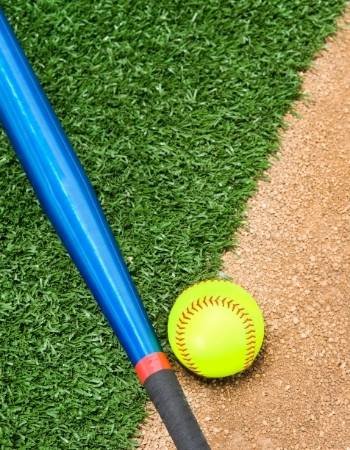
Simply put, the impact of the ball on the bat causes it to rattle and vibrate. But you’ve probably noticed that a really good hit barely stings at all. That’s because you caught the ball on the bat’s “sweet spot.”
The sweet spot is the small zone on the barrel, usually just a handful of inches from the end cap, where the bat vibrates the least. Bat acoustics researchers describe it as the region sitting between the first two “bending modes” of the bat, basically the points where the barrel flexes hardest on impact. Hit between those points and most of the shock never makes it to your hands.
When you connect there, nearly all the kinetic energy from your swing transfers into the ball instead of bouncing back through the barrel and into your palms. That’s why a flush hit barely rattles, while a mishit can make you want to drop the bat entirely.
Let’s walk through three scenarios: hitting the ball dead center on the sweet spot, catching it out near the end of the barrel, and catching it in tight near the handle.
1. Center of The Barrel/ Sweet Spot = No Vibration + No Sting
Catch the ball on the dead center of the barrel and you’ll barely feel a thing. I’m not exaggerating. Ask most power hitters if their hands sting after a flush hit, and they’ll tell you they felt almost nothing.
That’s because nearly all the energy stored in the bat transfers straight into the ball on contact. The bat’s momentum also gets absorbed cleanly the instant it connects, which is part of why a good hit feels smooth instead of jarring.
2 . Near the Barrel/ Outside the Sweet Spot = A Lot of Vibration + Painful Sting
Catch the ball out near the end cap and you’ll feel it. This kind of contact sends a wave of vibration through the whole bat, and your hands take the brunt of it.
The ball won’t travel as far either, since the energy transfer isn’t nearly as efficient. Whatever energy doesn’t make it into the ball gets bounced right back through the barrel. A lot of this comes down to how you swing the softball bat and where your hands are through the load, so dialing in your mechanics helps here too.
3. Near the Handle/ Inside the Sweet Spot = A Lot of Vibration + Painful Sting
You can also miss the sweet spot by getting jammed, catching the ball in tight near the handle. This sends vibration through the bat’s length too, and it often stings even worse than an end-cap miss simply because you’re closer to your hands.
The cause is the same as scenario two. The energy transfer isn’t clean, so the leftover kinetic energy has nowhere to go but back through the bat. Your grip takes a hit, and the quality of contact drops fast. Of these three scenarios, only the sweet-spot hit gives you a vibration-free swing, and that’s the one every hitter is chasing.
Poor contact isn’t the only culprit, though. A softball bat nearing the end of its usable life can start rattling even on a flush hit. If your bat is stinging on hits that used to feel clean, it might be dying rather than you missing your mark. I’ve laid out the warning signs in my guide on how to tell if a softball bat is dead.
And if you’re swinging an aluminum alloy bat, even a high-end one, expect some sting no matter what. It’s one of the tradeoffs that comes with alloy construction.
What Does a Rattle in a Softball Bat Mean?
A rattling softball bat usually means one of two things: you missed the sweet spot, or the bat itself is on its way out. Alloy bats are generally more prone to vibration than composite bats, since composite construction, especially double-wall composite barrels, typically builds in some form of dampening.
If your bat starts rattling suddenly, even on hits that used to feel clean and centered, that’s usually a sign it’s dying. At that point, no amount of swing adjustment fixes it, and you’re better off shopping for a replacement.
How Do You Stop a Softball Bat from Vibrating or Rattling?
Step one is figuring out why it’s happening. If it’s coming down to poor contact, the honest answer is you need more reps. There’s no shortcut around that.
Consistent, centered contact is what actually eliminates vibration, full stop. That comes from practice, not gear. The more consistently you find the sweet spot, the less you’ll feel the sting.
That said, a few things can take the edge off. Batting gloves add a layer of cushioning. Some hitters install a vibration-dampening knob or insert. Wrapping the handle with extra grip tape or padding can soften the blow too.
None of that eliminates vibration on a mishit, it just makes it more tolerable. I’d also be careful with extra wraps and padding. Bulking up the handle can throw off your grip and mess with your bat control over time, which isn’t worth it just to dull the sting.
Your bat’s construction matters here too, more than most hitters realize.
Single-Wall vs. Double-Wall Softball Bats and Vibration
This is where softball bats really diverge from baseball bats, and it’s worth its own section.
Single-wall barrels are built from one layer of material, usually alloy. They tend to have a big, forgiving sweet spot that spans more of the barrel, which is part of why beginners and a lot of slowpitch players gravitate toward them. The tradeoff is that they can feel harsh and buzzy on a mishit.
Double-wall bats add a second inner barrel layer, almost always in composite construction. That extra layer flexes more on contact, which boosts the trampoline effect (more pop on a good hit) and also helps soak up vibration on a bad one. That’s why composite double-wall bats generally sting less than single-wall alloy bats on off-center contact, even though neither one eliminates sting entirely.
I go deeper into the tradeoffs, including how each construction holds up under your league’s rules, in my single-wall vs double-wall softball bats breakdown.
Does USSSA or ASA/USA Softball Certification Affect Vibration?
Not directly, but it’s related. USSSA and ASA (now branded USA Softball) don’t test bats for vibration. They test for batted-ball speed, typically capping fastpitch and slowpitch bats at a 1.20 BPF (bat performance factor), a measure of how much livelier a bat makes contact compared to just throwing a ball into a wall. USA Softball leans on an exit-velocity standard for some categories instead of BPF, but the goal is the same either way: keeping bats from playing too hot.
None of that regulates sting. A fully certified bat can still rattle your hands on a mishit. What certification affects indirectly is construction. Composite double-wall bats built to USSSA and USA Softball specs often ship with dampening tech baked in (foam inserts, multi-piece connections, and similar features) because manufacturers know sting is one of the top complaints they hear from hitters.
If you play across multiple leagues, or you’re not sure which stamp your bat needs, I broke down the certification differences in my USSSA vs ASA (USA Softball) comparison.
Do Composite Softball Bats Vibrate or Rattle?
A good composite softball bat will almost always come with some kind of sting-dampening feature, but that doesn’t make it immune. You’ll still feel some vibration on a poor connection. Compared to alloy bats, though, composite bats generally don’t feel nearly as harsh when they do vibrate.
Wood bats land in a similar spot, offering less sting than alloy on a mishit. Meanwhile, single-wall alloy bats tend to have a larger forgiving sweet spot than composite or wood bats do. So even though they sting more on a bad hit, it’s often easier to find the sweet spot in the first place with one.
Do Batting Gloves Help with Vibration?

The main job of batting gloves isn’t to kill bat vibration, it’s to protect your hands. If a stray pitch or a bad hop off the mound clips your hand, gloves cushion that impact.
Reducing sting is more of a side benefit than the main selling point. Not every glove is built for it either. Only models with extra palm padding, or the kind designed for cold-weather play, offer real protection against vibration.
A Few Words of Wisdom
The real fix for bat vibration comes down to consistency. I’m not saying every swing has to be perfect. But on the ones you do connect with, make sure you’re catching the sweet spot of the bat. Building more power into your swing helps too, and a few solid drills for building fastpitch batting power can help you get there.
The sting from a bad connection isn’t pleasant, but it’s useful. Think of it as instant feedback telling you exactly where you missed. Keep grinding in the cage, and every session gets you closer to a swing that barely rattles at all. Cheers!

With 4 years of Division II experience, a .272 career batting average, .410 on-base percentage, and 7 home runs, I’m now in my fifth season. I’ve played baseball since age 3, alongside future MLB Draft picks, and I aim to pursue a career in baseball professionally, be it playing, coaching, or scouting.