
Caring for your baseball glove shouldn’t take a backseat to the flashy side of the game. Everyone likes to talk about diving catches and big swings, but what you do off the field with your gear matters just as much.
Discipline is the key here. If you can’t manage to keep your glove clean between practices and games, that says something about how seriously you take your equipment. That’s why I always make sure the players on my team take a few minutes after practice to wipe the dirt off their gloves and bats.
But wiping off loose dirt is only a temporary fix. Over time, dirt, sweat, and grime work their way into the seams and build up on the outer shell. When that happens, a quick wipe-down isn’t enough. You need to actually clean the glove.
A lot of players mix up cleaning and conditioning, so let’s get that straight first. Cleaning is about getting rid of dirt, sweat stains, and grime. Conditioning is about feeding the leather oil so it stays soft and doesn’t crack. I’ve got separate guides that go deep on glove oils and conditioners if that’s what brought you here. This one is entirely about getting your glove physically clean, dirt, stains, and all.
What Can I Use to Clean a Baseball Glove?
What makes cleaning a baseball glove tricky is what you can and can’t use on it. Leather doesn’t respond well to water or random household chemicals. It can get heavy, discolor, or start flaking as it dries out afterward.
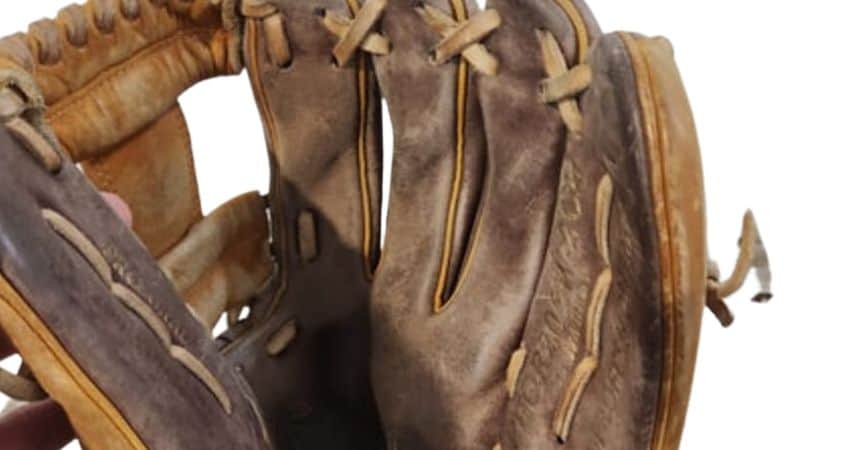
For most cleaning jobs, here’s what I keep on hand:
- A soft-bristled brush (an old toothbrush works fine) for loosening dirt in the seams and laces
- A leather-safe glove cleaner, or mild soap and water for synthetic and mesh gloves
- A couple of clean, slightly damp microfiber cloths
- A dry towel for wiping away residue
- A glove conditioner for after the glove is fully dry
I’d steer clear of dish soap, bar soap, and random kitchen oils for the actual cleaning step. They can strip the leather’s natural oils or leave a residue that ends up attracting more dirt down the line. Once your glove is clean and dry, that’s when conditioning comes in, and I’ve put together a full baseball glove oil and conditioner buyer’s guide that covers what I actually trust for that step.
If you’re in a pinch and don’t have a dedicated cleaner or conditioner, Vaseline is something a lot of players reach for. It’ll do the job once or twice, but if you keep cleaning your glove with Vaseline regularly, you can start to see the leather crack within a couple of months. I wouldn’t make a habit of it.
How to Clean Baseball Gloves
If you know your gloves, you already know there are a few different materials out there. Professionals and competitive players tend to stick with leather, while a lot of casual players go with synthetic leather or mesh to keep costs down.
Don’t get me wrong, in the battle between leather vs synthetic baseball gloves, leather comes out on top for durability and feel. But synthetic and mesh gloves offer real value for the price, and they clean up differently. I’ll walk through each material separately since the right approach changes depending on what your glove is made of.
Cleaning the Leather Baseball Glove
If you own a leather baseball glove, chances are you spent real money on it. Avoid the urge to toss it in the dishwasher or washing machine no matter how tempting it sounds after a muddy game. Cleaning a leather baseball glove is a slower process, and it needs a bit of patience.

I’ve already covered this in more detail in my dedicated guide on how to clean a leather baseball glove, but here’s the quick rundown:
- Use a clean toothbrush or soft-bristled brush to loosen dirt residue from the outer shell. Make sure you get the spots between the fingers and around the laces.
- Apply a small amount of leather cleaner to a clean cloth and buff the glove out gently. Less is more here.
- After cleaning the entire surface, let it rest for a while. Use another clean, slightly damp cloth to wipe off any excess cleaner, then let it dry completely.
- Once it’s fully dry, apply a small amount of glove conditioner on another clean rag and work it into the leather in small circular motions.

Once you’re done, leave the glove in a well-ventilated spot out of direct sunlight and let it dry fully. I like to leave mine overnight, and by the next morning it should be clean as a whistle.
One quick note: if what you’re dealing with isn’t just dirt but actual mold or mildew (usually from a glove that got put away wet), don’t use this same process. Scrubbing mold the normal way just spreads the spores around. Check out my guide on cleaning a moldy leather baseball glove first.
Getting Sweat Stains and Grass Stains Out
Sweat and grass stains are the two complaints I hear about most, and both build up slowly enough that you might not notice how bad it’s gotten until you compare an old photo of your glove to how it looks now.
For sweat stains, especially around the wrist opening and the palm lining, a slightly damp cloth with a small amount of mild soap usually handles it. Wipe in small circles, then go back over the same spot with a dry cloth to pull out the moisture. Don’t soak it. Leather holds onto water longer than you’d expect, and a soaked lining takes forever to dry out completely.
Grass stains are stubborn because the pigment sits down in the grain of the leather. A leather-safe cleaner with a bit of extra dwell time (let it sit for a minute before you wipe) works better than scrubbing harder. Scrub too aggressively and you risk burnishing the leather, which can actually make the stain more noticeable, not less.
For stains that just won’t budge, resist the urge to reach for anything with bleach or ammonia in it. I’ll get into why below.
Can You Bleach a Baseball Glove?
A while back, one of my youth players came to me with a question. He was bored with how his glove looked and wanted to give it a fresh new color, so he asked if it was okay to bleach it.
My answer was the same then as it is now: it’s a bad idea.
Bleach is a generic name for an abrasive chemical built to strip color from a surface. Because of how harsh and toxic it is, using it on your baseball glove is a strict no-no. You might get rid of the color, but you’ll also damage the leather’s fibers well beyond repair.
If you want to change up the look of your glove, there are safer options. Embroidery is a good, low-risk way to add a personal touch, and there are specialty leather services that can professionally dye or refinish a glove if you want a bigger visual change without risking the material yourself.
Cleaning a Synthetic Leather Baseball Glove
Synthetic leather gloves are favored by a lot of casual and youth players who want an affordable, low-maintenance glove. They’re not as durable as real leather, but they offer solid value for the price.

Cleaning a synthetic glove is much simpler than cleaning real leather. You don’t need a leather conditioner, and using one won’t do anything for it since there’s no actual leather to feed.
Take a soft microfiber cloth, dip it in a bowl of soapy water, and wipe the glove down completely. Get into the tight, hard-to-reach spots between the fingers and around the webbing. Once you’re done, let the glove air dry fully. Don’t try to speed up the process with a hair dryer or by setting it near a heater. Direct heat can warp synthetic material just as easily as it damages leather.
If you’re still trying to decide between the two materials in the first place, I broke down the full tradeoffs in my synthetic vs leather baseball gloves comparison.
Cleaning a Mesh Baseball Glove
Mesh gloves used to be strictly an entry-level thing, but you’ll find mesh backing on some higher-end gloves these days too, mostly for the added breathability. This section covers the affordable, mostly-mesh gloves. If you’ve got a higher-end glove with a mesh back panel over a leather shell, treat the leather parts like a regular leather glove and just spot-clean the mesh sections.

The nice thing about basic mesh gloves is that you can get away with tossing them in the washing machine. If you decide to do that, I’d recommend putting the glove in a mesh laundry bag first so it doesn’t get tangled up with other items in the wash.
Run a gentle cycle with cold water and only a small amount of detergent. Skip the dryer. Heat and mesh gloves don’t mix, and you risk warping the shape or damaging the padding.
How to Clean the Inside of Your Glove
Most players focus all their attention on the outside of the glove and forget the inside builds up just as much grime, mostly from sweat. Left alone, it can start to smell, and it’ll darken your hand a bit after a long practice too.
I’ve got a full walkthrough on cleaning the inside of a baseball glove if you want the detailed version. The short version: use a barely damp cloth with a bit of mild soap on the interior lining, avoid soaking it, and give it plenty of time to air dry, since the inside of the glove takes longer to dry out than the outside does.
When Should You Condition After Cleaning?
Cleaning strips out some of the leather’s natural oils along with the dirt, so I always recommend conditioning once the glove is completely dry. This is a separate step from cleaning, and it’s worth doing right since too much oil, or the wrong kind, can do more harm than the dirt ever did.
I’ve got a separate breakdown on how to use baseball glove conditioner the right way. If you want to compare specific products, my glove oil alternatives guide covers what’s actually worth using if you don’t have a dedicated conditioner on hand. Household oils like mink oil and canola oil come up a lot in these conversations, and I’ve tested most of them individually if you want the specifics before you put anything on your glove.
How Often Should You Clean a Baseball Glove?
There’s no strict rule here, but I’d wipe down the exterior with a dry cloth after every practice or game just to keep loose dirt from working into the seams. A deeper clean, the kind with an actual cleaner and conditioner, is usually only necessary every month or two during the season, or whenever the leather starts looking dull or feeling stiff.
Cleaning too often isn’t really the problem most players run into. It’s usually the opposite: a glove that goes a whole season without ever getting wiped down.
Once your glove is clean, dry, and conditioned, don’t just toss it back in your bag. How you store it matters just as much as how you clean it. I go through all of that in my guide on how to store a baseball glove, but the short version is cool, dry, ventilated, and out of direct sunlight.
Now That We’re Here
We all want to get the best out of our baseball gloves, but that takes some work on your end too. Keeping your glove clean and game-ready is part of the deal of being a serious ballplayer, so don’t put it off for tomorrow when you can knock it out today.
If you take one thing away from this, let it be this order of operations: clean first, condition second. Dirt trapped underneath a coat of oil doesn’t go anywhere, it just gets sealed in. For the bigger picture on everything glove care related, from break-in to long-term storage, my full glove care guide rounds it all up in one place.
I hope this rundown helps you get through this chore with minimal hassle. Cheers!
Tyler Wells

With 4 years of Division II experience, a .272 career batting average, .410 on-base percentage, and 7 home runs, I’m now in my fifth season. I’ve played baseball since age 3, alongside future MLB Draft picks, and I aim to pursue a career in baseball professionally, be it playing, coaching, or scouting.