
Baseball gloves take a while to break in, and if you’ve ever picked up a new one at the sporting goods store, you know exactly how stiff that leather feels in your hand. Somewhere along the way, almost everyone gets told the same trick: rub some Vaseline into it and let it soften up.
I get why people reach for it. It’s cheap, it’s already sitting in most bathroom cabinets, and it definitely feels like it’s doing something when you work it into stiff leather. But I want to be upfront about something before we get into it: Vaseline is petroleum jelly, not an oil. That’s a bigger difference than most articles on this topic bother to mention, and it changes how it actually behaves on your glove.
I’ve broken in a lot of gloves over the years, including a few with Vaseline back before I knew better. Let’s get into what it really does to leather, whether it’s actually worth using, and what I’d reach for instead.
Is Vaseline Good for Baseball Gloves?
Vaseline is petrolatum, a semi-solid blend of mineral oils and waxes. It was formulated to sit on human skin and lock existing moisture in, not to feed something that’s already dry. That distinction matters a lot here, because leather is preserved animal hide. It’s no longer living tissue, so it has no internal moisture supply the way your skin does. Vaseline’s whole “trap the moisture that’s already there” trick doesn’t really apply to a material that isn’t producing any moisture of its own.
Compare that to something like lanolin or neatsfoot oil, which are built to actually penetrate leather fibers and replace the natural oils tanning strips out. Vaseline doesn’t do that. It mostly sits on top of the leather instead of soaking in.

None of that means it’s dangerous to use. In small amounts, Vaseline will soften the surface of the leather and give you a bit of water resistance, since petroleum jelly is naturally hydrophobic. That’s genuinely useful if you’re playing in damp conditions. But because it just sits on the surface rather than getting absorbed, it also attracts dust and dirt faster than an actual leather conditioner would, and it can leave the glove feeling greasy and heavier than it should be.
Go overboard with it, apply it after every single game, or let it build up around the stitching, and you’re asking for trouble. Petroleum residue that never fully evaporates can weaken stitching threads over time, and a glove that’s constantly coated in a slick film loses some of the tackiness in the pocket that actually helps you catch and hold the ball. So the short answer is yes, you can use it, but it’s a “use sparingly” product, not a “use whenever” product.
What Actually Happens When You Rub Vaseline Into a Glove
- It softens the surface, not the fibers. You’ll feel an immediate difference in flexibility, but that’s mostly the top layer of the leather relaxing, not a deep conditioning effect.
- It adds water resistance. A thin coat will bead off light rain and morning dew reasonably well.
- It can make the pocket slicker. Too much and the ball won’t stick in the webbing the way it should.
- It attracts grime. A greasy surface picks up infield dust and dirt fast, and that combination is what eventually dulls the leather.
How to Use Vaseline on a Baseball Glove If You Still Want To
If you’ve already got a jar on hand and want to try it anyway, here’s how to do it without overdoing it.
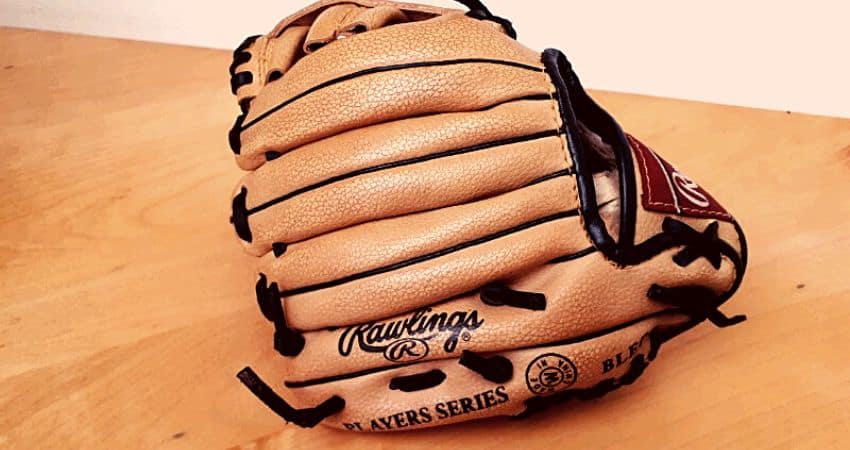
- Apply a thin layer. Scoop out a small amount and rub it across the palm and fingers of the glove with a soft cloth. Wipe off any visible excess right away instead of letting it sit in a thick coat.
- Give it a day to settle. Let the glove sit for 24 hours so the surface has time to soften before you start working it.
- Play catch and work the pocket. Use the glove, or go at it with a mallet if you’re in a hurry, to start shaping the pocket while the leather is pliable.
- Ball and wrap it overnight. Put a baseball in the pocket, fold the glove around it, and secure it with a belt or a couple of rubber bands. This does more for the shape of the glove than any product will.
- Keep it out of direct sun. Heat and UV exposure dry out leather fast, and that goes double when there’s a petroleum coating on it. Let it air dry indoors instead.
Stick to one or two light applications during the initial break-in period. There’s no reason to keep reapplying it once the glove has softened up.
Vaseline vs. Actual Glove Oils and Conditioners
This is where I want to be really clear, because Vaseline gets lumped in with oils constantly and it’s just not the same category of product. Oils like lanolin and neatsfoot are designed specifically to penetrate leather fibers and replace what tanning removes. Vaseline is petroleum jelly built for skin, and it mostly stays on the surface. If you want to see how it stacks up against the plant and animal oils people also try on gloves, I’ve broken most of them down individually, including mink oil, boot oil, and a general rundown of what oil actually works best to break in a glove.
If you’re comparing your options and want the honest short version of a bunch of household substitutes side by side, from vegetable oil to cooking oil to canola oil, check out our glove oil alternatives roundup. It’s the fastest way to see where Vaseline lands compared to everything else people try.
My honest recommendation, if you’re willing to spend a few extra dollars, is to skip Vaseline entirely and use a product actually formulated for leather. Nokona NLT Classic Leather Glove Conditioner is the one I keep coming back to. It’s been a dugout staple for decades because it actually conditions the leather instead of just coating it, and a small amount goes a long way without over-softening the pocket the way a heavy petroleum layer can. It’ll darken the leather a bit with repeated use, so keep that in mind if you care about your glove’s original color. For a full breakdown of every option I’d actually put my name behind, including oils for a stiff new glove and conditioners for upkeep, see our baseball glove oil and conditioner buyer’s guide.
My Honest Verdict
People have been using Vaseline to break in gloves for decades, and used sparingly, it isn’t going to ruin your glove. There’s no major risk to a light, occasional application. But it’s also not doing what a lot of players think it’s doing. It’s not feeding the leather the way lanolin or neatsfoot oil does, and it’s not a substitute for a product that’s actually engineered for glove care.
If you already have a jar in the house and just need to soften a stiff glove in a pinch, go ahead and use it the way I outlined above. But if you’re serious about a glove and want it to last several seasons, put the Vaseline back in the medicine cabinet and reach for a proper glove conditioner instead. For everything else on keeping a glove in good shape long term, take a look at our glove care basics guide and our detailed guide on using glove conditioner properly. And if you’re breaking in a brand new glove and want it game-ready fast, check out our guide on the fastest way to break in a glove, or the more general walkthrough on which oil to use if you decide oil is the better route for your glove.
Take care of your glove and it’ll take care of you out there. Good luck this season!

With 4 years of Division II experience, a .272 career batting average, .410 on-base percentage, and 7 home runs, I’m now in my fifth season. I’ve played baseball since age 3, alongside future MLB Draft picks, and I aim to pursue a career in baseball professionally, be it playing, coaching, or scouting.