
Baseball is a game of small details, and for a left handed thrower, the glove is one detail you can’t afford to get wrong.
I’ve spent years testing youth gloves, both for my own kids and for readers who write in asking the same thing: what’s actually worth buying for a left handed child right now?
The problem is most store shelves and Amazon listings default to right hand throw gear, and the left hand throw (LHT) version gets buried a few clicks deep. It’s frustrating if you don’t know exactly what to search for.
So I did the digging for you. Below are the 5 baseball gloves for left handed kids I’d actually put on my own child’s hand this season, and every one of them is confirmed available in a true left hand throw version.
What Does Left Hand Throw Mean?
A left hand throw glove, often shortened to LHT, is made for a player who throws the ball with their left hand and catches with their right. That means the glove goes on the right hand, not the left, which trips up a lot of parents the first time they shop for one.
Most glove lines make both hand orientations, but LHT sizes tend to sell out faster since fewer players need them. Some budget lines only make one orientation at all, so it pays to double check before you buy.
Every glove in this guide is available as a genuine left hand throw model, not just a right hand throw glove with a different label slapped on it.
Top 5 Best Baseball Gloves for a Left Handed Child
1. Rawlings Sure Catch Youth Baseball Glove
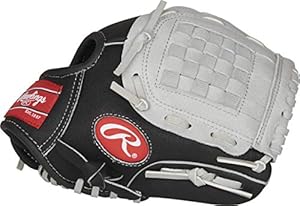
The Rawlings Sure Catch is still my top pick for a left handed child in 2026, and it’s the glove I recommend first when a parent asks me where to start. It’s built for ages 4 to 10 and covers pretty much everything I look for in a first real glove.
It’s a utility glove, so your kid can wear it at any position, including catcher in a pinch. I like that flexibility for young players who haven’t settled into one spot yet.
A lot of cheap kids’ gloves feel flimsy after a season. This one doesn’t. It’s lightweight but holds its shape, and the padded finger linings give it some quickness without making it stiff in a small hand.
Here’s the part parents love most. It comes about 90 percent factory broken in, so you skip most of the tedious glove work most kids have zero patience for. In my experience, if a new glove needs 3 weeks of oiling and pounding before it’s game ready, your kid will just refuse to use it. This one is close to ready right out of the box, and whatever’s left of the break in process goes quickly with a little use.
Rawlings built in their Sure Catch closing system, which makes it easier for small hands to snap the glove shut around the ball. Paired with the basket web pocket, it’s genuinely easier for a beginner to make a clean catch than with a lot of similarly priced gloves I’ve tested.
2. Mizuno Prospect PowerClose Youth Baseball Glove
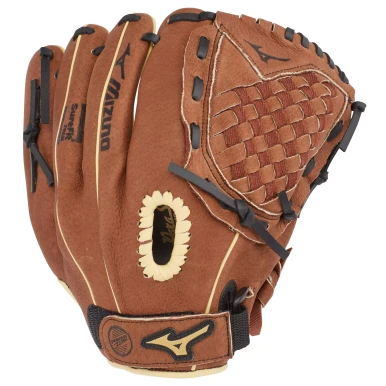
Mizuno’s Prospect PowerClose is the glove I swap in when a family wants something a step up from an entry level model without jumping into premium leather pricing. It’s an 11 inch utility glove built specifically for baseball, and it runs around $50 direct from Mizuno, which is fair for what you’re getting.
PowerClose is Mizuno’s version of an easy closing pocket, similar in spirit to what Rawlings does with Sure Catch. It helps young players trap the ball instead of watching it bounce out, which is the single biggest confidence killer for a new fielder.
The shell is lightweight and comfortable for a growing hand, and it comes with an adjustable strap on the back. Not every kid’s hand fits a glove the same way, so if yours feels a little loose or tight out of the box, you can usually reshape or adjust the fit rather than buying up or down a size.
It’s available in a true left hand throw configuration, and Mizuno sells the Prospect line from 9 inches all the way up to 11.5 inches, so there’s room to size up as your child grows into it.
3. Franklin Sports RTP T-ball Glove & Ball Combo
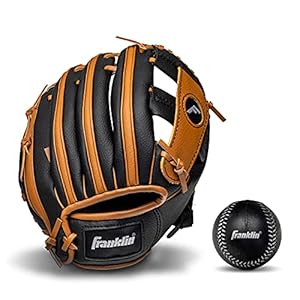
Franklin is a name most baseball parents already trust, and their RTP (Ready To Play) glove backs that reputation up. It’s built with mesh backed, synthetic materials rather than the kip leather you’ll find on higher end gloves, and that’s exactly the point for this age group.
Because it’s synthetic and lightweight, there’s essentially no break in period. Soft doesn’t mean poorly made here. The glove closes easily, which matters a lot for a 4 or 5 year old who’s still learning to squeeze a glove shut at the right moment.
This is really a T-ball glove first, made for kids just starting to learn to catch and throw. Franklin includes a soft foam ball in the combo, so your child can practice safely indoors or in the backyard without you worrying about a stray line drive.
It’s also one of the more affordable options in this guide, which makes it a smart pick if you’re not sure yet whether your kid is going to stick with the sport.
4. Rawlings Players Glove Series | T-Ball & Youth

The Rawlings Players Series is the budget minded sibling to the Sure Catch above, and honestly it holds its own. It’s a utility glove too, so it works at any position, catcher included, and it’s a solid choice if your young player hasn’t picked a favorite spot yet.
Where the Sure Catch leans on its closing technology, the Players Series uses a textured vinyl construction instead. It’s a simpler build, but it still gives young catchers a good feel for the ball, and the basket web pocket helps with tracking down high fly balls the same way it does on the Sure Catch.
It’s lightweight, comfortable for smaller hands, and comes in a handful of colorways, so there’s usually one your kid will actually be excited to wear. Sizing runs from about 9 to 11.5 inches, which covers most kids from ages 3 to 9.
5. Mizuno Youth Prospect Ball Glove
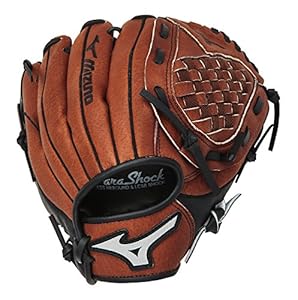
The Mizuno GPP1075Y1 Prospect is another game ready option, meaning your kid can use it with little to no break in required right out of the box. It checks most of the boxes I look for in an everyday glove for younger players.
It’s earned a solid reputation in youth leagues, and in my experience it holds up well to the abuse a 7 or 8 year old puts a glove through over a season. The Parashock palm pad sits right under the palm liner and takes the sting out of harder hit balls, which younger players notice and appreciate more than you’d expect.
Mizuno’s Power Close technology helps the glove snap shut around the ball, similar to what you get with the Sure Catch and PowerClose gloves above. It’s a genuinely useful feature at this age since closing the glove at the right moment is half the battle for a new player.
A few shoppers have mentioned mix ups with color or size on delivery. That’s worth knowing going in, though it’s an easy fix through Amazon’s return process if it happens to you. Outside of that, this is a dependable left hand throw glove for a young player.
How To Choose the Best Baseball Glove For a Left Handed Child
Every glove above is a solid option, but they’re not all right for every kid. Here’s what I actually weigh before recommending one.
Materials
Materials matter more than most parents expect. Cheap synthetic gloves can feel fine on day one and fall apart by mid season, especially once they get wet a few times and dry out in a bag.
Manufacturers keep youth gloves light by using thinner leather or synthetic shells, which is fine at this age since young players need a glove they can actually close. If you’re curious how youth construction compares to what adult and travel ball players use, I break it down in youth vs. adult baseball gloves. All 5 gloves in this guide are built to last a full season of regular use.
Price
You can find a youth glove for under $10 at a big box store, and I’d steer clear of most of them. A glove that cheap usually means a stiff shell that never breaks in right and a web that falls apart within a few games.
There are still affordable gloves that are worth more than their price tag, and every option on this list falls into that category, whether you’re spending $20 or closer to $50.
Size
Getting the size right matters more than the brand you pick. A glove that’s too tight or too loose makes catching genuinely harder, not just less comfortable, and it can slow down a young player’s progress without you realizing why.
- 9 Inch = (Ages 3- 7)
- 10 Inch = (Ages 5- 7)
- 10.5 Inch (Ages 6- 8)
- 11 Inch (Ages 7- 9)
- 11.5 Inch (Ages 7- 9)
These are starting points, not hard rules. If your child is between sizes, I’d size down rather than up. A left handed thrower who can actually close the glove will always outperform one who’s swimming in a glove that’s too big. For a more detailed walkthrough, check out how to size a baseball glove.
Quick Answers for Left Hand Throw Glove Shoppers
Is a “lefty glove” the same as a left hand throw glove?
Yes. “Lefty glove,” “left handed glove,” and “LHT glove” all mean the same thing in most listings: a glove worn on the right hand, made for a player who throws with their left.
The naming refers to the thrower, not the hand the glove sits on, which is the part that confuses most parents shopping for the first time.
Can my left handed child use a right hand throw glove instead?
Not comfortably, no. A right hand throw glove goes on the left hand, which means a left handed thrower would have to catch with their throwing hand and switch the ball over before throwing. It’s an awkward, slow motion that fights against everything you’re trying to teach a new player.
Stick with a true LHT glove like the ones above. It’s a small detail that makes a real difference in how quickly a young player picks up the game.
Do left handed gloves cost more than right handed ones?
Usually not by much, though LHT gloves in a specific size or colorway can sell out faster since fewer are made. If you see the exact glove you want in stock in left hand throw, I wouldn’t wait on it.
Wrap Up
If you’re trying to pick just one glove out of these 5 for your left handed child, I’d still go with the Rawlings Sure Catch Youth Baseball Glove. It’s game ready almost out of the box, comfortable for small hands, and versatile enough to work at any position on the field.
That said, any glove on this list will set your kid up to enjoy the game, which is really the whole point at this age.

With 4 years of Division II experience, a .272 career batting average, .410 on-base percentage, and 7 home runs, I’m now in my fifth season. I’ve played baseball since age 3, alongside future MLB Draft picks, and I aim to pursue a career in baseball professionally, be it playing, coaching, or scouting.