
Can You Use Boot Oil on a Baseball Glove?
I get this question a lot from parents and players who dig through the garage and find a bottle of boot oil sitting a few feet from their old baseball glove. Makes sense why people ask. Boot oil is cheap, it’s already in the house, and it’s marketed as a leather conditioner, same as the stuff made specifically for gloves.
But “leather conditioner” is a broad category, and boot oil isn’t built the same way glove oil is. I’ve tested both on my own gloves over the years, so let me walk you through what boot oil actually contains, whether it’s safe for glove leather, and what I’d reach for instead if you have a choice.
Short answer: yes, you can use boot oil on a baseball glove in a pinch, but I wouldn’t make it a habit. Boot oil is heavier and waxier than the culinary oils people usually ask me about, things like canola oil, vegetable oil, or coconut oil. It’s built to do a different job. Use a little, once, on a glove that’s desperately dry, and you’ll probably be fine. Use it regularly and you’re asking for a heavy, dark, greasy glove.
What Is Boot Oil, Exactly?
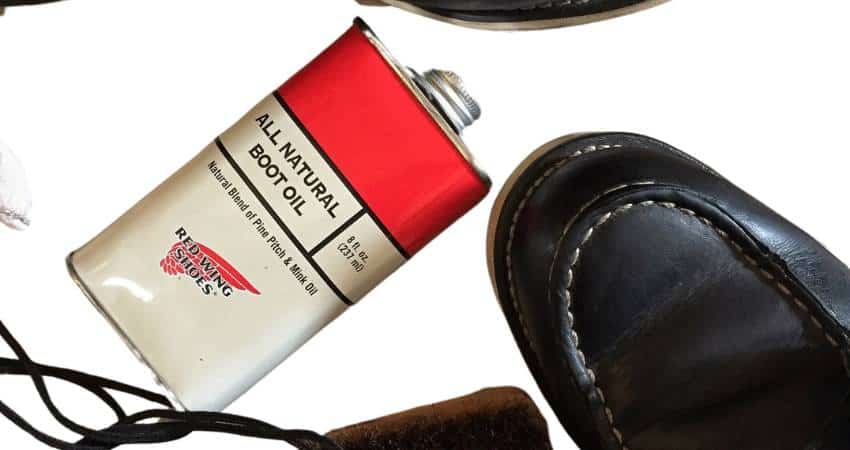
“Boot oil” isn’t one fixed formula. It varies by brand, but most versions are built the same basic way: a penetrating oil, usually mink oil or neatsfoot oil, blended with a wax or pine pitch to help the leather shed water. Red Wing’s All Natural Boot Oil, for example, is a mink oil and pine pitch blend. That’s a different formula than Red Wing’s own Mink Oil product, which adds lanolin and silicone instead of pine pitch.
That wax or pitch content is the key detail. A work boot needs to survive rain, mud, and slush all winter, so it needs a coating that seals against water. A baseball glove doesn’t need that. It needs to stay soft, light in your hand, and grippy in the pocket. The exact ingredients that make boot oil great on footwear are the ones that can work against you on a glove.
Is Boot Oil Good for Leather Baseball Gloves
It depends on what’s actually in the bottle, and how often you plan on using it.
If the boot oil you have is mink oil based, it will moisturize the leather and can help with cracking, the same way straight mink oil does when people use it on gloves. But mink oil (and by extension, mink-oil-based boot oil) has some real downsides on glove leather specifically: it darkens the hide noticeably, often two or three shades or more, and used often enough it can soften the stitching along with the leather, which is not what you want on a glove that needs to hold its shape and pocket.
If the boot oil is neatsfoot based, the same tradeoff applies. Neatsfoot oil conditions deeply and can help soften a stiff, older glove, but it also adds weight and darkens the leather more than most people expect.
Add in the wax or pine pitch that most boot oils include for waterproofing, and you get a product that’s simply heavier than what a glove needs. So yes, technically, boot oil can be used on a baseball glove. But it’s a “break glass in case of emergency” option, not something you should reach for as your regular glove maintenance routine.
Boot Oil vs. Baseball Glove Oil: Why They’re Not Interchangeable
If you’ve read my posts on Vaseline or the culinary oils people ask about, you already know most of those alternatives sit at the “too light to matter” end of the spectrum. They’re thin, mostly plain oils with zero wax content, so they condition a little but don’t add much durability or protection either way.
Boot oil is the opposite problem. It’s heavier, often wax or pine-tar fortified, and formulated to seal leather against weather, not to keep it flexible and light. Dedicated baseball glove oil, by contrast, is built around lighter penetrating oils like refined neatsfoot oil, mineral oil, or lanolin, without the wax or pitch that boots need. That’s the whole difference in one sentence: boots need to survive weather, gloves need to stay soft and light. Different jobs, different formulas.
This is also why I don’t recommend treating boot oil as a substitute for a proper break-in oil. If you’re breaking in a brand-new glove, check my full breakdown on what oil to use to break in a baseball glove before you reach for whatever’s in the garage.
How to Use Boot Oil on a Glove the Right Way (If You Decide To)
If your glove is bone dry and boot oil is genuinely all you have on hand, here’s how I’d apply it to keep the damage to a minimum.
- Clean the glove first. Wipe off dirt and dust with a dry or barely damp cloth so you’re not working oil into grime.
- Use a tiny amount. A dime-sized dab on a soft cloth is plenty. Boot oil goes further than you’d expect, and it’s much easier to add more than to take excess back out.
- Target the stiff spots only. Work it into the pocket, the hinge between thumb and fingers, and the seams, the areas that actually crack first. Don’t coat the whole glove.
- Let it sit, then wipe off the excess. Give it a few hours to absorb, then buff off anything still sitting on the surface with a dry cloth.
- Treat it as a one-time fix, not a routine. Once your glove is playable again, switch to a real glove oil or conditioner for anything going forward. My guide to using baseball glove conditioner walks through the ongoing maintenance side of this.
- Expect some color change. Even a light application will darken the leather somewhat. If keeping your glove’s original color matters to you, boot oil isn’t the move.
Better Alternatives to Boot Oil
If you have a choice, and most of the time you do, skip boot oil entirely and grab something actually built for glove leather. Here’s what I keep in my own bag.
Rawlings Glovolium XL for Breaking In a Stiff Glove
This is a light spray oil, so you get even coverage without guessing how much you’re applying, and it won’t noticeably darken the leather. It does the softening job people usually turn to boot oil for, minus the wax weight and the color change.
Pecard Baseball Glove Conditioner for Ongoing Care
Pecard’s been making leather care products since 1902, and this one’s a paste built specifically for oil-tanned glove leather. It adds essentially no weight, which is the direct opposite of what heavy, wax-based boot oil does. It needs 12 to 24 hours to absorb, so plan ahead rather than using it the night before a game.
I go into more detail on both of these, plus five other oils and conditioners I’ve actually tested, in my full baseball glove oil and conditioner buying guide. And if you want to see how boot oil stacks up against every other household substitute people ask me about, my glove oil alternatives roundup covers the rest of them side by side.
The Bottom Line
It’s always worth stocking up on real glove oil or conditioner so you don’t have to improvise with whatever’s in the garage. A good glove isn’t cheap, and the last thing you want is a product that leaves it heavier, darker, or weaker at the seams than it needs to be.
That said, if you’re in a bind and boot oil is genuinely what you’ve got, a light, one-time application won’t ruin your glove. Just don’t make it a regular habit, use it sparingly, and switch to a dedicated glove product as soon as you can. Good luck out there.
Will boot oil ruin a baseball glove?
A single light application usually won’t ruin a glove. Repeated or heavy use is the real risk, since the wax or pine pitch in most boot oils adds weight, darkens the leather significantly, and can soften stitching over time.
Is boot oil the same as mink oil?
Not exactly. Many boot oils are built around mink oil, but they also include a wax or pine pitch for waterproofing that pure mink oil products don’t always have. That extra ingredient is what makes boot oil heavier on glove leather.
Can I use boot oil to break in a new glove?
You can, but it’s not the best tool for the job. A dedicated glove oil like Rawlings Glovolium is lighter, won’t darken the leather, and is made specifically to soften stiff, new glove leather without the wax weight boot oil carries.
What’s better than boot oil for a baseball glove?
A glove-specific oil for breaking in a new glove, and a glove-specific conditioner like Pecard for ongoing maintenance. Both are formulated for the thinner, more flexible leather gloves use, without the wax or pine tar that boot oil relies on for weatherproofing.

With 4 years of Division II experience, a .272 career batting average, .410 on-base percentage, and 7 home runs, I’m now in my fifth season. I’ve played baseball since age 3, alongside future MLB Draft picks, and I aim to pursue a career in baseball professionally, be it playing, coaching, or scouting.