
You might be wondering does college baseball use metal bats? College baseball is an extremely popular American pastime. For the audience, it’s the next best thing after MLB, where they can get a front-seat view into the lives of the future pros. And for the players, it’s an important stepping stone if they are planning to go big in the sport.
Now, the rules of baseball are always changing. New regulations are added, and old ones are swapped out to keep the game fair for all teams. Bat rules are actually a good example of that. The NCAA still requires the same BBCOR standard it has for years, but the group that manages that standard just changed.
MLB games are always played with wooden baseball bats.
And while college baseball follows almost all the same rules that are used in Major League Baseball, there’s one key difference here – college baseball overwhelmingly uses metal (and composite) bats instead of wood. It’s not that wood is banned outright, it’s that almost nobody actually plays with one.
But why is that? Isn’t a wooden baseball bat considered supreme by the pros around the country? Then why would nearly every college team pass on it in favor of metal? Well, there are plenty of reasons for it. But it’s going to take a while to get through all that.
However, I’m not going to let that stop me, am I? I will talk extensively about why college baseball uses metal bats, walk through the actual NCAA bat rules, and offer my two cents on the subject. So, let’s get straight to it.
Does College Baseball Use Metal Bats?
Let’s start with the big question – is college baseball strict about metal bats? Most players use metal or composite bats, but is wood actually off limits?

Here’s the part that trips a lot of people up: NCAA bat rules don’t technically ban wood. A solid, one-piece wood bat is legal without needing any certification at all. What NCAA rules actually require is that any non-wood bat, meaning metal or composite, carries a BBCOR (Batted Ball Coefficient of Restitution) certification mark on the barrel. No mark, no play, that bat gets pulled at inspection.
In practice, that difference barely matters, because virtually every college team swings a BBCOR-certified metal or composite bat anyway. Wood is legal, but it’s rare to actually see one at the plate in a D1 game. I’ll get into why below.
NCAA Rules on College Baseball Bats
Before I get to the why, let’s backtrack a bit. If you don’t play in college baseball but follow it extensively, you might not be aware of all the rules.
I mean, sure, it becomes obvious that the players use metal bats when you hear the iconic “ping” sound of the aluminum clashing against the leather baseball, but not many people realize that a composite or metal bat has to clear NCAA testing before it’s legal to swing in this league.
Now, college baseball falls under the regulations of the NCAA. The term NCAA stands for National Collegiate Athletics Association, and it’s responsible for regulating all the college sports in the world.

Here’s what NCAA bat rules actually spell out for non-wood bats:
- Must carry a permanent, approved BBCOR certification mark stamped on the barrel (a sticker doesn’t count)
- Performance is capped at a BBCOR of .50, which brings the trampoline effect close to what you’d get from wood
- Maximum barrel diameter of 2 5/8 inches
- Maximum length of 36 inches
- A drop weight no lighter than -3 (so a 34 inch bat has to weigh at least 31 ounces)
Solid one-piece wood bats skip all of that. They’re exempt from BBCOR testing entirely, since a solid wood bat naturally performs within that limit on its own. Non-solid wood or wood-composite bats do still need NCAA certification, so it’s not a blanket exemption for anything labeled “wood.”
One more thing worth knowing about right now: as of July 2026, USA Baseball took over management of the BBCOR standard from the NCAA. The new mark is being called USA BBCOR, and it runs under USA Baseball’s existing USABat program. The performance standard itself isn’t changing, it’s the same .50 BBCOR cap, same -3 drop, same 2 5/8 inch barrel. USA BBCOR bats are expected to become NCAA-eligible starting with the 2028 season, with a full switchover after that. So nothing changes for the bat in your bag right now, but it’s worth keeping an eye on if you’re a player, coach, or parent planning purchases a couple of seasons out.
Before 1974, college baseball was played mostly with wooden baseball bats. That year, the NCAA standardized the use of metal baseball bats, mainly to cut down on how often teams had to replace broken bats. Some believe that it was a bad move by the organization. Nevertheless, modern college baseball is overwhelmingly played with aluminum and composite bats, even though wood was never technically outlawed.
Why Does College Baseball Use Metal Bats?
Here are a couple of reasons why nearly every college program leans on metal and composite bats over wood, even though wood is technically legal:
·Performance and Popularity:
Metal bats have been around for decades, and they do offer a couple of key advantages over wooden bats that are used in the MLB. For instance, the trampoline effect in a metal bat’s barrel is naturally higher than what you’d get with a wooden bat, which is exactly why the NCAA caps it with the BBCOR .50 standard in the first place.

Even with that cap in place, the baseball still rebounds a touch faster off a BBCOR bat than off wood, resulting in a slightly higher exit velocity. That improved performance makes the game more exciting and thrilling both for the player and the audience. In fact, many people claim that they have more fun watching college baseball for this very reason.
· Player Growth:
Most pros playing in the MLB got their big break from college baseball. It’s an important stepping stone that many players consider their ticket into the big leagues. At this stage, the ability of a player to showcase their potential without worrying about their bat’s durability is extremely important.
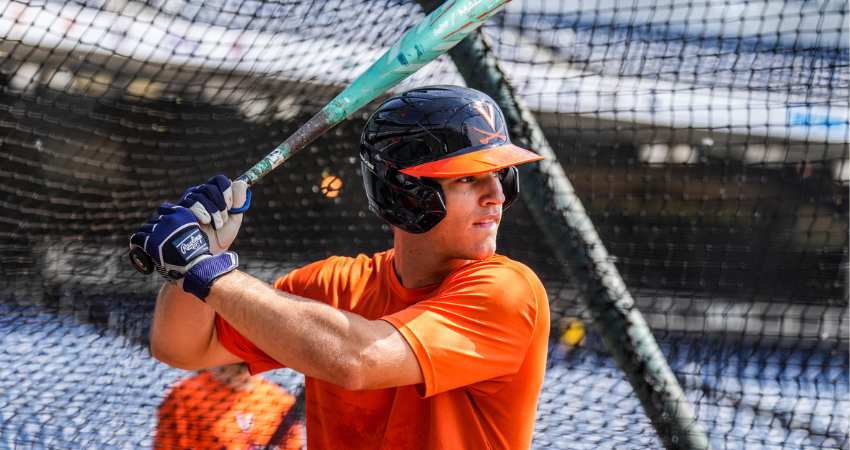
Since metal baseball bats are more durable, it’s beneficial for player growth and development. Metal baseball bats allow the hitter to fine-tune his swing mechanics and work on different hitting techniques without worrying about breaking the bat every other week. And for a player, experimenting with different techniques is always a necessity.
· Financial Factor:
College kids are not exactly financially stable. Our education system can be financially taxing on many people. And with the rising cost of high-end wooden bats, having to replace a bat when it breaks can be quite difficult for a college baseball program.
Let’s face it: though wooden bats are amazing; they break pretty easily. Replacing wooden bats a couple of times each season can put a lot of strain on the budget of college athletic departments or even the players. With BBCOR metal and composite bats, colleges can alleviate some of the financial pressure on their baseball programs.
· Consistency and Safety:
Consistency is always important in baseball games, and it’s the responsibility of the organization to ensure consistent equipment in different leagues. By capping every non-wood bat at the same -3 drop weight and BBCOR .50 performance, the NCAA can ensure a level playing field for every team competing in college baseball, no matter which brand or model a player swings.

Besides, wooden baseball bats aren’t exactly the safest piece of gear. When they shatter, splinters from the bat can easily harm the player or even the spectators. In comparison, metal and composite bats are much safer over a long college season simply because they hold up instead of splintering mid-swing.
·Spectator Appeal:
College baseball is a spectator sport. And the reason why people get so hyped up about college baseball is the electrifying and thrilling speed of the game. It’s much faster than MLB games, and one of the main reasons for it is that college baseball is played almost entirely with metal and composite bats.

The loud and iconic “ping” sound that resonates throughout the stadium is one of the main things that people associate with college baseball. And that happens only because the league is played almost exclusively with metal baseball bats. Metal baseball bats make college baseball a lot more exciting for the viewers.
Frequently Asked Questions
By now, you should know the answer to why college baseball uses metal bats. However, as I said, there’s a lot to cover here. And while I can’t answer each question for lack of time, I can certainly address some of the common ones that I get asked a lot.
I hope the following section will resolve any questions you have in your mind.
Can you use wooden baseball bats in college?
Yes, technically. NCAA bat rules don’t ban solid one-piece wood bats, and a wood bat doesn’t need a BBCOR stamp to be legal. In practice, though, you basically never see a wood bat at a college game. Wood breaks too often for a program’s budget, and it can’t match the durability of a BBCOR-certified metal or composite bat over a full season. If a player wants that wood feel for training or fall scrimmages, I’ve rounded up some solid picks in my best wood baseball bats guide.
Do metal baseball bats give an unfair advantage to the hitters?
Not necessarily. While metal baseball bats, in general, do allow the hitters to generate more power to drive the ball further, in college baseball, the bats are regulated. Every BBCOR-certified bat allowed in college baseball has a controlled trampoline effect that’s close to what you would get with a wooden bat. If you’re shopping for one, I keep a running list of my favorite BBCOR bats for power hitters.
Are metal baseball bats better than wooden bats?
Metal baseball bats are noticeably different from wooden bats. Comparing between the two bat types is difficult since they both have their own sets of strengths and weaknesses.
For example, wooden bats have a better feel and are generally considered the “traditional” choice. They are also the main bat type used in MLB games, which makes them more appealing.
However, metal bats are cheaper over the long run and often have a more forgiving learning curve. For college baseball, metal and composite bats are simply the more practical fit.
If you want to learn more about the differences between wood and metal baseball bats, check out.
Let’s Recap
Tradition plays a huge role in deciding the rules of baseball. College baseball, while it used wooden bats before 1974, is mostly associated with metal and composite baseball bats these days. I mean, I couldn’t really imagine going to a college baseball game and not hearing the thunderous ping at least once the entire game.
So, if you’re playing college baseball and want to invest in a top-tier baseball bat, make sure it carries a valid BBCOR certification mark. Wood bats are technically legal too, they just need to be solid one-piece construction, but between the durability and the budget, metal and composite are what nearly every program actually plays with.
I hope my in-depth article will help you understand why college baseball uses metal bats, and what the NCAA’s BBCOR rules actually require. Good luck!

With 4 years of Division II experience, a .272 career batting average, .410 on-base percentage, and 7 home runs, I’m now in my fifth season. I’ve played baseball since age 3, alongside future MLB Draft picks, and I aim to pursue a career in baseball professionally, be it playing, coaching, or scouting.