
When the two titans of softball bats clash, there will be fireworks. Both Easton and Louisville Slugger have passionate supporters who would vouch for them. Is one titan really better than the other, or is it a stalemate? Who takes the crown in an Easton vs. Louisville Slugger softball bats showdown?
To tone this chaos down, I picked two fastpitch softball bats from each brand, one high-end composite bat and one budget-friendly alloy bat. I’ve swung all four of these bats myself as part of coaching softball for years.
So I’ve put down the features and specs of each bat and pitched them against each other. I also cover the good, the bad, and the ugly of each one, plus a quick note on which older models got replaced by newer versions since I first wrote this. That way you’ll have a clear idea of what these bats actually bring to the table before you drop your money on one.
With that said, you should know the bat itself matters more than the brand. It’s bat over brand, so don’t discard every softball bat from one company just because a single model let you down. Let’s get to it.
Easton Ghost Advanced vs Louisville Slugger LXT

Quick heads up before we start: Easton retired the “Ghost Double Barrel” name a while back. The double-barrel composite bat in this line is now called the Ghost Advanced, and it’s still one of the most talked-about fastpitch bats out there. The Louisville Slugger LXT is still its most direct rival, and the current 2025 LXT is a legitimately strong contender against it.
Pricing has flipped since I last updated this comparison. The Ghost Advanced now runs about $499.99 at full retail, while the LXT sits closer to $399.99 (often discounted below $330). So today it’s actually Easton carrying the higher price tag, not Louisville Slugger.
Before I get into the details, here’s a chart with the basics on both bats.
Specifications
| General Specs | Easton Ghost Advanced | Louisville Slugger LXT |
| Bat Length | 29” to 34” | 28” to 34” |
| Barrel Diameter | 2-1/4” | 2-1/4” |
| Barrel Material | Composite | Composite |
| Bat Drop | -8, -9, -10, and -11 | -8, -9, -10, and -11 |
| Certification | USA, USSSA (FASTPITCH ONLY), NSA, ISA, WBSC | ISA, NSA, USA Softball, USSSA |
| Approx. Retail Price | ~$499.99 | ~$399.99 |
Quick note on that certification row: you’ll still see the LXT listed with “ASA” on some older sites and boxes. ASA was renamed USA Softball back in 2013, so it’s the same governing body, just the current name.
Bat Construction
You’ll see a lot of similarities in the dimensions and construction of these two bats. Both the Easton Ghost Advanced and the Louisville Slugger LXT are made out of composite material and share the same 2 ¼ inch barrel diameter.
Both have what it takes to claim the title of best composite softball bat. But I’m getting ahead of myself. That’s a discussion for another time.
They both offer four weight drop options: -8, -9, -10, and -11, and both carry certification stamps from USA Softball, USSSA, ISA, NSA, and WBSC. The only real difference left between the two is bat length. The Louisville Slugger LXT offers a range that starts at 28 inches and goes up to 34 inches. The Easton Ghost Advanced starts at 29 inches and also tops out at 34 inches.
Barrel Design
As the name suggests, the Ghost Advanced has an inner and an outer wall, the “double barrel.” The sonic composite material used to build it enhances durability and gives the barrel very low compression. You’ll hear a resonating pop throughout the field, and the crisscross pattern in the layup makes the barrel very flexible.
The connector piece uses Easton’s ConneXion Evolution technology, which gives the bat a stiffer feel around the joint. That makes the bat act like one solid unit when you connect.
There are two advantages here in particular. First, the connector keeps vibrations from the barrel from reaching your hands. Second, since it stiffens the bat, you’ll generate more power while hitting the ball. Both power hitters and contact hitters tend to like this bat.
The LXT, on the other hand, uses a composite barrel with a bigger sweet spot built in, plus its VCX3 Connection System, a patented elastomeric connector that reduces vibration at the contact point and still delivers a solid, unmistakable feel. It adds a bit more flex to the barrel too, which contact hitters tend to appreciate.
Two-Piece Design and Vibration Control
Here’s something worth clearing up if you’ve read older reviews: for years the LXT ran a three-piece design, with its VCX2 connection system counted as a separate third piece alongside the barrel and handle. The current LXT has been simplified into a two-piece composite build, with the newer VCX3 connector doing the vibration-damping job that VCX2 used to handle.
The Ghost Advanced has always been a two-piece bat. You’ve got the barrel and the handle joined by the ConneXion Evolution connector in the middle. So today, both bats land in the same two-piece camp, they just get there with different connector tech.
Endcap and Grip
On the Ghost Advanced, the handle and grip are pretty standard for Easton. It’s an ultra-thin handle around 29/32 inch, with a Powerboost soft knob and a cushioned grip. The LXT has the COPA Performance End Cap, which, paired with the composite barrel, pushes the sweet spot out further and improves overall performance.
And if you’re chasing more pop specifically, check out our best fastpitch softball bat for power hitters guide, the LXT shows up there because of that extended sweet spot. As for the grip, the LXT comes with a cushioned, tacky performance grip that’s comfortable to swing through a full game.
Features
| Easton Ghost Advanced | Louisville Slugger LXT |
| Patented double-barrel construction | Composite barrel with VCX3 Connection System |
| Two-piece design | Two-piece design |
| Standard End Cap | COPA Performance End Cap |


Easton Ghost Youth vs Louisville Slugger Diva
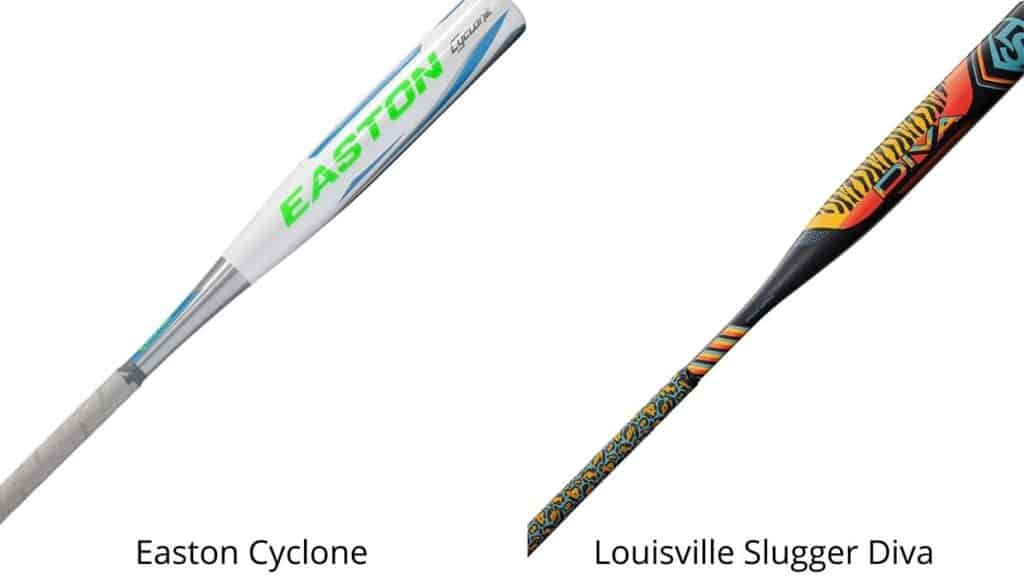
If you want a budget-friendly softball bat without giving up too much quality, take a look at the Easton Ghost Youth and the Louisville Slugger Diva. One more heads-up: Easton has phased the old Cyclone out of its current lineup, you’ll mostly find it on clearance and used-gear sites now, so I’ve swapped it for the Ghost Youth, which is Easton’s current entry-level alloy bat and lands in a similar price range. Both bats here run well under $60, and the Diva is the cheaper of the two at around $35. But price isn’t the whole story; you still need to weigh what you’re getting for it.
Specifications
| General Specs | Easton Ghost Youth | Louisville Slugger Diva |
| Bat Length | 26” to 31” | 27” to 31” |
| Barrel Diameter | 2-1/4” | 2-1/4” |
| Barrel Material | Aluminum Alloy | Aluminum Alloy |
| Bat Drop | -11 | -11.5 |
| Certification | USSSA (approved for all major fastpitch associations) | ISA, WBSC, NSA, USSSA, USA Softball |
| Approx. Retail Price | ~$59.99 | ~$34.99 |
The Differences in Key Features
Here are the features of the two bats.
Bat Construction
You can see from the chart that the Diva falls a bit short on bat length options. The Ghost Youth runs from 26 inches up to 31 inches, while the Diva starts at 27 inches and tops out at 31 inches.
Both bats carry certification from the major softball associations, so if you’re worried about legality for your league, check the certification stamp on the handle or barrel before you buy.
As for the weight drop, neither bat offers a range of options. The Ghost Youth is a -11, and the Diva is a -11.5. Both are built specifically for young players just starting out, roughly kids in the 6 to 9 age range.
Barrel Design
Both bats share the same 2 ¼ inch barrel diameter and both are built from aluminum alloy, though the alloy blend differs by manufacturer. The Easton Ghost Youth has an extended barrel design that gives it a larger sweet spot and more forgiveness on mis-hits.
The Diva keeps things light with a balanced swing weight, which makes it easier for beginners taking their first real swings to control the bat throughout a game.
One-Piece Vs Two-Piece
Both the Ghost Youth and the Diva come in one-piece construction. A one-piece bat is a continuous solid piece with no buffer in between, so there’s no collar or connection system interrupting the swing.
There are advantages and disadvantages to a one-piece bat. On the downside, since there’s no collar, there’s nothing to stop vibration coming from the center of the barrel. That used to be a bigger issue in the past.
If you’re worried about vibration on every mis-hit, know that modern materials and manufacturing make today’s one-piece bats more forgiving than their predecessors.
One advantage of a one-piece softball bat is that you don’t lose power on contact. Less flex means a stiffer bat, which transfers more energy into the ball.
You also get honest feedback. Any time there’s a mis-hit, you’ll feel a jolt of vibration traveling back through the handle.
Endcap and Grip
The Ghost Youth has an ultra-thin 29/32 inch handle with Easton’s All-Sports Grip, standard for the model. The Diva keeps things simple with a standard end cap and a synthetic grip built for control and a comfortable, cushioned feel.
If it were up to me, I’d lean toward whichever bat feels more forgiving in a young player’s hands since both are entry-level bats meant to build confidence, not chase max exit velocity. Either one is a fine starting point, and you honestly can’t go too wrong at this price point.
Features
| Easton Ghost Youth | Louisville Slugger Diva |
| One-piece aluminum alloy construction | One-piece aluminum alloy construction |
| Extended barrel for a larger sweet spot | Balanced swing weight for beginners |
| Ultra-Thin handle with All-Sports Grip | Standard End Cap with synthetic grip |

Closing Thoughts
After going through these bats, if you’re still not satisfied, take a look at other softball bats out there. Trust me, there are tons of great ones. Just do some homework on a bat before you buy it.
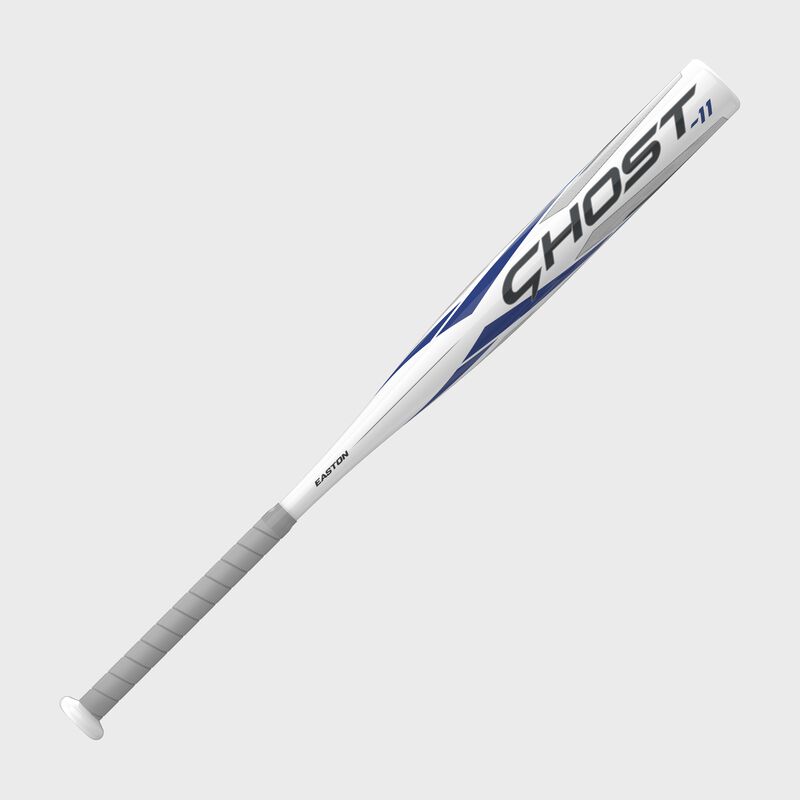
As a rookie, I never went for the expensive bats. They were way beyond my league. These days it’s different. If I had to choose right now, I’d go for the Easton Ghost Advanced, hands down. That’s mostly because it fits my batting style and I’ve never had an issue with the bat length.
The Ghost line has a reputation for being a hot bat that fires on all cylinders right out of the wrapper, but some players find that composite barrel loses a step faster than they’d like. That’s why players who want more balance and durability over time should look at the Louisville Slugger LXT. If you want to keep comparing brands beyond these two, I also broke down another matchup in Rawlings vs Easton softball bats.
I hope the comparisons, the number crunching, and the recommendations didn’t put you to sleep. What can I say, numbers are either boring or intimidating, but it’s still the best way to evaluate a bat. So who wins? I’ll leave that up to you. Cheers!

With 4 years of Division II experience, a .272 career batting average, .410 on-base percentage, and 7 home runs, I’m now in my fifth season. I’ve played baseball since age 3, alongside future MLB Draft picks, and I aim to pursue a career in baseball professionally, be it playing, coaching, or scouting.