
Every softball batter dreams of hitting those blazing home runs that send the ball flying to the stands. But the path to that isn’t an easy one. It’s paved with sweat and hours in the batting cage as you work on honing your skills, rep after rep.
Improving your bat speed is a huge part of becoming a better hitter, and it’s one of the most common questions I get from softball players and parents. So how do you actually do it? Let’s break it down.
How to Increase Softball Bat Speed?
Speed, power, and consistency are the three things that separate a good batter from a great one. If you’re strong at one or two of these, you might be considered a good hitter. But to become one of the greats, you need to work on all three.
A good softball batter might swing with plenty of power but struggle to deliver a fast swing. On the other hand, some batters have that speed but lack power behind the swing. And those who have a good balance of power and speed might fall short when it comes to consistency.
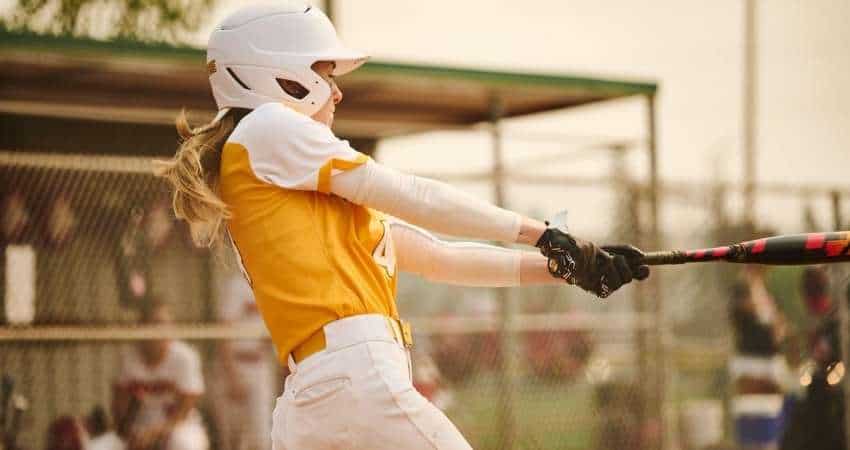
You have to start somewhere, though, and working on your bat speed is a smart place to begin if you want to develop your hitting overall. Once you’ve got a solid swing speed, you can build the rest on top of it. So what’s the best way to go about it? To get a faster swing, you need to work on your batting posture and swing mechanics, build up your physical strength, and pick the right bat. Your softball bat plays a bigger role here than most hitters realize.
Is it Possible to Increase Softball Bat Speed?
There are two ways to get more power behind your bat swings: you either use a heavier softball bat, or you swing a relatively lighter bat a lot faster. Needless to say, to wield a heavy bat well, you need the physique for it, and not every softball player has the build to swing a heavy bat comfortably.
So contact hitters mostly prioritize a faster swing to compensate for a lighter bat. And if you want to be a good contact hitter with a fast, consistent swing, you can absolutely get there. Just know going in that faster bat speed doesn’t happen overnight.
That doesn’t mean you shouldn’t chase a faster swing, though. Becoming a good contact hitter comes down to consistency, and swing speed is a big part of that. With regular practice in the right direction, you’ll swing faster and start putting more balls into the gap before too long.
How To Increase Bat Speed in Softball
Naturally, you won’t see much improvement in your bat speed without putting in real hours in a batting cage. But training aimlessly never helped anyone. If you actually want to swing faster, train as smartly as you can.
Here’s what I’ve found actually moves the needle on swing speed.
1. Use the Right Bat
The most common thing I see holding back rookie hitters isn’t the number of hours they’ve put in at the cage, it’s their choice of softball bat. If you want a quick swing, you need a bat that feels perfectly balanced in your hands.
End-loaded softball bats help you generate more power, while a balanced bat gets you a faster swing and better accuracy. Beyond balance point, you also need to look at weight. Softball bat weight typically runs from 26 to 31 oz., and you should go with whatever feels most comfortable in your hands. The bat’s barrel material matters here too, since composite and alloy barrels swing and feel different even at the same listed weight.
Then again, don’t go too light, either. A bat that’s too light means you won’t generate enough power behind the swing, even if it feels fast. To find your ideal weight, hold the bat in your strong hand and stretch your arm straight out in front of you. If you feel it shaking within a few seconds, it’s too heavy for you right now.
It’s also worth remembering that a fast swing on a dead bat still won’t produce much. If you’re shopping for a new stick, check out my breakdown of which softball bats have the most pop, and if budget is a factor, I also cover why softball bats cost what they do so you know what you’re actually paying for.
2. Proper Stance and Form
You also need to work on your posture and swing technique if you want to swing the bat fast. Everything from your grip to your elbow and shoulder positioning to your stance needs to be dialed in if you want real bat speed.
If you’re training under a coach, they should be able to help you here. Ask them to walk you through proper stance and form, then practice it every single day as you warm up before hitting drills.
To get real bat speed, hitters need a quick, compact stride as they load into the swing. You also need to fire your hips as you connect with the ball, since that’s where most of your speed and power actually come from, not your arms. Dial in your stance and swing mechanics and your speed will follow.
3. Bat Speed Drills
You also need to run drills that specifically target bat speed if you want to see real gains. The exact drills you use will depend a lot on your coach and what they think fits your swing. But it helps to tell them what kind of hitter you’re trying to become and what you want to focus on.
A few drills I’ve had good results with:
- Max-effort dry swings. Three sets of ten swings with no ball, full effort every rep. This builds the fast-twitch pattern without worrying about contact.
- One-handed tee work. Take your top hand off the bat and work through the swing with one arm. It isolates bad habits fast and builds hand speed.
- Short-toss drills. Have someone toss from 15 to 20 feet away. The shorter distance forces your hands and hips to react quicker, which trains speed under real time pressure.
- The pause drill. Load into your stance and hold a 2 to 3 second pause before you swing. It teaches you to generate speed from a dead stop instead of relying on momentum.
A quality batting tee makes most of these drills a lot easier to run on your own, without needing a partner every time. And if you want more structured drill ideas beyond what I’ve listed here, this rundown of softball hitting drills is worth a look.
4. Workout is Important
Just because you’re working toward becoming a faster, more explosive hitter doesn’t mean you get to skip your workouts. The key muscles behind a good bat swing are your glutes, core, hips, and your hand and forearm muscles. You need to train these body parts if you want to become a genuinely fast swinger.

There are tons of exercises that train these muscles, and you should stick with a routine your body actually responds well to. A few of my favorites are medicine ball rotational throws, barbell hip thrusts, Romanian deadlifts, and farmer’s carries. These build the rotational hip and core strength that drives the kinetic chain through your swing, which is really where bat speed comes from.
5. Overload/Underload Bat Training
Once you’ve got your mechanics down, overload/underload training is one of the more effective ways to add real speed. The idea is simple: you alternate swings using a bat that’s 2 to 3 ounces heavier than your game bat with swings using one that’s 2 to 3 ounces lighter, swinging at full effort every single rep.
The heavier bat trains your muscles to produce more force, and the lighter bat trains your nervous system to move that force through the zone faster. Alternating between the two, instead of only using one or the other, is what makes the training stick. Just be careful not to go too far outside that 2 to 3 ounce range, since anything more extreme can start reinforcing the wrong swing mechanics instead of speed.
If you want to track whether any of this is actually working, a swing sensor like Blast Motion or Diamond Kinetics can clip right onto the knob of your bat and give you real bat speed numbers after every swing. You don’t need one to get faster, but it takes a lot of the guesswork out of knowing if your training is paying off.
What is a Good Bat Speed for Softball?
There are two types of softball played competitively, and you probably already know this if you’ve been playing for a while: slowpitch and fastpitch. While both are softball at their core, there’s a real difference in slowpitch and fastpitch softball bats and how they’re used.
So what counts as a good bat speed for slowpitch isn’t necessarily a good bat speed for fastpitch.
· What is a Good Bat Speed for Fastpitch Softball?
For fastpitch softball, most hitting coaches and swing-tracking data put a strong bat speed somewhere in the 60 to 70 mph range once you’re at the varsity or travel-ball level. College hitters generally average between 60 and 75 mph, with the occasional elite power hitter pushing past that. If you’re in middle school (roughly 13U-14U), it’s normal to be somewhere in the high 40s to upper 50s mph, and that’s not a red flag, that range grows fast with strength training and reps. High schoolers should be aiming for a consistent bat speed somewhere between 55 and 68 mph.
Keep in mind these numbers shift a bit depending on which swing sensor or radar tool is doing the measuring, so treat them as a general benchmark rather than an exact target.
· What is a Good Bat Speed for Slow Pitch Softball?
In slowpitch softball, the ball is pitched much slower than in fastpitch, usually around 10 to 20 mph. That gives the batter more time to react. Then again, slowpitch bats tend to run heavier than fastpitch bats, which brings the overall bat speed down some.
From what I’ve seen coaching and playing slowpitch, a bat speed of around 60 mph is generally considered solid, and dedicated power hitters can get noticeably higher than that with training. I’ll be honest, there isn’t nearly as much published swing-speed data for slowpitch as there is for fastpitch, so treat this number as a rough, experience-based benchmark rather than a hard rule.
The Bottom Line
Bat speed matters, but it’s not the be-all, end-all for softball batters. Things like posture, swing accuracy, and consistency all play just as big a role in shaping you into a good hitter. So if you want to build up your bat speed, go for it, but don’t overlook the other pieces of your training along the way.
If you’re working on your bat speed right now, the best advice I can give you is don’t give up on it. It takes a while, but if you stay consistent, you’ll come out the other side a much better hitter.
Hopefully this gives you the guidelines and motivation you need to build a faster, more powerful swing. Cheers!

With 4 years of Division II experience, a .272 career batting average, .410 on-base percentage, and 7 home runs, I’m now in my fifth season. I’ve played baseball since age 3, alongside future MLB Draft picks, and I aim to pursue a career in baseball professionally, be it playing, coaching, or scouting.