
The pitch comes in, you square it up, barrel meets ball dead center, and the ball just doesn’t go anywhere. It’s one of the most frustrating feelings in softball, and if it keeps happening, your bat is usually part of the problem.
Here’s the thing though. No single bat on the market has “the most pop,” full stop. If one did, every travel ball parent in the country would already own it and every other manufacturer would be out of business. What’s actually true is that certain factors reliably predict which bats hit harder than others. Once you understand those factors, you can spot a bat with real pop before you ever step into the box. Let me walk you through it.
What Softball Bat Has the Most Pop?
So what is this “pop” I keep talking about? In softball jargon, pop refers to the exit velocity of the ball when it comes off the bat’s sweet spot.
That sweet spot is the specific zone on the barrel best suited for hitting a pitched softball. Contact in that zone creates minimal sting or vibration in your hands and maximum speed on the batted ball, which is exactly what you’re chasing when you’re shopping for pop.
Good pop really comes down to two things: A) the material the bat is built from, and B) the barrel construction. Get both of those right and a well-placed hit intensifies the exit velocity noticeably.
As I said, no single bat has the greatest pop across the board. But good composite softball bats generally out-pop wood and aluminum. And within composite, double-barrel bats typically deliver more pop than single-wall builds thanks to a stronger “trampoline effect” off the barrel.
Wood, Aluminum, or Composite? (The Pop Math)
Softball bats used to be made almost exclusively from wood, but technology brought aluminum and composite into the mix. Here’s a rundown of each, and why I still lean composite when pop is the priority.
Option 1: Wood
Wood bats aren’t common in competitive softball anymore, mostly because composite and alloy construction took over decades ago. Some players still prefer the crack of wood over the ping of metal, and I get the appeal, but wood bats have decent pop at best, not great.
Most wood bats are made from ash, a light material that splinters fairly easily. Maple and birch are denser and less prone to breaking, but they don’t give you a bigger sweet spot in return. Compared to metal or composite, wood is better suited for training, where you’re refining mechanics rather than chasing distance.
Option 2: Aluminum
Aluminum (alloy) bats are more durable since they’re made by mixing two or more metals. They’re generally cheaper and hold up better in cold weather than composite. They won’t crack the way wood can, but they will dent over time with enough hard contact.
Thinner, lighter alloy bats give you a larger hitting zone than wood, and most are single wall construction, which keeps them light but caps how much trampoline effect they can generate. Power hitters use them plenty, but in my experience the pop is average at best. Metal bats are also as “hot” as they’ll ever be right out of the wrapper. There’s no break-in period, but there’s also no ceiling left to climb toward.
I remember a training session a few years back where one of my players, a kid with a real knack for hitting the ball a mile, just couldn’t get the pop he wanted out of his alloy bat no matter how clean his swing was. That’s when it clicked for both of us that the bat itself was the ceiling.
Option 3: Composite
Now to the bat material I keep coming back to: composite.
Composite bats are built from layered materials like carbon fiber or Kevlar. They’re firm, tough, and lightweight, and that layering lets manufacturers dial in variable strength and rigidity in different sections of the bat.
The result is a bat with a sturdier handle for control and a more flexible barrel for less shock and a stronger trampoline effect on contact.
Composite bats tend to have the largest hitting surface with the most pronounced sweet spot, which is exactly why they typically produce the most pop. Because carbon fiber is easy to work with, you’ll find composite bats across the full range of swing weights, from balanced to end-loaded. It’s the construction I’ve swung for the last several seasons, and I’ve never hit better.
Keep in mind, though: not every league allows composite bats. Always double check that whatever you buy is actually legal for your league before you show up with it. My roundup of the best composite softball bats is a good next stop if you want specific models to compare once you’ve decided composite is the right call.
Compression, BPF, and Certification: Why “Most Pop” Depends on Your League
Here’s the part a lot of hitters skip past. A bat can’t just be hot, it has to pass a performance test before your league will let you swing it in a sanctioned game.
USSSA caps bats at a 1.20 BPF (bat performance factor), which measures how much trampoline effect the barrel is allowed to produce. USA Softball, formerly ASA, runs its own certification process based on ball compression and COR (coefficient of restitution) testing, and it doesn’t use the same 1.20 BPF stamp USSSA does. That’s why a bat can be legal in one association and banned in another even though the pop feels nearly identical off the barrel.
If you play across multiple associations, it’s worth understanding exactly how those standards diverge before you buy. I broke it all down in my USSSA vs ASA softball bats comparison, and if you want to know what gets a bat flagged and pulled from an approved list entirely, my guide on which softball bats are illegal covers that too. Bottom line: the compression rating and certification stamp matter just as much as the material when you’re chasing pop legally.
Which Fast-Pitch or Slow-Pitch Bat Should You Buy for the Most Pop?
Here comes the softball Santa with a couple of recommendations, one for fast-pitch and one for slow-pitch. I’ve used both of these myself and they’ve served me well. That said, experience with a bat is subjective, so whatever you pick needs to fit your own swing and league. If you’re still not sure which format you’re even shopping for, my slowpitch vs fastpitch softball bats breakdown is worth a quick read first.
What Fast-Pitch Softball Bat Has the Most Pop?
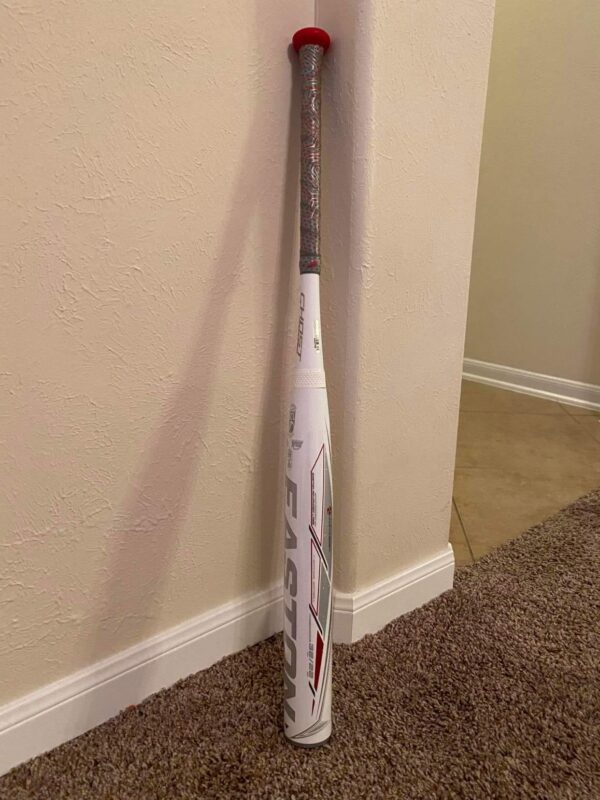
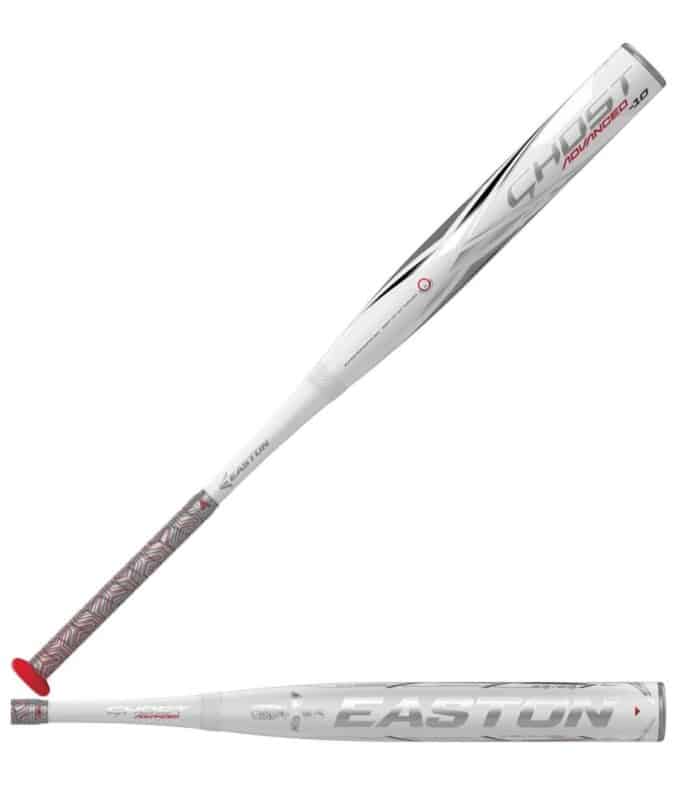
Easton Ghost Advanced Fastpitch Softball Bat
When it comes to a fast-pitch softball bat, the Easton Ghost Advanced is the one I keep reaching for. It’s built on Easton’s Double Barrel 3 platform, which pairs a lightweight inner barrel with Easton’s lowest-compression outer barrel yet. That combination lets the barrel flex more on contact, which is a big part of why this bat performs the way it does.
The barrel is built from Easton’s Sonic Comp Max composite, and the two pieces are joined with the ConneXion Evolution connection system. The Power Boost Soft Knob at the base of the handle gives you more leverage on your swing while cutting down the vibration you’d normally feel in your bottom hand.
It’s a hot bat right out of the wrapper, and the double-barrel design gives you a genuinely large sweet spot, so you don’t need pinpoint contact to feel the pop. It’s available in drop -8 through -11 with a 2 1/4-inch barrel, so both contact hitters and power swingers have an option that fits. I also bought one for my niece, and she loves it. She still talks about the pop on that bat more than anything else in her bag.
It’s certified for USA Softball, USSSA (fastpitch only), NSA, ISA, and WBSC play, so it covers most sanctioned leagues. If you want more options built specifically around bigger swings, my guide to the best fastpitch softball bats for power hitters goes deeper on that side of the market.
Which Slow-Pitch Softball Bat Has the Most Pop?
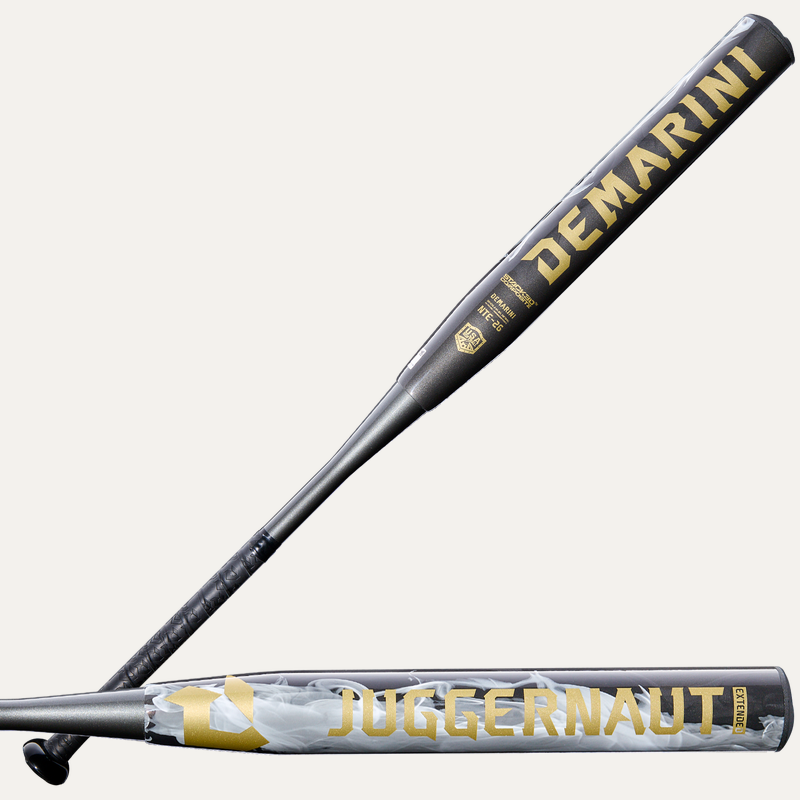
DeMarini Juggy Extended Slowpitch Softball Bat
On the slow-pitch side, the DeMarini Juggy Extended is the bat I reach for. It’s a no-brainer pick if you’re a free-swinging hitter who wants to punish the ball.
The extended 13-inch end-loaded barrel gives you a big, forgiving sweet spot along with real mass out at the end cap. It’s a two-piece composite build using DeMarini’s double wall barrel construction, which boosts the trampoline effect and helps drive the ball deeper into the outfield than a single-wall bat would.
Because of that end-load, contact hitters might feel it’s a little top-heavy through the zone. For a power hitter, that extra mass out on the barrel is exactly the point. It’s certified for USA Softball and USSSA play, so it covers most rec league and tournament softball. Pricing on composite slow-pitch bats like this one moves around a fair bit depending on the model year and whatever sale is running, so check the current price before you commit.
If you’d rather go balanced instead of stacking weight at the end cap, a Miken Freak Maxload is worth a look too. I compare when an end-loaded bat like the Juggy Extended actually makes sense versus a balanced swing in my balanced vs end-loaded softball bats guide.
With Everything Said and Done
I’m pretty sure you’ve got it by now: pop comes down to material, barrel construction, and the compression rating your league actually allows. There’s no single superhero bat with the greatest pop out there. Some bats just have better pop than others because of what they’re built from and how they’re certified, and that’s really all there is to it.
One more thing worth remembering: even the hottest bat loses its pop eventually. If a bat that used to feel electric suddenly feels flat, it might be time to check whether it’s actually dead. My guide on how to tell if a softball bat is dead walks through the signs, and if you’re wondering how much life you’ve got left before that happens, I cover realistic expectations in how long a softball bat actually lasts.
I hope this cleared things up. Cheers!

With 4 years of Division II experience, a .272 career batting average, .410 on-base percentage, and 7 home runs, I’m now in my fifth season. I’ve played baseball since age 3, alongside future MLB Draft picks, and I aim to pursue a career in baseball professionally, be it playing, coaching, or scouting.