
Lanolin baseball glove oil is one of the best things you can put on your glove, and it’s not close. Ask a glove technician, a college equipment manager, or the guy behind the counter at your local sporting goods store which oil they trust, and lanolin comes up almost every time. It’s the fat derived from sheep’s wool, and it happens to share a lot in common with the natural oils already in leather.
Glove makers have leaned on lanolin for decades, and it’s still the main active ingredient in most name-brand glove conditioners on the market today. This guide covers what lanolin actually is, why it works so well on leather, and exactly how I apply it to my own gloves.
Why Is Lanolin the Best Oil for Your Glove?
Lanolin baseball glove oil is hard to beat when you’re picking an oil or conditioner for your glove. Most glove conditioners use it as a base ingredient, and here’s why.
Lanolin protects and preserves the leather. It keeps the hide flexible, strong, and durable, which is exactly what you need during the break-in process. A stiff new glove softens up a lot faster once lanolin gets into the fibers.
It also helps revive older leather. Gloves that have been played with for a few seasons start to wrinkle and look like they’re on the verge of cracking. A round of lanolin brings a lot of that life back and leaves the leather looking (and feeling) game-ready again.
One more thing I like about it: lanolin doesn’t mask the leather’s natural smell the way some synthetic conditioners do. It refreshes the look of the glove without leaving it smelling like a chemistry set.
What Exactly Is Lanolin?
Lanolin is technically a wax, not an oil, even though everyone (myself included) calls it “lanolin oil.” It’s secreted by the sebaceous glands of sheep to waterproof their wool, and it’s collected as a byproduct when raw wool gets cleaned, a process called scouring.
Chemically, it’s made up of esters of fatty acids and fatty alcohols rather than the triglycerides you’d find in a cooking oil. That’s the reason lanolin resists rancidity so well compared to something like olive oil or vegetable oil, both of which can turn sticky or smelly if left in leather too long. Lanolin also happens to be similar in structure to human skin oils, which is part of why it’s used in everything from nipple cream to lip balm to leather conditioners.
One small caution: a small percentage of people are sensitive to the wool alcohols in lanolin. It’s rare, but if you’ve got sensitive skin, apply it with a cloth instead of rubbing it in with bare hands.
How to Apply Lanolin to Your Glove
If you want your glove to actually last, taking care of it can’t be an afterthought. Leather is tougher than it looks, but it’s also easy to ruin if you ignore it for a whole season.
The short version: oil it with lanolin, do it sparingly, and give it time to soak in. Here’s the longer version, step by step.
Step-by-Step Guide for Applying Lanolin Baseball Glove Oil
1. Rawlings Gold Glove Butter
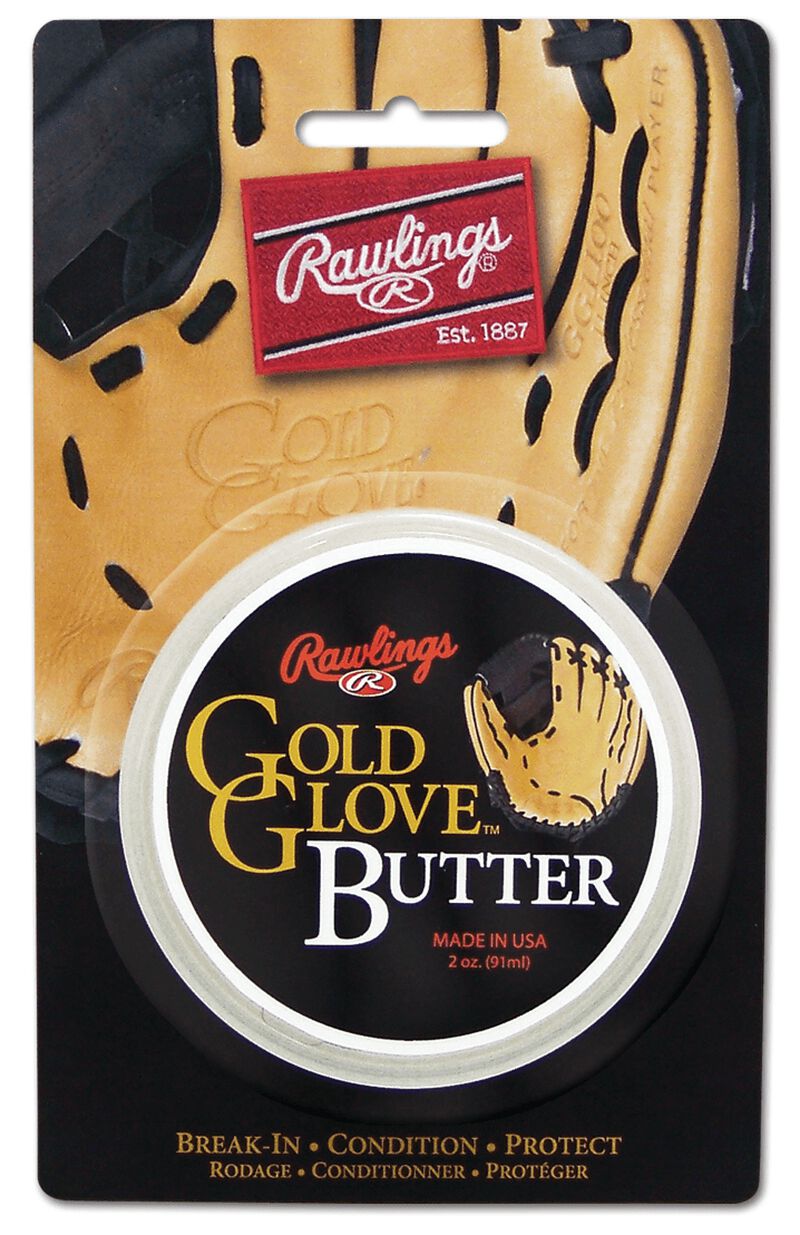
Buying the right product matters more than people think. Not every “glove oil” on the shelf actually contains lanolin, so check the label before you buy. Rawlings Gold Glove Butter is a lanolin-based cream built specifically for glove leather, and it’s the one I keep in my bag. A single tin usually runs somewhere in the $6-8 range and lasts most players a full season.
2. Use the Proper Routine
Plenty of methods exist for breaking in a glove, but applying lanolin still tops the list for me. It’s low-risk and it works.
Start by working the product into the areas that flex the most, the pocket, the hinge between the thumb and fingers, and the outer seams. Use a clean cloth or your fingers, and spread it in small circles until it disappears into the leather.
3. Apply the Oil Sparingly
This is the step players mess up the most. Don’t dump half the tin onto your glove in one sitting. Start with a small amount, work it in, and only add more if a spot still feels dry once it’s absorbed. Less is more here. Too much lanolin at once will leave the leather feeling greasy and add unnecessary weight to the glove.
4. Let Your Glove Dry
Give the glove time to actually absorb the lanolin instead of rushing back onto the field. A solid 24 hours is usually enough, though I’ll let it sit for 48 hours if the leather was really dried out to start.
That downtime lets the leather pull in the oil at its own pace, which gives you a better result than trying to force it. My one tip here: dry it in a cool, shaded spot rather than direct sunlight. Sun exposure over a long stretch can dry out and fade leather, which works against the whole point of oiling it in the first place.
Lanolin vs. Other Break-In Oils
Lanolin isn’t the only thing people reach for when a glove feels stiff. Mink oil comes up a lot too, and it does condition leather, but it darkens the hide more noticeably than lanolin and doesn’t hold up as long between applications. I’d only reach for it as a quick fix, not a regular routine.
Some players skip oil entirely and use a household trick instead, like breaking in a glove with shaving cream. That can work in a pinch, but it doesn’t protect the leather long-term the way a lanolin-based product does. If you’re only breaking in a glove once, lanolin is still the safer long-term investment.
Frequently Asked Questions on Lanolin Baseball Glove Oil
Is lanolin oil suitable for leather?
Yes. Lanolin softens, protects, and preserves leather. Used correctly, it keeps your glove supple for years instead of months.
What tools do I need to oil my baseball glove?
A clean washcloth, sponge, or soft brush is all you need. Your fingers work fine too, though a cloth gives you a bit more control over how much product goes on.
Can I use lanolin oil on my baseball glove?
Absolutely. As long as you apply it sparingly and let it dry properly, you shouldn’t run into any issues.
How do I break in my baseball glove with lanolin oil?
Here’s the routine I use:
- Apply lanolin sparingly across the glove
- Put a baseball in the pocket area
- Wrap rubber bands around the glove to hold the ball tightly in place
- Leave it in the sun for about 2 hours, no longer
- Bring the glove back inside, then remove the bands and ball
- Shape the pocket by punching your fist into the glove while opening and closing it
- Wrap the ball back inside the glove and store it in a cool, dry spot for up to two days
- Take the glove out and start playing catch to finish shaping the pocket
Wrap Up
Applying lanolin oil to your glove is one of the best things you can do for it. It’s not the cheapest option out there, but if you go with a substitute instead, just make sure lanolin is actually listed on the ingredients. For a full rundown of what else works, take a look at my guide on baseball glove oil alternatives.
Cleaning your glove regularly keeps it in mint condition too. Beyond oiling, get in the habit of wiping it down with a sponge or damp cloth after games. That small habit adds real years to a glove’s life.
Lanolin oil softens the leather and helps prevent cracking, whether you’re breaking in a brand-new glove or reviving an old one. Letting a glove break in naturally through reps alone works too, but lanolin speeds up the process without cutting corners on quality.
Keeping your gear in good shape is part of the job as a player, and a well-maintained glove pays you back every time you take the field. If your glove is older and needs more than a light oiling, check out my guide on how to oil an old baseball glove for a deeper revival routine.

With 4 years of Division II experience, a .272 career batting average, .410 on-base percentage, and 7 home runs, I’m now in my fifth season. I’ve played baseball since age 3, alongside future MLB Draft picks, and I aim to pursue a career in baseball professionally, be it playing, coaching, or scouting.