
What separates a good hitter from a great one? Most people would say it comes down to hard work and reps in the cage. And they’re not wrong. But the bat in your hands matters just as much as the hours you put in.
Most newcomers to softball never think twice about swing weight. Nobody explains it to them, so it becomes a roadblock they don’t even know is there.
Softball bats generally fall into three swing-weight categories: light, balanced, and end-loaded. The right one for you depends on your build, your swing, and what kind of hitter you are. Whenever I’m working with a new hitter, I watch how they swing before I say a word about which bat they should be using.
If you’re trying to figure out whether a balanced or end-loaded softball bat fits your game, I’ve got you. Here’s a full head-to-head breakdown so you can walk away knowing exactly what you’re looking for.
Difference Between End-Loaded and Balanced Softball Bats
End-loaded and balanced softball bats are built to do two very different jobs. One is about control and quick hands. The other is about raw power. Neither is objectively “better,” they just serve different hitters.
The main difference comes down to swing weight, which is really just where the bat’s mass sits along its length. A balanced bat spreads its weight evenly from knob to end cap. An end-loaded bat concentrates more mass out near the barrel, which is what bat fitters call a higher moment of inertia (MOI).
End-loaded bats also tend to run heavier overall, not just top-heavy. Balance one on your finger and you’ll feel it want to tip toward the barrel. A balanced bat, by contrast, sits level.
That difference in swing weight changes how the bat feels and performs in a real at-bat. At the youth and beginner level, it usually doesn’t matter as much. Most players in rec leagues and early travel ball stick with balanced bats since an end-loaded bat can be tough to control before you’ve built up bat speed.
Once you’re hitting at a competitive travel or college level, though, even a great softball bat will let you down if the swing weight doesn’t match your mechanics. That’s why understanding this difference matters more the further you go in the sport.
A Quick Look into Balanced vs End-Loaded Softball Bats
If you want the short version before I get into the details, this chart covers the key differences between an end-loaded and a balanced bat.
| Features | End-Loaded Bats | Balanced Bats |
| Weight Distribution | Top-heavy, higher MOI | Even distribution, lower MOI |
| Power Hitting | Strong | Moderate |
| Bat Speed & Contact | Slower to swing | Quicker through the zone |
| Best For | Strong, experienced power hitters | Contact hitters, beginners, most fastpitch players |
| Highlighting Factor | Distance on contact | Control and quick hands |
| Learning Curve | Steeper, takes reps to control | Easier to pick up |
What is a Balanced Softball Bat?
As the name says, balanced softball bats spread their weight evenly across the whole length of the bat. Since the mass isn’t stacked at either end, you can whip the barrel through the zone faster. That’s exactly what a contact hitter wants.
Balanced bats are the go-to for most contact hitters because you don’t need elite upper-body strength to control one. With some reps, you’ll be able to swing the bat quickly and accurately without fighting the swing weight.
That’s also why balanced bats dominate fastpitch. Bunting and slap hitting are a bigger part of that game, and a lighter, more maneuverable swing weight makes both easier to execute.
Who Should Use Balanced Bats?
Balanced bats work for nearly everyone, which is why they’re the safest default. If you’re a contact hitter, a balanced bat should feel right at home in your hands. I also tell most young hitters and high schoolers to stick with balanced bats until they’ve got a good read on their own strengths and weaknesses at the plate.
My Pick: Louisville Slugger LXT Fastpitch Softball Bat
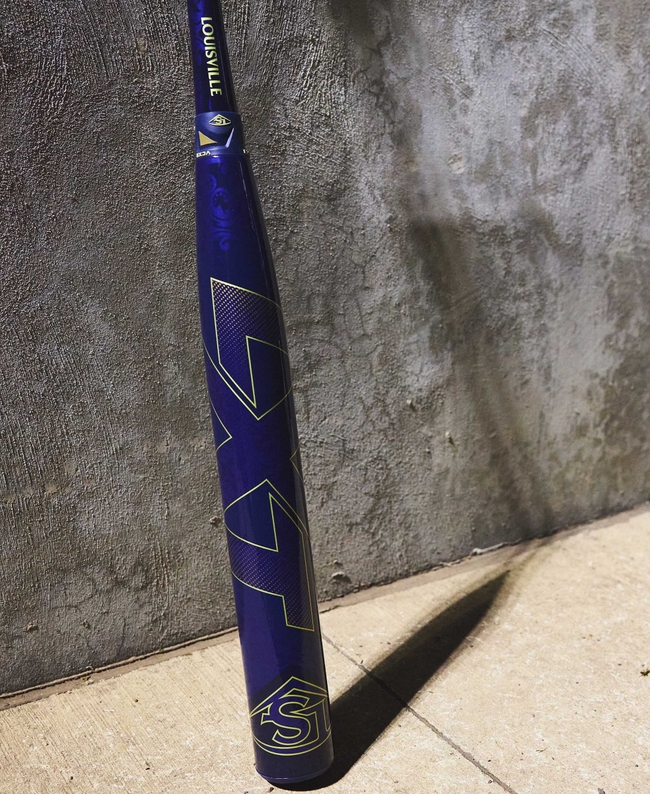
Anybody who has spent more than a couple of days around this sport knows the name Louisville Slugger. I’ve coached with their gear for years, and the LXT lineup is still one of the better balanced fastpitch bats you can put in a hitter’s hands.
The current LXT is a two-piece composite build with a flex connection between the handle and barrel, which cuts down on sting and vibration on off-center hits. The barrel uses Louisville Slugger’s PBF construction to widen the sweet spot and improve responsiveness through contact.
The current lineup is available in drop weights from -9 to -11, so check which drop your league allows before you buy. If you’re newer to the game, the -11 will feel lighter and easier to control. More experienced hitters usually lean toward the -9 for a bit more mass behind the swing.
The grip has plenty of tack, which helps you keep control through the swing and find the sweet spot more consistently. Combined with the balanced weight distribution, it’s a bat that rewards a clean, repeatable swing.
Louisville Slugger built its name on affordable gear, but the LXT isn’t that. Expect to pay around $400 at full retail, which puts it firmly in premium territory. If you’re a beginner, that’s a tough pill to swallow. But for a serious contact hitter, it’s a bat that holds up over a long season.
What is an End-Loaded Softball Bat?
End-loaded bats carry noticeably more weight out near the barrel end. That top-heavy design lets a strong hitter build a whip-like motion through the swing. But that same design makes it a handful unless you’ve already built the physical strength to control it.
Hitters who reach for end-loaded bats are usually bigger, stronger, and further along in their development. That extra mass sitting close to the strike zone is what lets you drive the ball deeper on contact, but it comes at the cost of bat speed and control if your swing isn’t built for it.
This is also why end-loaded bats are so common in slowpitch softball. Slower incoming pitches give you more time to load up, so the extra swing weight becomes an advantage instead of a liability. That’s part of why slowpitch and fastpitch bats are built so differently in the first place.
Who Should Use End-Loaded Bats?
End-loaded bats are best for hitters who are physically strong enough to control the extra mass and still make consistent contact. You’ll see them constantly in slowpitch, where the ball travels slower and power hitting is the priority. If your goal is to drive the ball deep and rack up extra-base hits, this is the swing weight to look at.
By design, these bats are harder to control. Without the strength and bat speed to back it up, you won’t get much out of it. I always recommend logging real time in the batting cage with an end-loaded bat before you trust it in a game.
My Pick: Miken Freak Maxload Slowpitch Softball Bat
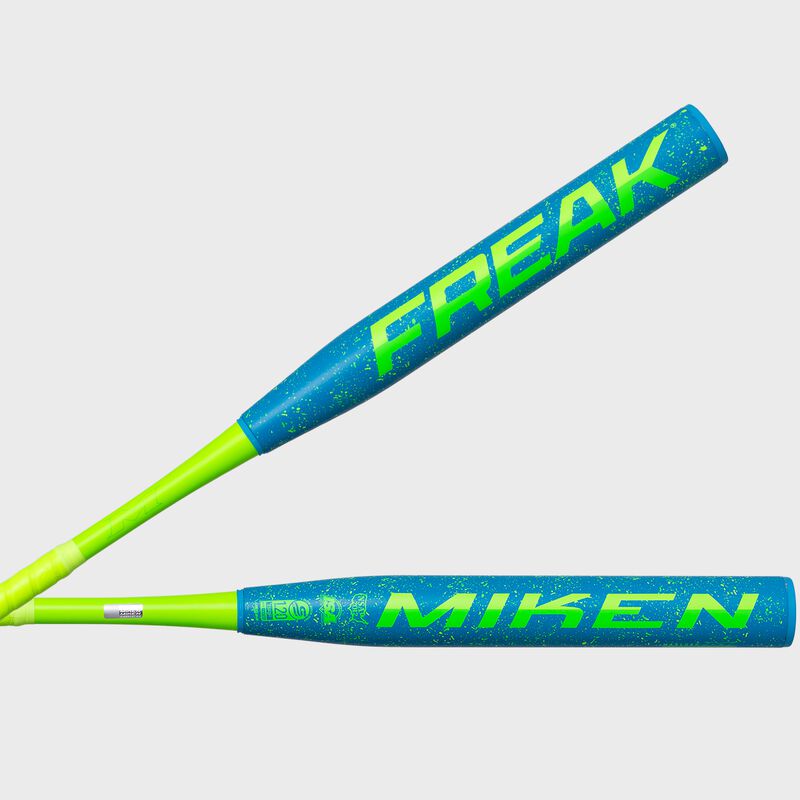
When I’m working with a heavy hitter who plays slowpitch, the Miken Freak Maxload is one of the first bats I point them toward. Miken has built a name on end-loaded slowpitch performance, and the Freak Maxload leans all the way into that identity.
It’s a two-piece, all-composite build with a 13.5-inch barrel and roughly a half-ounce of true Maxload end weighting, which is about as end-loaded as a legal bat gets. The barrel is tuned for a wide sweet spot, and the handle is built with a bit more flex so you can still whip the barrel through the zone despite the extra mass out front.
It’s available in 25, 26, and 27-ounce weights and carries USSSA certification, so double check your league’s approved bat list before you buy. At full retail it runs about $300, which is right in line with other high-end slowpitch bats in this class.
If you’re strong enough to handle the swing weight, this is one of the more reliable ways to turn that strength into distance.
Is a Balanced or End-Loaded Bat Better?
So which one wins? If you’ve been following along, you’ll notice I haven’t been pushing you toward one side. That’s on purpose. There’s no universal winner here, only the right fit for your swing.
Balanced bats are a solid all-around choice for hitters at every level, from little league to college ball. If you’re a contact hitter who wants a quick, accurate swing, there’s not much of a case against going balanced.
If you’re a strong hitter chasing power and extra-base hits, an end-loaded bat can get you there. Just know that swinging it well takes real strength and reps. Without that, an end-loaded bat will slow you down and cost you contact more than it helps.
A lot of hitters also land somewhere in the middle. If neither extreme feels right, it’s worth testing a slightly end-loaded or “hybrid” balance point before committing. And once you’ve settled on a swing weight, take a look at how one-piece vs. two-piece construction and barrel material affect feel too, since swing weight is only one piece of the puzzle.
Hopefully this breakdown of balanced vs. end-loaded softball bats gives you enough to go on next time you’re picking out a bat. Cheers!

With 4 years of Division II experience, a .272 career batting average, .410 on-base percentage, and 7 home runs, I’m now in my fifth season. I’ve played baseball since age 3, alongside future MLB Draft picks, and I aim to pursue a career in baseball professionally, be it playing, coaching, or scouting.